
Inverse condemnation

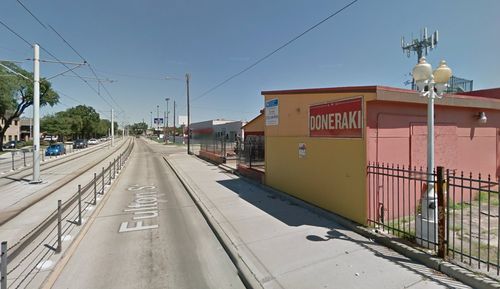
Doneraki

We did a post a while back about a Houston barbecue restaurant which had some troubles with the Harris County, Texas, Metropolitan Transit Authority. The court of appeals held that the restaurant’s lost profits could not be recovered in an inverse condemnation action.

Well, that same court has rendered an opinion in a case involving
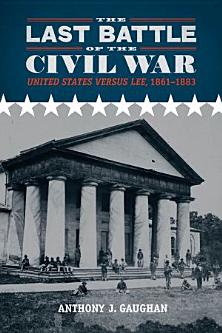
Programming note: On the day we remember our nation’s war dead, we thought we’d repost this one, about how Arlington National Cemetery came to be, and how yes, there’s a takings story there.

———————————————————

LastbattlebookYou know how we’re always saying that the provisions in the Takings Clause are “self-executing,” that even in the absence of

Here’s the amicus brief we filed yesterday on behalf of lawprof David Callies and our colleagues at Owners’ Counsel of America in an important case involving ownership and use of the “dry sand” beach, now pending in the North Carolina Supreme Court.  

In Nies v. Town of Emerald Isle, No. COA15-169 (N.C. App. Nov. 17

Someone up in Asheville must’ve really ticked off someone else down at the North Carolina legislature. Because for some reason, the state adopted a statute which, just like that, transferred the city-owned water system to a newly-created county sewer and water district. The statute didn’t change the water system’s operation — and this was key in

We thought there was a chance in a case out of San Jose, California, that the U.S. Supreme Court might take up the long-standing issue of whether legislatively-imposed exactions meet the nexus and proportionality unconstitutional conditions tests from Nollan, Dolan, and Koontz. Do those tests require an individualized determination, or is

Untitled Extract Pages

About this time last year, the Court of Federal Claims held that the federal government was liable for a temporary taking to certain property owners for the flooding caused by Hurricane Katrina and the Corps of Engineers’ failure to maintain the “MR-GO” (Mississippi River-Gulf Outlet) canal system. See also a guest post by

20151205_145903

Earlier today, we asked the Federal Circuit for its permission to file this amici brief urging the court to rehear its recent panel decision in Romanoff Equities, Inc. v. United States, No. 15-5034 (Fed. Cir. Mar. 10, 2016).

This is a rails-to-trails takings case in which the panel concluded that the words in the

The New Hampshire Supreme Court, in our view, got it wrong in Ashton v. City of Concord, No. 2015-0400 (Apr. 29, 2016). Really, really wrong.

Indeed, the New Hampshire court seems to have resurrected the California Supreme Court’s now-defunct rule from Agins v. City of Tiburon, 598 P.2d 25 (Cal. 1979), which held

Another day that we’re tied up, so there won’t be too much analysis. But we wanted to post this fascinating case out of the California Court of Appeal, Friends of Martin Beach v. Martin Beach 1 LLC, No. A142035 (Apr. 27, 2016).

As the caption of the case indicates, it involves beach access. Specifically

We’re tied up today, so can’t write much, but wanted to post this recent decision from the Court of Federal Claims. Here’s the court’s own summary:

Plaintiffs Love Terminal Partners, L.P. (“Love Terminal Partners”) and Virginia Aerospace, LLC (“Virginia Aerospace”) are leaseholders of property at Dallas Love Field Airport (“Love Field”), located in Dallas, Texas.