42 U.S.C. § 1983 | Civil Rights

131996

In a 2-1 decision, the U.S. Court of Appeals for the Fourth Circuit concluded that Norfolk, Virginia’s sign ordinance did not violate the First Amendment, when it was applied to bar the anti-eminent domain banner shown above.  

Central Radio Co. Inc. v. City of Norfolk, No. 13-1996 (4th Cir. Jan. 13, 2015), arose from

Here’s that last case in our 2014 opinion queue, from way back in July. It’s also coincidentially the 2,500th post on the blog.

In Sawn Beach  Corolla, LLC v,.County of Currituck, No. COA13-1272 (July 1, 2014), the North Carolina Court of Appeals considered vested rights and takings claims in a fact pattern than streched

On one hand, the U.S. Court of Appeals’ opinion in Hutto v. South Carolina Retirement System, No. 13-1523 (Dec. 5, 2014) is old hat: the court concluded that a plaintiff alleging a federal takings claim could not bring that claim in federal court. But this case is different because it — unlike those where

The Hawaii Supreme Court has issued a lengthy opinion in a case we’ve been following, DW Aina Lea Development, LLC v. Bridge Aina Lea, LLC, No. SCAP-13-0000091 (Nov. 25, 2014). 

The litigation is a series of two lawsuits that originated in state court in the Third Circuit (Big Island), one an original jurisdiction civil rights

Today, on behalf of the National Federation of Independent Business Small Business Legal Center, we filed this amicus brief in Kurtz v. Verizon New York, Inc., No. 14-439 (cert. petition filed Oct. 14, 2014). The cert petition, filed on Kurtz’s behalf by the Institute for Justice, is posted here

That’s the case in

Here’s one to add to the “unusual takings cases” category, at which we looked at last week

In  Young v. Larimer County Sheriff’s Office, No. 13CA1338 (Sep. 11, 2014), the sheriff raided Mr. Young’s (medical) marijuana grow and seized as evidence “forty-two mariijuana plants by cutting them off just above the roots.”

Now,

EM Hauulaeminent_domain_abuse

Remember that case which we posted about earlier, in which the City and County of Honolulu condemned an undeveloped lot in rural Oahu for a fire station, but has been met with staunch resistance by the property owners? Not only did we post on the case, but it made national waves, also.

The City

2010-03-24 15.24.40
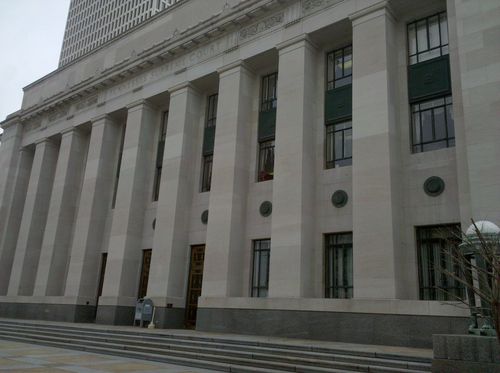
Tennessee Supreme Court, Nashville

In Phillips v. Montgomery County, No. M2012-00737-SC-R11-CV (Aug. 18, 2014), the Tennessee Supreme Court held that a property owner could recover under the state’s inverse condemnation statute, Tenn. Code Ann. § 29-16-123, for a regulatory taking:

We hold that, like the Takings Clause of the United States Constitution, article I

To follow up on our earlier post about issues to look for in the legal challenge to the Hawaii Chief Elections Officer’s choice to hold the delayed Democratic Party primary election on Friday, August 15, 2014, rather than keep the 21-day window open, here are the Complaint and Motion for Temporary Restraining Order filed this