February 2026

Next week, we’ll be at the Denver Law School for the 2026 Rocky Mountain Land Use Institute’s “Western Places | Western Spaces” annual conference. Earlier in our career, we were a fairly regular attendee, but for mesne reasons (unrelated to the conference) our ability to attend kind of fell off. Recognizing that shortcoming, we attended the 2025 Conference last year. This convinced us that indeed, we were missing out. In short, the RMULI has returned as a featured event on our calendar.
Continue Reading Join Us At The Rocky Mountain Land Use Institute (Denver) To Talk Sheetz, And Housing

Courtrooms are places for serious business. After all, people’s lives, businesses, property, and past and futures are at stake. It’s right that the court, the lawyers, and the public take what goes on there seriously. But judges and lawyers are also human, so it should surprise no one that moments of levity and humor can creep in.
Continue Reading Lighter Moments In Yesterday’s SCOTUS Takings Arguments

Check out this call for papers from our firm, Pacific Legal Foundation.

The call of the question is intriguing: is there room in Fourth Amendment jurisprudence for a property-base view (as opposed to the prevalent Katz “expectation of privacy” focus now in vogue? After all, the Fourth Amendment mentions things that we classify as property

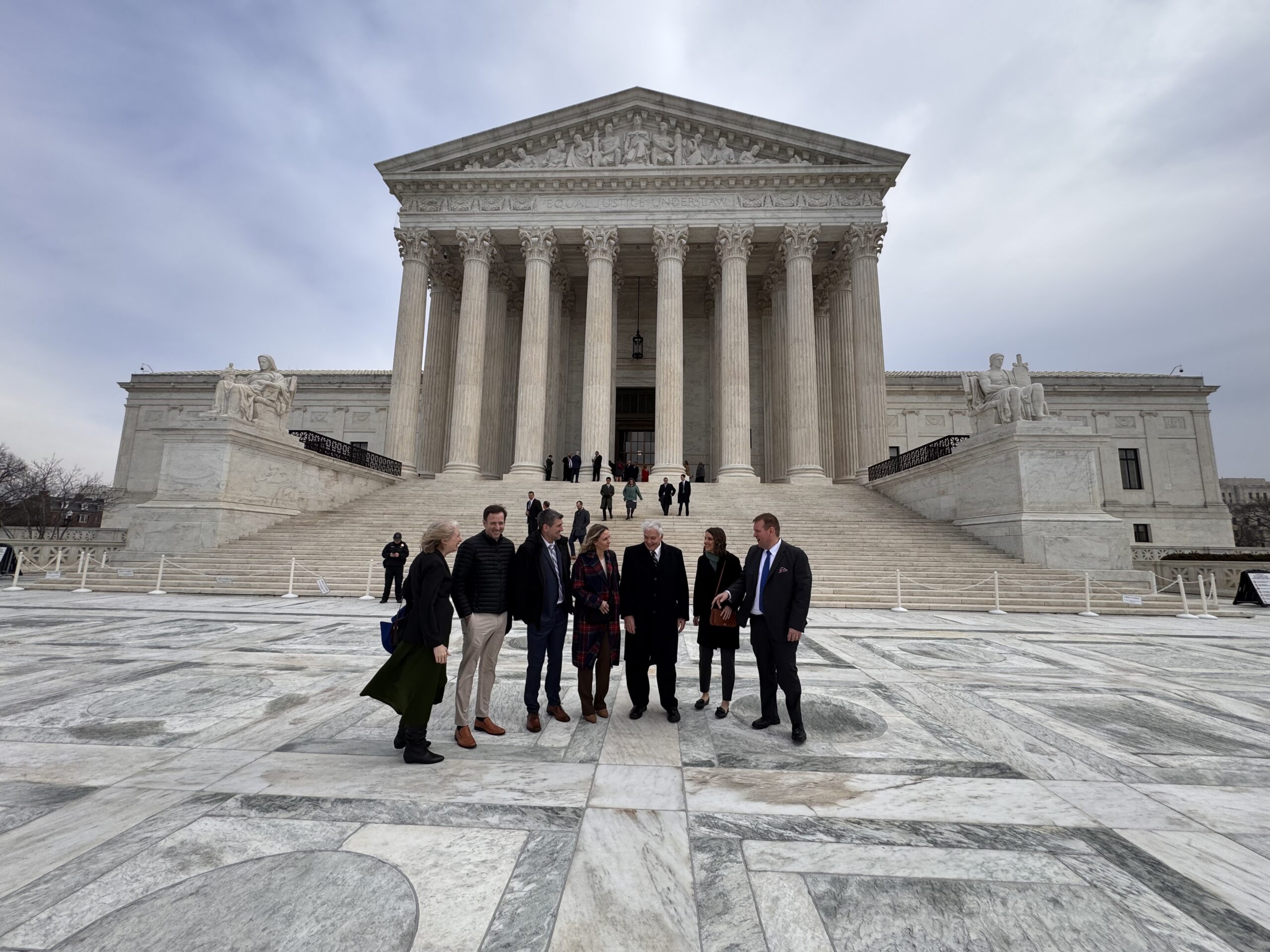
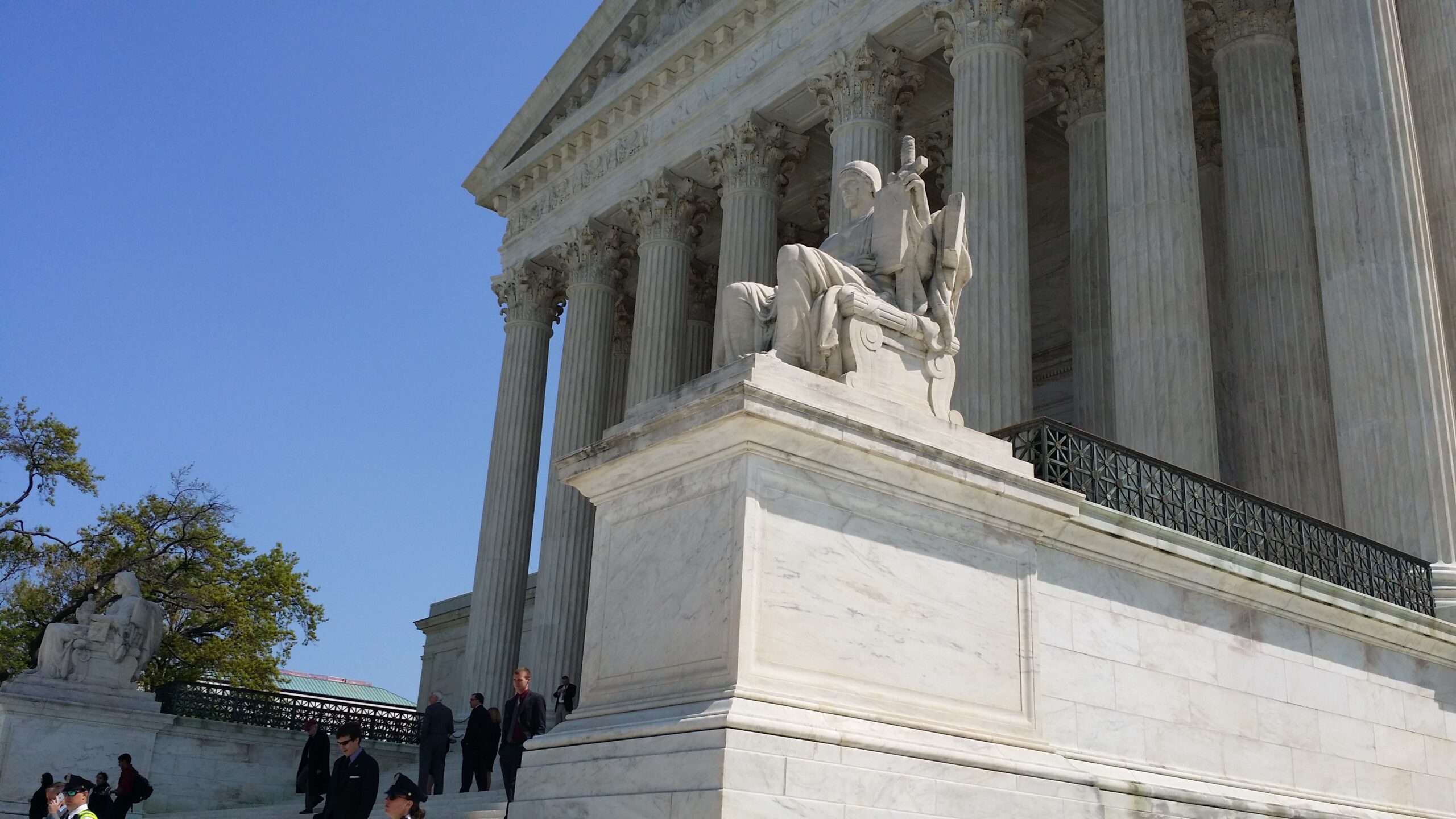
Here is the transcript of the oral arguments held earlier today in Pung v. Isabella County. [And before we get further, a disclosure: this case is one of ours as the above courthouse steps photo shows.]
Continue Reading Transcript And Audio From Today’s SCOTUS Takings And Excessive Fine Arguments (Pung v. Isabella County)

Here’s what’s on our radar screen today: Anthony Flint, How Zoning Won (Bloomberg) (“In 1926, the Supreme Court’s Euclid decision enshrined zoning in US cities. On its 100th anniversary, academics gathered to reflect on the landmark ruling’s mixed legacy.”)
Continue Reading Today’s Dirt Law Round-Up: Zoning, Public Use, and Penn Central History

Although Knick knocked out the Supreme Court-created requirement that before an owner may assert a takings claim, he must first effectively exhaust available state procedures for obtaining compensation, it left the other ripeness requirement — that the government has made a “final decision” applying the challenged law to the owner — in place. Despite the Supreme Court in Pakdel noting that the final decision rule is a “relatively modest” requirement and does not require exhaustion of remedies (administrative or otherwise), some lower courts refuse to accept the message. Well here’s one that not only gets its wrong, it gets it seriously wrong.
Continue Reading Say What? CA4: Takings Claim Not Ripe Because Owner Could Always Change The Law

You know the drill: DOT takes property and pays compensation for that as part of the project. But the project also resulted in elimination of what was the “shortest indirect access route” to the subject property from the public road, for which the DOT did not pay compensation. Question: is the owner who loses such access entitled to compensation?
Continue Reading SD: Closure Of Intersection And Loss Of Access Is Not Compensable Special Injury

Check out this cert petition filed yesterday. It’s from our shop, so we’re not going to be commenting much. The issue is one that the Supreme Court has expressed an interest in, but the last time it was before the Court a few years ago, the Justices decided to wait for the next case. Well, here’s the next case.
Continue Reading New Cert Petition: Do Indian Tribes Have Greater Sovereign Immunity Than Other Governments?

Here’s the Reply Brief in a case we’ve been following (naturally, because it is one of ours).

This is the case where the Court is reviewing the question of the amount of just compensation the county is obligated to provide, if any, for seizing the title to, and then auctioning off Pung’s property to satisfy his debt for unpaid property taxes. The county asserts Pung is entitled to only the proceeds, if any, from the auction (no matter what). Pung asserts he is entitled to just compensation, and that the lower court erroneously presumed that the auction proceeds met that standard.
Continue Reading “The Fifth Amendment does not require an auction; it requires payment of just compensation” – Owner’s Reply In SCOTUS Just Comp/Excessive Fines Case