2011

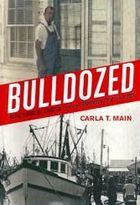
Bulldozed_home Note to appellate practitioners: it’s not a good sign when an opinion’s treatment of your arguments starts with the phrase “[t]o the extent we are able to discern the arguments, we address them below.”

As that statement telegraphed, it didn’t go very well for the appellee in Main v. Royall, No. 05-09-1503-CV (July 25

Goodtobeking As Mel Brooks once said, “It’s good to be the King.” That’s especially true in eminent domain law. Even when you’re not the King.

Exhibit A: the plaintiff in this federal condemnation action was a railroad, the Dakota, Minnesota & Eastern Railroad Corporation. It brought suit against 97.943 acres of land, more or

In Edwards v. City of Jonesboro, No. 10-2405 (July 14, 2011), the U.S. Court of Appeals for the Eighth Circuit held that a takings claim brought in federal court after the property owner prevailed on the same claim in state court was not barred by the Rooker-Feldman doctrine, but that the state court judgment

In a case we’ve been following, a San Francisco Bay Area municipality has filed a cert petition asking the U.S. Supreme Court to review the Ninth Circuit’s opinion in International Church of the Foursquare Gospel v. City of San Leandro, No. 09-15163 (Feb. 15, 2011). In that case, the Ninth Circuit held that the

In some states, Hawaii included, the question of whether a taking is “for public use” is entitled to full resolution before addressing the question of just compensation. See, e.g., Haw. Rev. Stat. § 101-34 (public use challenges are entitled to immediate trial, and as-of-right interlocutory appeal). This makes sense since questions of value


It appears it is not enough for the lobbying arms of California cites and redevelopment agencies to sue the state claiming the state is grabbing “their” money, now at least one California city is in the business of producing You Tube videos complaining of the taking.

Putting aside for the moment whether the municipal

We tend not to think of churches as “blighting” their neighborhoods. But what about a church in a downtown “entertainment” district, where the nearby businesses are bars, nightclubs, and liquor stores, and placing a church in the area might limit the availability of liquor licenses?

In a sort of reversal of the usual LULU (locally

Yesterday, the California Redevelopment Association, the League of California Cities and two Bay Area municipalities filed an original jurisdiction petition for writ of mandate in the California Supreme Court asserting that the California Legislature’s recent bills to eliminate redevelopment agencies, or allow them to continue to exist if they pay tribute to the state, violate