
 Mark your calendars: as a follow up to the panel discussion of Stop the Beach Renourishment, Inc. v. Florida Dept. of Environmental Protection, 130 S. Ct. 2592 (2010) at the ABA Annual Meeting in San Francisco in August, the ABA Section of Real Property, Trust and Estate Law is sponsoring (along with the Section
Amicus Brief In Hawaii Beach Takings Case: Is The Right To Accretion A “Property” Interest?
Yesterday, on behalf of the Land Use Research Foundation of Hawaii, we filed this brief amicus curiae in the U.S. Supreme Court in Maunalua Bay Beach Ohana 28 v. Hawaii, No. 10-331 (cert. petition filed Sep. 7, 2010). The Supreme Court’s docket entry on the case is here.
This is the case in which the Hawaii Intermediate Court of Appeals concluded that ownership of beachfront property includes only a partial right to accreted land. In Maunalua Bay Beach Ohana 28 v. State of Hawaii, 122 Haw. 34, 222 P.3d 441 (Haw. Ct. App. 2009), the ICA held that held that “Act 73” (codifed here and here), the statute in which the legislature redefined accretion as public property was a taking of existing accreted land, but held that Act 73 did not affect a taking of what it called “future” accretion, because the right is simply a contingent future interest. The cert petition is available here.
The Cato Institute and Pacific Legal Foundation also filed an amicus brief urging the Court to review the case. See If Only Hawaii’s Government Were as Beautiful as Its Beaches.
The LURF amicus brief poses this Question Presented:
In 2003, the Hawaii legislature adopted Act 73, which declared that the private right to own accretion on beachfront parcels was public property. The statute did not provide for compensation, and upon challenge by the Petitioners, a state trial court invalidated Act 73 as a regulatory taking.
The Intermediate Court of Appeals of Hawaii partially affirmed, concluding that Act 73 was a taking of accreted land in existence in 2003 when the Act became effective. It also concluded, however, that the statute was not a taking of “future accretion,” or land that might be accreted after 2003, because there was no certainty that accretion would occur, and littoral owners’ right to accretion was therefore not “vested.” The court concluded the legislature was free to recharacterize the private right to accretion as state property without compensation because Petitioners never owned it. In other words, the right to accretion is not “property” as that term is used in the Fifth and Fourteenth Amendments.
The question presented is whether the right to accretion is property within the meaning of the Fifth and Fourteenth Amendments, and therefore protected from ipse dixit redefinition into public property.
Here’s a summary of the brief:
To rescue Act 73 from total invalidity under the Takings Clause, the court below created a distinction never before recognized in Hawaii law between “vested existing accretions” which are constitutionally protected property, and “unvested future accretions,” which are not. The latter, the court concluded, could be transformed ipse dixit by the Hawaii legislature into public property without compensation. After all, how could a littoral owner possess a property interest in land that had not yet accreted?
The supposed distinction between “existing” and “future” accreted land is illusory, however, and overlooks the critical private property interest which Act 73 redefined as public property. Hawaii law had for over a century recognized that littoral owners possessed the right to accretion. That right was a present right, was “vested,” and, as surely as interest follows principal, cannot be transformed by the stroke of the legislature’s pen into public property. The Constitution – in addition to recognizing as property the accreted land in existence at the time of the adoption of Act 73 in 2003 – also protects the right to all accretion. Thus, when Act 73 declared that accretion belonged to the state, it confiscated private property without due process or condemnation, and violated the Fifth and the Fourteenth Amendments.
This brief focuses on two issues. First, the right to accretion is a present property interest protected by the Fifth and Fourteenth Amendments from uncompensated legislative redefinition as public property. This right is not limited merely as accreted land in existence on the day the legislature adopted Act 73, and the court below strayed far afield from this Court’s established precedents when it concluded that the only property interest protected by the Constitution was the land already accreted. Second, to provide context to the lower court’s decision and how it reached its conclusion, this brief summarizes the decades-long experiences of Hawaii’s property owners who have seen their established common law property rights eroded into public property. The case at bar is only the latest example.
Brief at 3-4 (emphasis original) (footnote omitted).
The State of Hawaii has waived its right to file a brief in opposition (unless the Court orders a BIO be filed), and the case will be considered at the Court’s conference on October 29, 2010.
More to follow.
Continue Reading Amicus Brief In Hawaii Beach Takings Case: Is The Right To Accretion A “Property” Interest?NY Appeals Judge: “[T]here is no longer any judicial oversight of eminent domain proceedings.”
We knew that, but in case you didn’t take our word for it, here’s a judge from the New York Supreme Court’s Appellate Division to tell it like it is. In Uptown Holdings, LLCC v. City of New York, No. 2882 (Oct. 12, 2010), the Appellate Division held that the city’s Department of
January 13 & 14, 2011: 5th Hawaii Land Use Law Conference
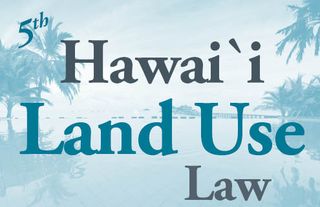 Mark your calendars for January 13 and 14, 2011 for the 5th Hawaii Land Use Law Conference, to be held in Honolulu. Yes, it’s a few months away, but this is the Big One, it only comes around every two years, and you don’t want to miss it.
The program chairs are Professor David Callies
10/21/2010 Webconference: Eminent Domain After Kelo
On Thursday, October 21, 2010, from noon to 1:00 p.m. EDT, please tune in for the free web conference “The Whacky and Wonderful World of Eminent Domain After Kelo.”
I’m not sure I can live up to making eminent domain “whacky and wonderful,” but I will be speaking about what the Court in Kelo
New Book: Callies, Regulating Paradise – Land Use Controls In Hawaii (2d ed. 2010)
 University of Hawaii lawprof David L. Callies needs no introduction to the readers of this blog. He’s one of the deans of the national and international land use bar and professoriate, but those of us who practice land use law in Hawaii consider him our special mentor (dare I say guru?) when the topic of Hawaii land use law is raised. Virtually every dirt lawyer practicing here has studied under or with him.
Those of us who consider this area of law our calling have for years looked forward to an update of Regulating Paradise, his seminal book on Hawaii’s complex and multi-layered system of land use and regulation.
Well wait no further. The University of Hawaii Press has published the second edition of Professor Callies’ essential work. Purchase your copy here (a mere $22). Here’s the Introduction.
We haven’t had an opportunity to pore through the nearly 400 pages of text (illustrated with the irreplaceable Corky Trinidad‘s editorial cartoons), so a more complete review will follow once we’ve had a chance to do so. In the meantime, voices more eminent than our own have weighed in:
“A masterful analysis of [Hawai‘i’s] land use laws.” —Daniel R. Mandelker, Stamper Professor of Law, Washington University, St. Louis
“Essential reading for all who seek to understand how land use is regulated in Hawai‘i or to apply the lessons learned there to other states.” —Dan Tarlock, Distinguished Professor of Law, Chicago-Kent College of Law
“A must-read for both neophyte and veteran legal practitioners. Callies’ in-depth and insightful explanations and commentaries on Hawai‘i’s complex land use and planning laws provide a road map for understanding the state’s multi-layered regulatory scheme.” —Benjamin A. Kudo, Ph.D.
“With this magnificent new work, and its far ranging, comprehensive analysis – from the feudal land holdings of the monarchy to regulating McMansions – Professor Callies teaches and entertains us with tales of success and failure in Hawaiian land use and development law. There are lessons here for every one of us, all across this country.” —Dwight Merriam, Robinson & Cole
If the second edition is anything like the first, Regulating Paradise will occupy an frequently-used spot on our back bookshelf. More to follow.
Continue Reading New Book: Callies, Regulating Paradise – Land Use Controls In Hawaii (2d ed. 2010)
New Book – social.lawyers: Transforming Business Development (2010)
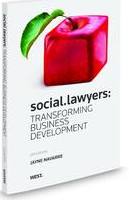 I’m going to deviate a bit from the usual blog topics to point you to a recently-published book about the use of social media by lawyers.
The book is social.lawyers: Transforming Business Development (West 2010), by legal marketing expert Jayne Navarre. It is available for purchase through West here.
First off, this will
Creative Takings Lawyering, Part II – Arizona Prisoners Have A Property Right In Their Wages, But Not That Much Of A Property Right
Shades Of Loretto From The New York Appellate Division
Takings lawyers know Loretto v. Teleprompter Manhattan CATV Corp., 458 U.S. 419 (1982) stands for the proposition that a regulation allowing a physical invasion of private property — no matter how de minimus the invasion might be — is a per se regulatory taking. In those instances, the right to exclude is such a