
Our American Bar Association colleague Ed Thomas (no relation, although we often joke that we’re probably cousins), the President of the Natural Hazard Mitigation Association and a guy who acknowledges that the need to protect against natural disasters must take property rights into account, has compiled some thoughts about the Court of Federal Claims’ recent
NJ Trial Court Finds Open Space Taking Pretextual: “objective scrutiny of the…testimony of the elected officials…reveals a studied attempt to obscure the true purpose of the condemnors”
Even though it is a trial court decision, the opinion in Township of Readington v. Solberg Aviation Co., No. HNT-L-486-06 (May 4, 2015), is well worth reading, because we think the judge gets the process for how courts evaluate claims of pretext correct.
We posted about this case a few years ago, after the
Sue Early, Sue Often If Your Home Flooded With Municipal Waste In Oregon
Remember Dunn v. City of Milwaukie? That’s the case in which the Oregon Supreme Court reversed an inverse condemnation judgment in favor of a homeowner who had sewage back up into her house after the city “hydrocleaned” the sewer system, because she had not shown that the government had “acquisitory intent.”
The court, however
NC App: No Public Use Or Benefit When Town, Fueled By Improper Motive, Condemned Private Street To Make It Public
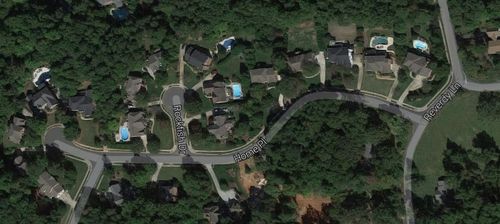
In Town of Matthews v. Wright, No. COA14-943 (Apr. 21, 2015), the North Carolina Court of Appeals invalidated a taking, the stated purpose of which was to make a portion of a private road into a public street.
A taking to open a private road to the public? That sure does sound like a
Cal App: Municipality Free To Form Community Facilities District To Take Over Water Utility
The first sign that the opinion wasn’t going the way of the Golden State Water Company — a private utility that provides water to the City of Ojai, California — was right there in the first paragraphs, which contain the one-two punch of labeling the company both a monopolist, and one that price gouges about
HAWSCT Clarifies Joinder Of Indispensable Parties
Here’s the latest from the Hawaii Supreme Court on the joinder of parties under Rule 19, where there’s a claim that an absent party is “indispensable” and thus the case should be dismissed. Bottom line is that an absentee should be joined if its presence is needed, and the “indispensable” determination only needs to be
Property Owners’ Brief In NC “Map Act” Takings Case: Depressing Acquisition Price Precondemnation Is An Exercise Of The Eminent Domain Power
Here’s the property owners’ brief in opposition to the DOT’s request for the North Carolina Supreme Court to review the court of appeals’ opinion in Kirby v. N.C. Dep’t of Transportation, No. OA14-184 (Feb. 17, 2015).
The court concluded that the Map Act — which gives the DOT the ability to designate hundreds of
New Book Forthcoming: “The Grasping Hand: Kelo v. City of New London & The Limits Of Eminent Domain” by Ilya Somin

To put on your to-buy, to-read list: lawprof Ilya Somin‘s forthcoming book about the Kelo case and the aftermath, available on June 5, 2015. (We’re in the process of organizing some book talk events with Prof Somin in the fall, and if you have suggestions for venues or want to host one, let us
California Supreme Court Considering “Inclusionary Housing” Fee
Last week, the California Supreme Court heard oral arguments in California Building Industry Assn. v. City of San Jose, No. S212072, the case which challenges San Jose’s “inclusionary housing” requirement.
The Court of Appeal held that under rational basis review (and not heightend scrutiny) San Jose’s affordable housing exaction might survive because it was
Iowa: “Liberty Requires Accountability” – Delegation Of Eminent Domain Power Strictly Construed, And Commission With Private Members Could Not Take Property
Here’s one that just rolled in, from the Iowa Supreme Court. In Clarke County Reservoir Comm’n v. Edwin D. & Deloris A. Robins Revocable Trust, No. 14-0774 (Apr. 10, 2015), the court held that the Commission did not have the power of eminent domain because several of its members were private actors. The court