
In Keeton v. State of Alaska, No. 7366 (May 24, 2019), the Alaska Supreme Court held that a property owner is entitled to interest only on the “amount awarded” — the difference between the quick-take deposit and the eventual final judgment of compensation — and not on that amount plus the statutory attorneys’ fees

Shaka, When The Walls Fell: Yes, Knick Will Be About Takings, But It Will Be More About Federalism
With the opinion in the Knick v. Township of Scott case to drop as soon as Tuesday (we’re guessing the opinion will be by Chief Justice Roberts, by the way), hold on: we’re about to get super nerdy here. Impossibly nerdy. Yes, we’re revisiting the Star Trek analogies. We’ve been down this road before
It’s Not A Physical Intrusion On Property Rights To Condition Roach Coach License On GPS Installation
Chicago wants to know where the food trucks it licenses to operate on city streets are. So it conditions the approval of a license on the operator installing a GPS device on the vehicle.
In LMP Services, Inc. v. City of Chicago, No. 123123 (May 23, 2019), a case decided by the Illinois Supreme
Ohio App: Owner Can’t Object To An Illegal Quick Take, Except By Filing A Trespass Action, And Obtaining An Injunction
In City of Dublin v. RiverPark Group, LLC, No. 18AP-607 (May 9, 2019), the Ohio Court of Appeals (Tenth District), the city exercised eminent domain — via Ohio’s version of “quick take” (immediate possession, not title) — to take an easement “for the purposes of constructing roadway improvements … and a shared-use path adjacent
Lawprof: “Does Legalizing Uber and Lyft ‘Take’ The Property Of Taxi Companies?”
Short answer: no.
But the longer answer which lawprof Ilya Somin discusses in this short podcast is worth listening to. Check it out.
Here’s the summary:
Over the last few years, taxi companies in several cities have brought lawsuits claiming that legalizing ride-share services such as Uber and Lyft violates the Takings Clause of the
Frozen: “Necessity” In Eminent Domain Can Mean Mere Convenience (Or Anything Else The Condemnor Says)
North Dakota, as you might expect, can be cold in the winter. So cold that railroad switches need to be heated, else they get… frozen. The railroad uses refillable propane tanks, but these need to be refilled from time to time. And North Dakota is so cold in the winter that sometimes, the propane trucks
Texas: Transportation Projects Exempt From Post-Kelo Limitations On Eminent Domain Power
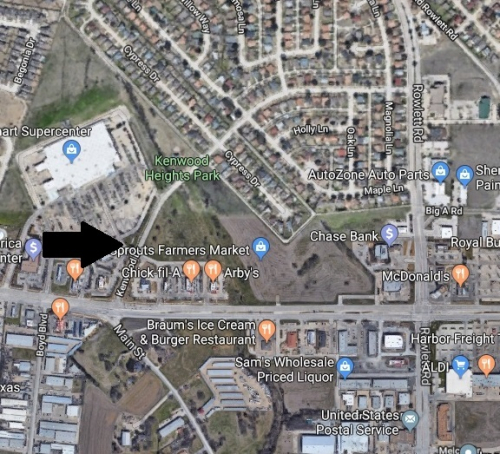
Here’s one we’ve been waiting to drop. In KMS Retail Rowlett, LP v. City of Rowlett, No. 17-0850 (May 17, 2019), a deeply divided Texas Supreme Court held that a statute — adopted in response to Kelo — which seems to limit eminent domain power, also contains a massive hole: according to the court
Friday Reading: Pipeline Injunctions, Justifying Kelo, And Maui Groundwater Case
Here’s what we’re reading today, in between real work:
- “Rural families’ eminent domain fight arrives at high court” from Pamela King at E&E News, about this case we’ve been following. Injunctions and “take first, pay later.”
- “John Paul Stevens Is Still Trying To Defend the Kelo Debacle” from Damon
CA3 Amicus Brief: “Paired Sales” Isn’t Only Way To Prove Market Stigma Damages
Yesterday, on behalf of our Owners’ Counsel of America colleagues, we filed this request asking the U.S. Court of Appeals to consider our amicus brief in support of the property owners in a natural gas act pipeline case.
The issue is what evidence the trier of fact in a compensation trial may consider about “stigma”
AZ App: Private Utility Does Not Effect A Taking “until after trial and payment”
The Arizona Court of Appeals’ opinion in Arizona Electrical Power Cooperative v. DJL 2007 LLC, No. 1 CA-CV 16-0097 (May 9, 2019), is about the date of valuation in eminent domain, but beyond that is interesting to us because it sheds light on a case we’ve been following about natural gas pipelines and the