
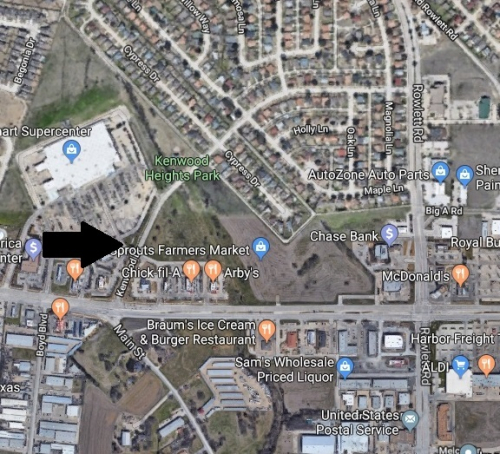
Here’s one we’ve been waiting to drop. In KMS Retail Rowlett, LP v. City of Rowlett, No. 17-0850 (May 17, 2019), a deeply divided Texas Supreme Court held that a statute — adopted in response to Kelo — which seems to limit eminent domain power, also contains a massive hole: according to the court
May 2019
Friday Reading: Pipeline Injunctions, Justifying Kelo, And Maui Groundwater Case
Here’s what we’re reading today, in between real work:
- “Rural families’ eminent domain fight arrives at high court” from Pamela King at E&E News, about this case we’ve been following. Injunctions and “take first, pay later.”
- “John Paul Stevens Is Still Trying To Defend the Kelo Debacle” from Damon
…
CA3 Amicus Brief: “Paired Sales” Isn’t Only Way To Prove Market Stigma Damages
Yesterday, on behalf of our Owners’ Counsel of America colleagues, we filed this request asking the U.S. Court of Appeals to consider our amicus brief in support of the property owners in a natural gas act pipeline case.
The issue is what evidence the trier of fact in a compensation trial may consider about “stigma”…
AZ App: Private Utility Does Not Effect A Taking “until after trial and payment”
The Arizona Court of Appeals’ opinion in Arizona Electrical Power Cooperative v. DJL 2007 LLC, No. 1 CA-CV 16-0097 (May 9, 2019), is about the date of valuation in eminent domain, but beyond that is interesting to us because it sheds light on a case we’ve been following about natural gas pipelines and the…
HAWSCT: PUC Must Consider Whether Renewable Biofuel Energy Plant Might Impact Property Right To Clean And Healthful Environment
By Robert H. Thomas on
On one hand, there’s nothing really new in the Hawaii Supreme Court’s opinion in In re Hawaii Electric Light Co., No. SCOT-17-630 (May 10, 2019), because the court has previously told us the answers to each the component questions in the case:
- On the ultimate question posed in the title, must the PUC consider
…
New Cert Petition: Fifth Amendment Requires California To Spread The Cost Of Wildfire Inverse Condemnations To Ratepayers
Remember that Christopher Nolan movie from a few years ago, “Inception,” with its dream-within-a-dream storyline?
Well, that’s what a recently-filed cert petition which asks the U.S. Supreme Court to jump into California’s inverse-condemnation-liability-for-wildfires issue reminds us of with its taking-within-a-taking argument, as detailed in the Question Presented:
Whether it is an uncompensated…
PruneYard Undone: California’s Union Easement – Which Invites Labor Organizers To Enter Private Property – Isn’t A Physical Taking
The title of this post may have you wondering, especially the part about how a regulation that invites others to physically enter private property, is determined by a court to not be a physical taking. (The court also hints at looking at a physical taking under Penn Central, and not by applying per se…
Tuesday Takings And Property Round-Up
Here’s what’s on the reading list for today:
- “Who owns the fertilized eggs? It’s a conundrum” from our Owners’ Counsel colleague Dwight Merriam, a piece about the property aspects of the question.
- “Dismissal of review in takings case restored precedential effect of Court of Appeal opinion” – the California Supreme
…
Flooding Was A Taking. But What Kind Of Taking?
By Robert H. Thomas on
Posted in Inverse condemnation
The city conceded that its street and storm water project resulted in a neighboring commercial property flooding three times, and that “the evidence supported a prima facie case of a ‘partial taking’ of Lenertz’s property.” So far, so good.
But Lenertz had alleged the city’s project caused past and future flooding, and resulted in a…
SCOTUS Reply Brief Clears Up Misconception About Eminent Domain Actions
Here’s the Reply Brief in a case which we’ve been following (and in which we filed this amici brief). This is the one in which landowners are challenging the district court’s issuance of an injunction in a Natural Gas Act taking which allow a private condemnor to obtain immediate possession of the land being…