
You should be following along with Clint Schumacher’s Eminent Domain Podcast on your own, but in case you missed this one in your feed, be sure to check out the latest episode, which features U. Virginia Law School prof Molly Brady talking about “damage clauses” in state constitutions.
Staten Island Wetlands Regulations Are A Penn Central Taking. A Penn Central Taking!
We’re in court today (so blogging about lawyering must yield to the actual practice of lawyering) so we’re going to just post this here, and let you consider it. And maybe wait for our New York City colleagues (who just happen to represent the property owner), to weigh in via their eminent domain blog.
West Virginia: Takings Clause Protects More Than Just Land – Owners Of Personal Property Can Bring Inverse Condemnation Claims
The title of West Virginia Lottery v. A-1 Amusement, Inc., No. 16-1047 (Nov. 13, 2017) alone may not give you an indication that this is a takings case, but yes, it’s a takings case.
As the title might indicate, it’s a case involving the state-run lottery and video lottery machines. If we’re reading
Georgia: No True Taking – Challenge To City’s Refusal To Rezone Isn’t Really Inverse Condemnation
The Georgia Supreme Court’s analysis in Diversified Holdings, LLP v. City of Suwanee, No. S17A1140 (Nov. 2, 2017) reminded us of that old trope from logic, “no true Scotsman.”
According to a completely reliable source (Wikipedia):
No true Scotsman is a kind of informal fallacy in which one attempts to protect a
Monday Reading: “When the Government Grabs — the Border Wall, Pipelines and New Challenges to Eminent Domain”
Border walls, pipelines, and state takings law. All topics we dig. So for today’s reading, we recommend “When the Government Grabs — the Border Wall, Pipelines and New Challenges to Eminent Domain,” an interview with U. Va. lawprof Molly Brady on these topics. Check it out.
PS – Professor Brady will be speaking on another
Queen: Feds Took** Our Crown Lands!
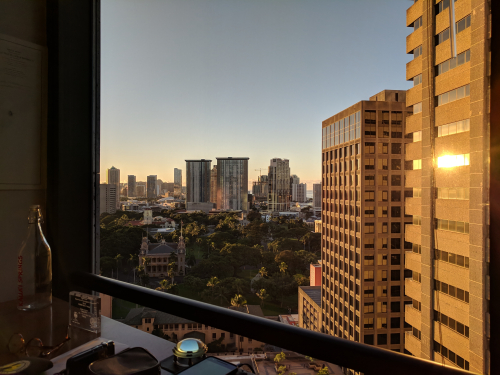
Tomorrow, Saturday, November 11, 2017, is the 100th anniversary of the death of Hawaii’s last monarch, Liliuokalani. The Honolulu Star-Advertiser has a story about the commemoration events.
But here’s a historical tidbit about her which our readers might find interesting: did you know that after she was deposed, and after Hawaii became a
Connecticut Creates Lower Court Split? Split Your Takings Claim At Your Own Res Judicata Risk
We all know that if you are challenging a federal government action as either beyond the agency’s authority (or is unconstitutional), and as a taking, you’ve got to split your claim between a U.S. district court, and the Court of Federal Claims. The district court considers challenges to the validity of the government action, while
ALI-CLE Eminent Domain Conference Hotel Block Selling Out – Overflow Available
We’re looking forward to a good crowd at the upcoming ALI-CLE Eminent Domain and Land Valuation Litigation Conference, when we shall converge on Charleston, SC, January 25-27, 2018. We’ve received word that our main conference hotel, the Francis Marion, has sold out.
But if you haven’t reserved your space yet, don’t despair. The
New Cert Petition: Property Owners Entitled To Jury & Article III Judge In Federal Inverse Cases
Here’s the cert petition which has just been filed in a case we’ve been following since it was instituted in the District Court, Brott v. United States.
The case presents the deceptively simple question of whether property owners who sue the federal government for a taking are entitled to both an Article III
Joe Waldo Elected To American Law Institute
This just in: friend and colleague, Norfolk, Virginia’s Joe Waldo (already known to many of you, and the long-time planning chair of ALI-CLE’s Eminent Domain and Land Valuation Litigation Conference) has been elected to the American Law Institute as one of its 35 new members.
Congratulations, Joe, on this significant honor!
This is a