
January 2013

Update: the briefs are posted here.

In a case we’ve been following involving the Koa Ridge Makai residential housing project on Oahu, the Hawaii Supreme Court yesterday issued an order accepting the Sierra Club’s application for a writ of certiorari in Sierra Club v. Castle & Cooke Homes Hawaii, Inc., No. SCWC-11-0000625.

In
William W. Wade, Ph.D., a resource economist with the firm Energy and Water Economics (Columbia, Tennessee) is a frequent author and speaker on the topic of regulatory takings and is familiar to readers of this blog. (His next gig is a talk on Penn Central and inverse condemnation at the 12th Annual Texas Eminent Domain

In 2009, in the “Superferry” case, the Hawaii Supreme Court, after years of hinting (but not finding a suitable vehicle), formally adopted the “private attorney general’ doctrine allowing attorneys’ fee shifting in certain select circumstances. See Sierra Club v. Dep’t of Transp., 202 P.3d 1226 (Haw. 2009). Under that doctrine, a court evaluating a

In “When Government Takes You Hostage,” lawprof Richard Epstein weighs in on the issues in Koontz v. St Johns River Water Mgmt Dist., No. 11-1447 (cert. granted Oct. 5, 2012). In that case, the U.S. Supreme Court will address whether the “essential nexus” and “rough proportionality” standards of Nollan and Dolan are

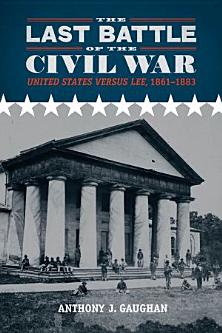
LastbattlebookYou know how we’re always saying that the provisions in the Takings Clause are “self-executing,” that even in the absence of a waiver of sovereign immunity, the Tucker Act, and section 1983, property owners would still be able to maintain a claim for compensation? Well here’s an article that explains that how that rule was