
Ah, Williamson County. We’ve ranted about it before, so we won’t do so here (again). But takings mavens know that a property owner must meet two tests before she can raise a takings claim against a state or local government in federal court: the state or local government must have reached a final
Tennessee Finally Recognizes Regulatory Takings Cause Of Action – A Quarter Century After The US Supreme Court Wrongly Assumed It Did
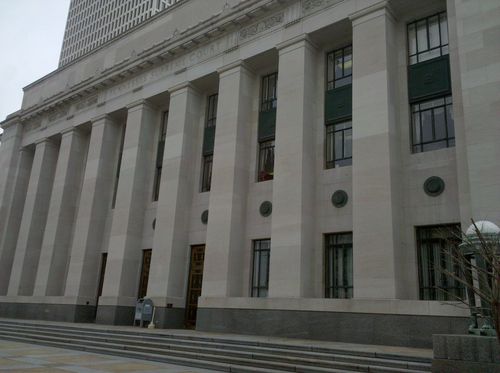
Tennessee Supreme Court, Nashville
In Phillips v. Montgomery County, No. M2012-00737-SC-R11-CV (Aug. 18, 2014), the Tennessee Supreme Court held that a property owner could recover under the state’s inverse condemnation statute, Tenn. Code Ann. § 29-16-123, for a regulatory taking:
We hold that, like the Takings Clause of the United States Constitution, article I
Circuit Split Alert: Second Circuit Says Williamson County Ripeness Applies To Due Process
When the one side or the other in the public debate complains about “judicial activism,” they’re usually talking about judges legislating from the bench — finding new rights, reading words into statutes that aren’t there, and the like. But that species of judicial activism doesn’t bother us all that much since we rarely see it
Upcoming CLE Trifecta: Hot Topics In Land Use Law, Heirs Property, Urban Ag (July 15, 2014)
There’s still time to register for one or more upcoming CLE programs sponsored by the ABA Section of State and Local Government Law:
- Hot Topics in Land Use Law (July 16, 2014, 2:00 – 3:30pm ET)
- Legal Pickles, Planning Tools, and Case Studies in Urban Agriculture (July 15, 2014, 2:00 – 3:30pm ET)
New Takings Blog – “Takings Litigation”
Check this out: Vermont lawprof John Echeverria has launched a blog about “Takings Litigation.” Which, given the predilections of the author (organizer of the anti-takings conference, and recently presented with the Koontz Catatonia Award), probably should be called “Takings Defense” or the “No Takings Blog,” but who are we to say?
Bridge Aina Lea 9th Cir Oral Argument Report: Hawaii Land Use Commission’s Immunity For Reclassification
Earlier, we posted the recording of the Ninth Circuit’s recent oral arguments in Bridge Aina Lea, LLC v. Chock, Nos. 12-15971, 12-16076, a case in which the court is considering whether State of Hawaii Land Use Commissioners have immunity from civil rights lawsuits, among other issues. The essence of the plaintiff’s allegations is that
11th Circuit: Facial Challenge To Ordinance Must Be Brought When Ordinance Adopted
Remember that decision by a U.S. District Court in Tampa, Florida last year that we crowed about? The court held that a county’s “Right of Way Preservation Ordinance” which allows it to land bank for future road corridors by means of an exaction is “both coercive and confiscatory in nature and constitutionally
HAWSCT Briefs In Bridge Aina Lea: Takings, State Land Reclassification, And Orders To Show Cause
Here are the merits briefs in an important case set for argument later this month in the Hawaii Supreme Court.
The litigation is a series of two lawsuits that originated in state court in the Third Circuit (Big Island), one an original jurisdiction civil rights lawsuit, the other an administrative appeal. The essence of the
9th Cir Says “Let’s Wait” On Hawaii Supreme Court To Rule In Bridge Aina Lea
The final words in most appellate oral arguments by the jurists are usually something along the lines of “we’ll let you know.” In Hawaii state courts, the Chief Justice signals you’re done with “we’ll take the case under advisement,” while in many federal courts, the presiding judge informs you “the case is submitted.” Or words
9th Circuit Orals In Bridge Aina Lea: Pullman Abstention, Qualified Immunity, And “Haunted By Williamson County”
Here is the oral argument recording in Bridge Aina Lea, LLC v. Chock, Nos. 12-15971, 12-16076, case argued yesterday in the Ninth Circuit at its session in Honolulu. As we previewed, the issues involved Pullman abstention and immunity. As for Williamson County ripeness, an issue the court asked the parties to brief separately