
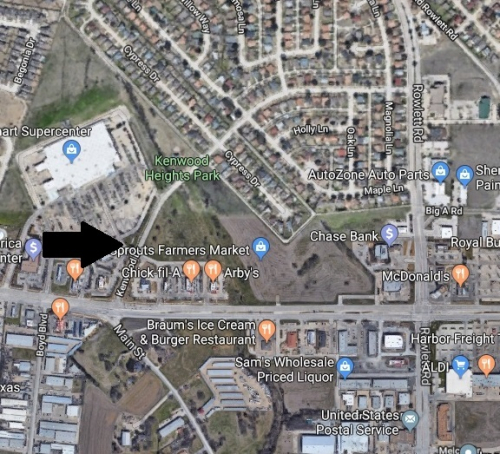
Here’s one we’ve been waiting to drop. In KMS Retail Rowlett, LP v. City of Rowlett, No. 17-0850 (May 17, 2019), a deeply divided Texas Supreme Court held that a statute — adopted in response to Kelo — which seems to limit eminent domain power, also contains a massive hole: according to the court
Eminent Domain | Condemnation
Friday Reading: Pipeline Injunctions, Justifying Kelo, And Maui Groundwater Case
Here’s what we’re reading today, in between real work:
- “Rural families’ eminent domain fight arrives at high court” from Pamela King at E&E News, about this case we’ve been following. Injunctions and “take first, pay later.”
- “John Paul Stevens Is Still Trying To Defend the Kelo Debacle” from Damon
…
CA3 Amicus Brief: “Paired Sales” Isn’t Only Way To Prove Market Stigma Damages
Yesterday, on behalf of our Owners’ Counsel of America colleagues, we filed this request asking the U.S. Court of Appeals to consider our amicus brief in support of the property owners in a natural gas act pipeline case.
The issue is what evidence the trier of fact in a compensation trial may consider about “stigma”…
AZ App: Private Utility Does Not Effect A Taking “until after trial and payment”
The Arizona Court of Appeals’ opinion in Arizona Electrical Power Cooperative v. DJL 2007 LLC, No. 1 CA-CV 16-0097 (May 9, 2019), is about the date of valuation in eminent domain, but beyond that is interesting to us because it sheds light on a case we’ve been following about natural gas pipelines and the…
Tuesday Takings And Property Round-Up
Here’s what’s on the reading list for today:
- “Who owns the fertilized eggs? It’s a conundrum” from our Owners’ Counsel colleague Dwight Merriam, a piece about the property aspects of the question.
- “Dismissal of review in takings case restored precedential effect of Court of Appeal opinion” – the California Supreme
…
SCOTUS Reply Brief Clears Up Misconception About Eminent Domain Actions
Here’s the Reply Brief in a case which we’ve been following (and in which we filed this amici brief). This is the one in which landowners are challenging the district court’s issuance of an injunction in a Natural Gas Act taking which allow a private condemnor to obtain immediate possession of the land being…
New Article: Imperfect Takings
A law journal article worth reading (short, not too many distracting footnotes) on takings theory.
In Imperfect Takings, 46 Fordham Urban Law Journal 130 (2019), Professor Shai Stern writes about what he calls the “three safeguards” in eminent domain (due process, public use, and mandatory compensation), and how to evaluate the legality of takings…
W Va: Decision To Take “Uneconomic Remnant” Lies Solely With Agency (Not The Owner, Not The Court)
As part of a federally-funded highway project, the WV DOT took a portion of parcels belonging to several property owners. The partial takings ended up landlocking one tract. So the DOT proposed building an access road to that parcel. The owners didn’t think this was the best idea, because “maintaining a road in that area…
Arizona: Eminent Domain Isn’t Voluntary (Even A “Friendly” Condemnation)
The Arizona Corporations Commission has authority to regulate the sale, lease, assigning, mortgage of a public utility’s assets, including when those assets are “otherwise dispose[d] of.” These transactions need the Commission’s approval.
The city intended to exercise eminent domain to take the assets of a water utility. This sure looked like a “friendly” condemnation: the…
California Inverse Condemnation And Wildfires: The Comic
Thanks to Professor Michael Wara’s Twitter feed, here is what might possibly be the first and only example of a comic strip devoted to inverse condemnation.
Yes, it is on an advocacy site (the International Brotherhood of Electrical Workers Local 1245), and it doesn’t really go into the details of the doctrine…