
2015

Wright_home_place

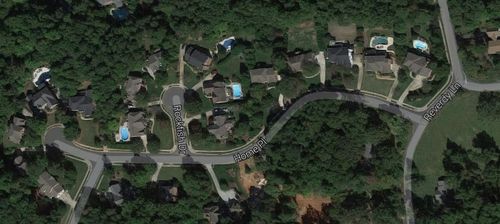
In Town of Matthews v. Wright, No. COA14-943 (Apr. 21, 2015), the North Carolina Court of Appeals invalidated a taking, the stated purpose of which was to make a portion of a private road into a public street. 

A taking to open a private road to the public? That sure does sound like a

Pic_shot_1429716535697

We were in the neighborhood, so decided to drop in on today’s Supreme Court oral arguments in Horne v. U.S.D.A., No. 14-275, the case about the taking of California raisins. 

The arguments ended a few minutes ago, and here’s our initial thoughts:

  • The Leviathan of the regulatory state was on full display today, with

The first sign that the opinion wasn’t going the way of the Golden State Water Company — a private utility that provides water to the City of Ojai, California — was right there in the first paragraphs, which contain the one-two punch of labeling the company both a monopolist, and one that price gouges about

Here’s a couple of editorials about the Ramsey case, recently decided by the Virginia Supreme Court. [Disclosure: we filed an amicus brief in support of the Ramseys in that case.]

  • In “Sandbagging, exposed,” the Richmond Times-Dispatch editorial board writes: “Around the country, states that want to take people’s land will sometimes pull

On Wednesday, April 22, 2015, the Supreme Court will hear oral arguments in Horne v. U.S.D.A., No. 14-275, the second time this case has been to the Court. 

The first time around, the unanimous Court held that the Hornes could raise the Takings clause as a defense to the USDA’s action to enforce a

The Virginia Supreme Court today came back with an opinion in Ramsey v. Commissioner of Highways, No, 140929 (Apr. 16, 2015), a eminent domain case in which we filed an amicus brief in support of the property owner. 

Under Virginia’s condemnation procedures, as a prerequisite to a court exercising jurisdiction over an eminent domain

Here’s the latest from the Hawaii Supreme Court on the joinder of parties under Rule 19, where there’s a claim that an absent party is “indispensable” and thus the case should be dismissed. Bottom line is that an absentee should be joined if its presence is needed, and the “indispensable” determination only needs to be

In 2011, Missouri adopted a statute that looks to us like a slightly modified “right to farm” law:

The statute supplants the common law of private nuisance in actions in which the “alleged nuisance emanates from property primarily used for crop or animal production purposes.” Unlike a common law private nuisance action, section