Rail

Professor Richard Epstein shares his insight about the U.S. Supreme Court’s recent 8-1 decision in Marvin M. Brandt Revocable Trust v. United States, No. 12-1173 (Mar. 10, 2014).

The issue in the case was whether the federal government retained an “implied reversionary interest” when it issued railroad patents to private landowners, or whether these grants were subject

Our friend Paul Schwind has been keeping us up to date on the progress, vel non, of the legal challenge to the Honolulu rail project in the United States District Court for the District of Hawaii. We last reported on the status of this litigation on February 18, 2014, when the Ninth Circuit issued

Here are some reports and commentary on the Supreme Court’s opinion in Marvin M. Brandt Revocable Trust v. United States, No. 12-1173 (Mar. 10, 2014).

As we predicted it would after oral argument, today the U.S. Supreme Court ruled in the property owner’s favor in Marvin M. Brandt Revocable Trust v. United States, No.12-1173 (Mar. 10, 2014). Chief Justice Roberts wrote for the entire Court less Justice Sotomayor, who filed a solo dissent. SCOUTSblog posts a summary of

Ninth_circuit

Update 2/19/14: the Honolulu Star-Advertiser has this report (“The appellate court decision was an ‘overwhelming victory for the city from an ideologically diverse panel, said Robert Thomas, a Hono­lulu-and San Francisco-based attorney who attended the hearing in August. The panel comprised Judges Stephen Rein­hardt, Mary Schroe­der and Andrew Hur­witz. ‘All three of them agreed. They

Update: a deeper review of the opinion here.

The Ninth Circuit has affirmed the District Court’s decision upholding for the most part the environmental review of the Honolulu rail project. Here’s the summary from the court: 

The panel affirmed the district court’s dismissal of plaintiffs’ claims under the National Environmental Policy Act and Section 4(f) of

Hey, that rhymes! Today, in a not-entirely-unexpected move, the U.S. Supreme Court granted cert and agreed to review United States v. Brandt Revocable Trust, No. 09-8047 (Fed. Cir. Sep. 11, 2012).

We say not-unexpected for two reasons. First, the Tenth Circuit expressly noted its ruling created a circuit split (that’s catnip to counsel considering

The federal government has filed its brief responding to the cert petition which asks the Supreme Court to review a Tenth Circuit decision and resolve a lower court split about the meaning of the term railroad “right of way” as used in an 1875 federal statute and federal land patents subject to the 1875 Act.

13.EMDHI

Here are links to the cases and other materials (and more) we spoke about at today’s conference on Eminent Domain and Condemnation in Hawaii:

Update: More here from the Star-Advertiser.

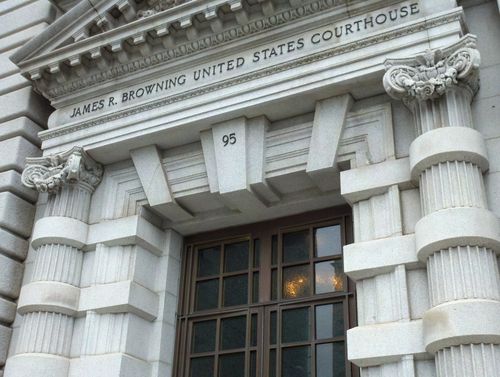
Courts, as “temples of justice” can be intimidating places, especially for the advocates who appear there. And when you make it a federal court, the level goes up. And when you are in a storied courthouse such as the Ninth Circuit’s headquarters in San Francisco surrounded by