
Some states (mostly in the Midwest, to our knowledge) don’t really recognize inverse condemnation” claims, at least as we in other jurisdictions use that term. Instead of recognizing a direct cause of action for compensation and damages when government has taken property physically or by regulation without first instituting an eminent domain case, these jurisdictions
University of Hawaii Law Review – Now (Finally) On-Line

We’re big fans of the University of Hawaii Law Review. Not just because it’s the flagship publication of our alma mater, but mostly because it publishes some worthy and useful articles from time to time (including ours).
But it’s always bothered us that the subscription service was really Old School. As in to
SC: Damage Caused By SWAT Isn’t A Taking
In the course of negotiating a successful hostage situation with tear gas, flash-bang grenades, and a bulldozer, the Spartanville, SC police department damaged a convenience store. So badly that the owners “were later asked by the City to tear it down as it did not comply with ordinances regarding vacant commercial buildings.” After the owners said
Wrapping Up Our First Decade

We published our first posts on this blog on August 31, 2006, ten years ago. In law blog years, that’s a lot of time. Heck, in regular years, that’s a lot of time. In the intervening decade, we’ve nailed up quite a few posts. This one is the 3,000th, a nice even number.
It’s
Visitors At The Volcano: Is The NPS Nuts?

Our law partner, Ken Kupchak, a scientist and lawyer, spends a lot of time on the Big Island. Volcano, specifically. So when he recently circulated these photos, taken on a hike-and-bike out to where the lava meets the sea, it reminded us of an article we jointly authored a few years ago about issues
Adieu, Toots
A short detour on this Monday to note the passing of the great Belgian-American jazzman Toots Thielemans. There’s no connection to the usual topics covered here, only that his music has kept us company during many long hours of writing and reading briefs and articles, soothing our nerves and inspiring us. We saw him
ND: Entry Statutes Are Not Takings, Even If There’s A Physical Invasion
Entry statutes are in the news lately. As we reported here for example, the California Supreme Court recently saved California’s entry statute from unconstitutionality by implying a requirement for a jury trial (and other eminent domain protections) when the entries which the condemnor seeks to undertake constitute takings.
In that case, the party seeking entry
HAWSCT Agrees To Review Eminent Domain Case: Larger Parcel, Interest, And Reducing The Deposit
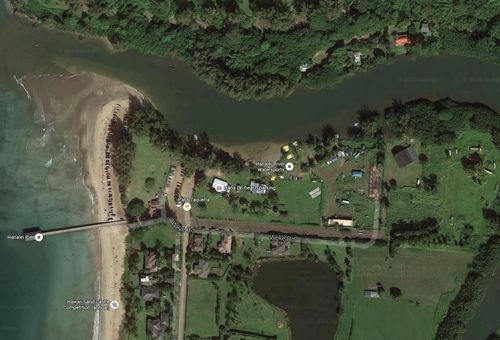
In a case we’ve been following in which the County of Kauai is condemning several Hanalei-area parcels to expand an adjacent public beach park, the Hawaii Supreme Court has accepted certiorari and agreed to review these three questions:
QUESTION NO. 1.: Must two parcels physically abut in order for the jury to consider whether they
Oregon: Owner’s Right To Remove Historic Designation Vanishes When Property Transferred

Come on, you can admit it: reading judicial opinions about grammar rules and legislative history is about as exciting as watching paint dry. Or maybe it is more appropriate in this case to talk about old paint peeling. Because the Oregon Supreme Court’s opinion in Lake Oswego Preservation Society v. City of Lake Oswego
In The Bluest Of Blue States, 9th Circuit Rebuffs (For Now) Attempt To Bar Republican Voters From The Only Election That Matters
You may call us anti-Holmesian, but we’re wary of any judicial opinion that has “clear and present danger” as its standard of review. Like “shouting fire in a crowded theater,” this legal meme gives more heat than light in our estimation, and doesn’t really tell you much.
But the phrase was at the