Eminent Domain | Condemnation

Here’s the property owners’ Merits Brief, filed earlier this week in the case in which the U.S. Supreme Court is considering the “parcel as a whole” doctrine in regulatory takings (also known as the “denominator” issue).  

The Wisconsin Court of Appeals held that the owners did not have their property taken because
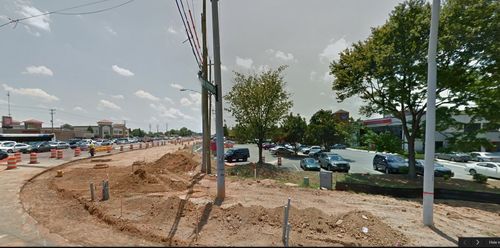
Charlotte

Urban property at the intersection of two main thoroughfares can be pretty valuable. It’s about location, for sure, but it’s also about visibility and the ability to be seen from four directions.

Charlotte, NC needed a part of such property for a rail line extension. The rail will be in the middle of the road

When you raise 13 issues on appeal, you shouldn’t be surprised if the court balks at analyzing them all. That was the case in City of Gulfport v. Dedeaux Utility Co., No. 2014-CA-00556-SCT (Mar. 24, 2016), where the Mississippi Supreme Court didn’t address the majority of the points raised by the city on

Early next month, the California Supreme Court will hear oral arguments in two cases which we’ve been closely following:

  • Tuesday, May 3, 2016, 9:00 amProperty Reserve, Inc. v. Superior Court, No. S217738. The court is considering whether California’s “entry statute” which allows a condemning agency to enter property for testing and inspection

The only issue in Caffe Ribs, Inc. v. Texas, No. 14-0193 (Apr. 1, 2016) was whether the jury could hear evidence proffered by the property owner that the delay in cleaning up the land to make it marketable could have been attributable to the government. The trial court said no, and the court of

As part of a railroad realignment project, Salt Lake City needed B’s land. But B wouldn’t sell, and since B’s land was already committed to public use as a power substation, the city had doubts whether it could condemn it. So the city and B agreed that B would voluntarily give the city the land

Rhode Island has a provision in its constitution which allows condemning agencies to take more property than they might actually need “for actual construction” when building “public highways, streets, places, [and] parks or parkways.”  See R.I. Const. art. VI, § 19. This provision also requires that in the event the condemnor doesn’t use

20160131_103348

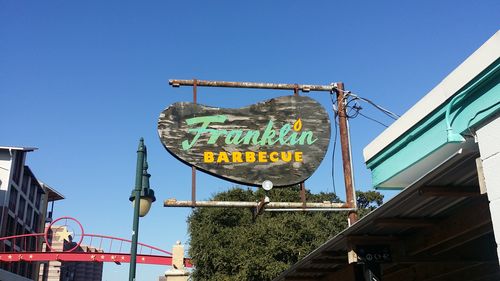
The photo above has pretty much nothing to do with today’s case, except it also involves a Texas barbecue joint. More on the photo after a short review of the Texas Court of Appeals’ decision in Lenox Barbeque and Catering, Inc. v. Metro. Transit Authority of Harris Cnty., No. 14-14-00383-CV (Feb. 23, 2016).

Lenox

Here’s the long story short in Metropolitan Theater, LLC v. YES Prep Public Schools, Inc, No. 01-15-00480 (Feb. 25, 2016), a decision from the Texas Court of Appeals:

The theater sued “YES Prep Public Schools” because (allegedly), the school screwed up the theater’s agreement to buy a parcel of land from a third party.

Colorado’s Constitution prohibits the use of proceeds from the state lottery, which are used to fund the “Great Outdoor Colorado Program” Trust Fund from being “used to acquire real property by condemnation through the power of eminent domain.” Colo. Const. art. XXVII, § 9. 

The Town of Silverthorne used trust fund money on a recreational trail project