Here’s the latest in an issue we’ve been following.

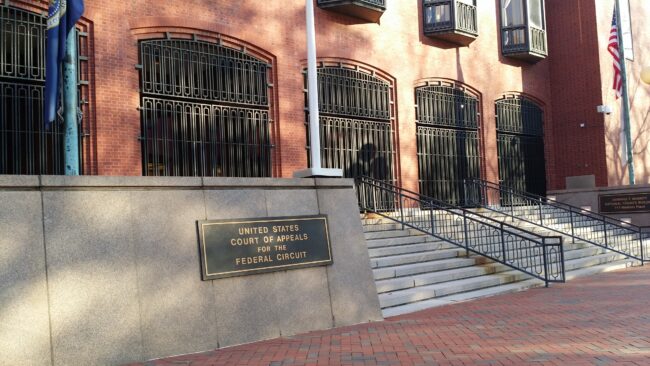
In Alban v. United States, No. 23-1363 (Dec. 22, 2025), the U.S. Court of Appeals for the Federal Circuit affirmed the Court of Federal Claims’s judgment concluding that the failure of the Corps of Engineers to properly operate two dams, which resulted in upstream flooding when Hurricane Harvey struck was a “permanent” taking.

The dams were built nearly 100 years ago to reduce downstream flood risks. The reservoirs are usually dry, and fill up when it rains a certain amount. At the time of construction, the Corps considered acquiring property which would be inundated when the reservoirs filled up to a certain level, but ultimately decided to not do so. The Corps made the decision to acquire only the properties predicted to be flooded in smaller storms. The Corps understood that flooding of additional property was predicted in more

Continue Reading CAFED: Like We Said Before, “Inevitably Recurring” Flooding Is A Taking
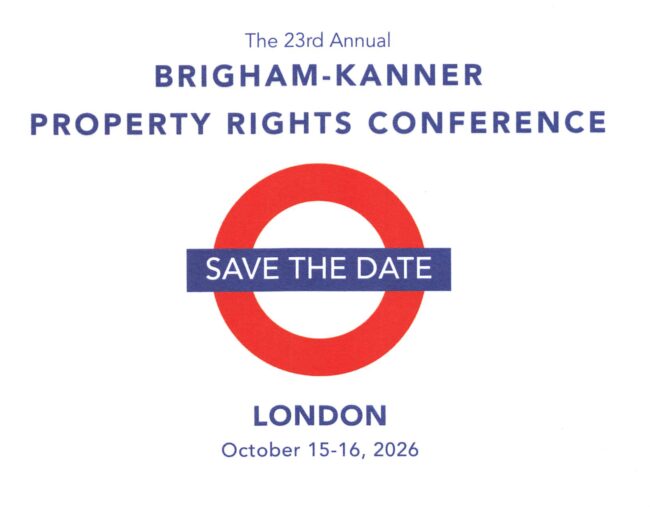

William and Mary Law School’s Property Rights Project has announced that Professor James E. Penner (Kwa Geok Choo Professor of Property Law at the National University of Singapore) will be awarded the 2026 Brigham-Kanner Property Rights Prize.

This is in keeping with the international theme in the 2026 Brigham-Kanner Property Rights Conference, which will be in London, October 15-16, 2026.

It isn’t too early to make your plans and save the date on your calendars.

More on Professor Penner and the Prize here.

Plan on joining us in London later this year!

Continue Reading 2026 Brigham-Kanner Property Rights Prize To Professor James Penner

We start off 2026 with some good news: after a short hiatus (explained in the episode), Bobby Debelak’s Eminent Domain Podcast is back with Episode 150: “Year in Review and ALI-CLE Preview.”

And we get to join him!

Here’s how Bobby describes the episode:

Bobby returns to the podcast after a brief hiatus due to the birth of a child. Robert Thomas returns to the show to talk about 2025 in review. The two cover twenty years of Kelo, an update on COVID takings, the year with a new presidential administration and legislative change, and a few key cases around the country. Robert looks ahead to the 2026 [ALI-CLE] conference in Savannah, GA. The cross exam is a musical themed head-to-head from the 80s.

Check it out. We have a bit of fun (esp. the “cross exam” portion).

Listen above, or download it here.

Continue Reading Welcome Back, Bobby: We Return To The Eminent Domain Podcast To Talk The Year That Was, ALI Savannah, And 80’s Music

In an earlier post, we covered the highlights of 2025.

There are quite a lot to choose from, but here’s our curated list of the year’s lowlights. As in our highlight list, we’re affirmatively omitting cases in which we had a hand.

Here we go:

Cert Denial of the Year: GHP Management Corp. v. City of Los Angles, No. 24-435 (U.S. June 30, 2025). We include this one because there’s a clear circuit split, and the lower courts’ misapplication of the Yee theory (forbidding or delaying a lessor from recovering possession should not be analyzed as a physical invasion taking, but is treated as a mere regulation on use because the lessor voluntarily opened the property to the offender) continues, mostly because the Supreme Court hasn’t acted.

Worst Regulatory Takings Case of the Year: Green Room LLC v. State of Wyoming, No. 24-853 (10th

Continue Reading Adieu To The Highs And Lows Of 2025 (Part II: The Lows)

It is time to bid farewell to the Year 2025, and our mind wanders back over the last 364 days in an attempt to ascribe meaning, a theme — a vibe — to the year that was.

Scientists tell us that this is just another trip around the Sun, but we humans like to assign meaning to a measure of time, so here’s our thoughts on what will stick with us about 2025.

Barista’s note: in the interest of objectivity, we shall exclude our shop’s cases such as this one: “Fla Ct App (en banc) In Takings Case: ”failing to vindicate a right expressly stated in the Constitution is not judicial restraint but judicial abnegation. That we must not do.'”

That said, here we go with what we think were the highlights of 2025 (lowlights are posted here in Part II).

Regulatory Takings Case of the Year:

Continue Reading Adieu To The Highs And Lows Of 2025 (Part I: The Highs)

This one is worth your time to review.

In HRT Enterprises v. City of Detroit, No. 23-1847 (Dec. 22, 2025), the U.S. Court of Appeals for the Sixth Circuit affirmed the district court’s entry of summary judgment in favor of the plaintiff/owner and a jury verdict on just compensation.

The case is notable not only for the fact it’s a property owner win, but that the usual procedural hurdles an owner is forced to jump through were successfully navigated. For example, the city’s assertion that the takings claim was both not ripe, and res judicata. Yes, in the city’s view, the claim was simultaneously too early and too late.

The first sentence of the opinion tells you that the focus of the analysis is going to be the res judicata question:

After losing in state court, HRT Enterprises sued the City of Detroit in federal court under a

Continue Reading CA6 Affirms Detroit Land Bank Taking: New Facts Defeat Res Judicata

Sometimes when you read a court opinion you imagine there’s a big gap between the objective, sterile words on the page and the reality of the situation.

The U.S. Court of Appeals for the Seventh Circuit’s opinion in O’Donnell v. City of Chicago, No. 24-2946 (Dec. 22, 2025) is one of those.

The words on the page reveal the court held that a Chicago ordinance which authorizes the city to seize vehicles for traffic violations — even other cars the violator owns — is not a taking because its “an exercise of the City’s police power to enforce its traffic code, and thus isn’t a taking.” Slip op. at 5. (We have problems with that conclusion, but more on that below.)

But reading the opinion gives a hint of the off-page reality on the ground.

Dig this. Get a traffic ticket in Chicago, and you can either challenge it

Continue Reading CA7: No Taking When City Forfeited Cars For Traffic Violations – Even Cars Not Involved In The Violation

Here’s one you don’t want to miss. Lawprof Shelley Ross Saxer has published “Forfeiture Takings, Police Power, and Necessity Destruction,” 80 U. Miami L. Rev. 147 (2025).

Here’s the Abstract:

Civil forfeiture laws allow law enforcement to seize property when there is probable cause it has been used or possessed in violation of legal rules, often before an owner has a chance to contest the government’s seizure in court. In the criminal context, forfeiture is typically an in personam action that requires a criminal conviction and is part of a defendant’s sentence. In the civil context, however, forfeiture is an in rem proceeding brought against the property derived from or used to commit an offense––not against the person who committed the offense. As such, a civil forfeiture may not require a criminal conviction or predeprivation hearing, and, under the “guilty property” theory, developed in England before eventually being

Continue Reading New Article: Shelley Ross Saxer, “Forfeiture Takings, Police Power, and Necessity Destruction,” 80 U. Miami L. Rev. 147 (2025)