
April 2015

If you have plans to be in Wisconsin or environs in June, the Wisconsin chapter of the Appraisal Institute is putting on its 12th annual Condemnation Appraisal Symposium at the Marquette Law School on Wednesday, June 3, 2015.

One of the featured speakers is Mike Berger on “Current National Eminent Domain Issues,” and there will also be presentations about power to take challenges, and thorny appraisal issues, among others.
Here’s the description from the event flyer:

The Condemnation Appraisal Symposium is the go-to event of the year for those real estate and legal professionals who are currently engaged, or who wish to be more involved, in eminent domain matters. This high-level program provides the latest information and open debate on condemnation case law, appraisal techniques and other timely topics presented by attorneys, appraisers, educators, and government officials, while again offering valuable networking opportunities with those practitioners active in this specialty

Continue Reading Upcoming Wisconsin Appraisal And Eminent Domain Law Conference

We were all ready to write up the California Court of Appeal’s latest opinion about our favorite subtopic — the recovery of attorneys’ fees in eminent domain actions — when our colleagues at the California Eminent Domain Report beat us to it (“Court Clarifies Rules for Recovery of Attorneys’ Fees in Eminent Domain Actions“).

The case is about fee shifting when the condemnor’s conduct is judged based on its final offer made 20 days before trial. But what about if there are multiple offers, and the trial date moves?

To find out what the court thought about this, read the opinion (People ex rel. California Dep’t of Transportation v. Hansen’s Truck Stop, Inc., No. A133252 (Apr. 24, 2015)), read the post, and enjoy the remainder of your day. 

People ex rel. California Dep’t of Transportation v. Hansen’s Truck Stop, Inc. No. A133252 (Cal….


Continue Reading Cal App On Attorneys’ Fees In Eminent Domain

While we put the finishing touches on our full write-up of last week’s oral arguments in Horne v. U.S.D.A., No. 14-275 (we posted our initial thoughts after attending the Court’s session here), here are other summaries of the arguments:

  • Supreme Court justices appear ready to rule against California raisin board” from the Los Angeles Times, isn’t a purely objective view of the case, and the “meta-message” (the Hornes are ingrates for challenging a program that benefits them) comes through loud and clear. The report also misunderstands the relief which the Hornes seek: “While it appeared clear a majority will side with Horne, it is not clear what this means for other farm products, or even what compensation he is due.” We hope this misconception doesn’t carry over to the Justices, since the Hornes are not seeking just compensation in this action, and only argue that


Continue Reading Horne Oral Argument Round-Up

We’re at a conference with the ABA Section of State and Local Government Law in Philadelphia (talking about eminent domain, public use, just comp, and Horne, inter alia), so we haven’t had the time to read this opinion — issued just a few minutes ago — in detail. But it’s a case we’ve been following keenly, and not just because we filed an amici brief in the case in support of the property owner.

The Texas Supreme Court has issued an opinion in State of Texas v. Clear Channel Outdoor, Inc., No. 13-0053 (Apr. 24, 2015), a case which involves the issue of whether the state DOT took a billboard when it ordered it removed during a road widening project, and if so, how it should be valued. Here’s the bottom line:

Consistent with that case, we conclude that a billboard may be a fixture to be valued

Continue Reading Texas Supreme Court Clarifies Just Compensation For Billboards

Wright_home_place

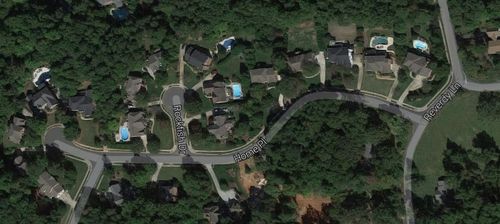
In Town of Matthews v. Wright, No. COA14-943 (Apr. 21, 2015), the North Carolina Court of Appeals invalidated a taking, the stated purpose of which was to make a portion of a private road into a public street. 

A taking to open a private road to the public? That sure does sound like a public use or purpose, no? And had the court of appeals stopped there and not delved deeper, and had the case not had the history which it did, the result might have been different. 

The facts which led the court to that conclusion are worth reading for yourself, but here’s the summary: the homes of the Wrights and five neighbors are located on a dead-end street, Home Place, which connects to the public street system at Revedery Lane. Home Place was originally a private street, but the Town believed there was an implied dedication, and treated

Continue Reading NC App: No Public Use Or Benefit When Town, Fueled By Improper Motive, Condemned Private Street To Make It Public

Compare these two reports, filed just over a month apart, about California’s “high speed” rail system, now underway in the Central Valley:

And here’s a report on an aging mass transit system, BART (there are lessons here for HART, Honolulu’s fledgling municipal rail transit authority):

Continue Reading Rail, Eminent Domain, And Who’s Going To Pay

Pic_shot_1429716535697

We were in the neighborhood, so decided to drop in on today’s Supreme Court oral arguments in Horne v. U.S.D.A., No. 14-275, the case about the taking of California raisins. 

The arguments ended a few minutes ago, and here’s our initial thoughts:

  • The Leviathan of the regulatory state was on full display today, with the government arguing that the seizure of the raisins wasn’t a taking, it was an “in-kind tax” and “just a standard regulation.”
  • The government actually argued that these regulations benefitted the Hornes, and that they were free to do other things with their grapes if they didn’t like the raisin regulations and government seizure.
  • The Monsanto and Leonard cases will figure prominently in the opinions. Read them again. 
  • Our initial tally: there’s enough votes to find that the USDA cannot fine the Hornes for violating the regulations because to do so would be a taking.


Continue Reading SCOTUS Oral Arguments In Horne (Taking California Raisins) – First Report

The first sign that the opinion wasn’t going the way of the Golden State Water Company — a private utility that provides water to the City of Ojai, California — was right there in the first paragraphs, which contain the one-two punch of labeling the company both a monopolist, and one that price gouges about California’s most sensitive subject these days, water.

The opinion is infused with the flavor that Golden State positively deserved to have its property taken by eminent domain:

Monopolists have long been unpopular in this country. When King George III’s choke hold on government led to intolerable levels of taxation, he was forced to divest his holdings. At the end of the nineteenth century, Congress passed the Sherman Antitrust Act with only a single dissenting vote. (26 Stat. 209, as amended, 15 U.S.C. §§ 1-7.) Introducing his landmark bill, Senator Sherman summed up the prevailing sentiment:

Continue Reading Cal App: Municipality Free To Form Community Facilities District To Take Over Water Utility

Here’s a couple of editorials about the Ramsey case, recently decided by the Virginia Supreme Court. [Disclosure: we filed an amicus brief in support of the Ramseys in that case.]

  • In “Sandbagging, exposed,” the Richmond Times-Dispatch editorial board writes: “Around the country, states that want to take people’s land will sometimes pull an underhanded stunt: If the owners don’t accept the state’s first offer, then the state will produce a second appraisal that claims the property is worth much less.

    That’s exactly what the Virginia Department of Transportation did to James and Janet Ramsey when it exercised eminent domain to take part of their land for an off-ramp. The first appraiser pegged the value of the land at more than $246,000. The Ramseys declined. After the first appraiser retired, VDOT brought in another who said the property was worth only $92,127.”

  • In “High court: VDOT’s


Continue Reading Virginia Papers On The Ramsey Case: VDOT “Bullying” And “Sandbagging” Revealed

On Wednesday, April 22, 2015, the Supreme Court will hear oral arguments in Horne v. U.S.D.A., No. 14-275, the second time this case has been to the Court. 

The first time around, the unanimous Court held that the Hornes could raise the Takings clause as a defense to the USDA’s action to enforce a regulatory scheme that Justice Kagan characterized as perhaps “the world’s most outdated law,” and which was derided by Justice Scalia as “a crazy statute.”

The Court remanded the case to the Ninth Circuit, which, to no one’s real surprise, held that the scheme was not a taking. The Court again granted cert to consider these Questions Presented:

  1. Does the government’s “categorical duty” under the Fifth Amendment to pay just compensation when it “physically takes possession of an interest in property,” Arkansas Game & Fish Comm’n v. United States, 133 S. Ct. 511, 518 (2012),


Continue Reading Raisin Takings Case Round II: Oral Argument Preview