
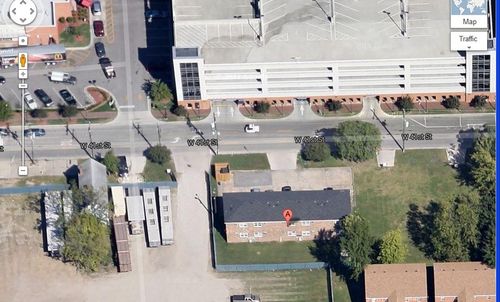
Earlier today, the Virginia Supreme Court, in PKO Ventures, LLC v. Norfolk Redevelopment and Housing Authority, No. 121534 (Sep. 12, 2013), invalidated takings of non-blighted properties which were part of a larger area designated as blighted.
In 2007, Virginia adopted a statute requiring that if property is taken to eliminate blight, the property itself must be blighted. That might seem like an obvious proposition, but as readers certainly know, since the U.S. Supreme Court’s decision in Berman, it has been ok to take the baby with the bathwater under the Fifth Amendment, and as long as a legislator rationally could have believed that taking a perfectly fine property would somehow help alleviate other blight, then the courts would not stand in the way.
The Virginia statute defines “blighted property” as one that is in bad shape “at the time of the filing of the petition for condemnation,” and also provided an exception for one project already underway by not limiting the ability of a redevelopment authority to “acquire” before July 2010 nonblighted property pursuant to a plan adopted before January 2007.
Several Norfolk property owners objected under this provision to the taking of their nonblighted property (see photo of the parcel and apartment building above) by the redevelopment agency for the expansion of Old Dominion University, a public school. The redevelopment authority argued it was exempt from the 2007 only-blighted-properties-may-be-taken requirement because it filed its condemnation petition on April 21, 2010, before the July 2010 cut off.
The court rejected that argument, holding the statute requires the condemnor to “acquire” the property before that date, not merely institute a condemnation action.
Accordingly, we hold that the circuit court erred when it allowed the NRHA to acquire the Property subsequent to the statutory deadline. The parties stipulated that the Property was not blighted. Further, the NRHA did not acquire the Property by obtaining title by certificate of take or certificate of deposit, or an award pursuant to a petition for condemnation prior to the July 1, 2010 deadline established by Paragraph 3. The NRHA therefore retained its ability to acquire the unblighted property only until July 1, 2010 when the limitations of Code § 1-219.1 became applicable. On July 1, 2010, the terms of Code § 1-219.1 governed the NRHA’s attempted acquisition and barred its authority to condemn PKO’s unblighted Property.
Slip op. at 12. In other words, the taking must have been completed before July 2010, not just started before that date.
The court also rejected the redevelopment authority’s claim that its right to take had vested, and because it adopted its redevelopment plan before the legislature adopted the statute, the statute did not limit its authority. Funny we thought that governments had “powers,” not “rights,” and vested rights could only be owned by persons, not government agencies. The court rightly rejected the authority’s argument, holding that because the agency had not acquired title to the property until after the statute had been effective, its “rights to the unblighted Property owned by PKO were only prospective at the time that [the statute] became applicable to redevelopment and housing authorities.” Slip op. at 14.
More on the decision:
- ODU must give back property (with video)
- Va. Supreme Court invalidates NRHA condemnations for ODU (also with video)
A big win for our Owners’ Counsel colleagues at Waldo and Lyle.
PKO Ventures, LLC v. Norfolk Redev. and Housing Authority, No. 121534 (Va. Sep. 12, 2013)