
July 2011

One of the very first things we addressed in the first year Property class (wonderfully taught by Allen Smith, visiting from Michigan Law) was the ownership of animals: when do wild animals become someone’s “property?” And the very first Latin phrase we incorporated into our new legal lexicon was ferae naturae, the law of wild animals.

In that vein, we introduce you to Ferae Naturae, a new law blog (to us, at least) on the law of animals, wild and otherwise. The blog is authored by our ABA State and Local Government Law colleague Amy Lavine, and although she posts on a wider scope of issues than the property law aspects of wild animals, it’s still an informative and worthwhile read.

Recent posts include “How to fight criminal charges when you get caught with a crocodile in your bathtub,” “Raccoons are not ‘cuddly

Continue Reading New Law Blog To Follow: Ferae Naturae

Later this week, I’ll be attending the annual scrum of lawyers known as the American Bar Association Annual Meeting, being held this year in Toronto, Ontario, Canada. I’ll be attending the gatherings of the State & Local Government Law Section and the Litigation Section (Condemnation, Zoning & Land Use Committee), and the meeting of the Council of Appellate Lawyers.

I’m the CLE Director for the State & Local Government Law Section, and I’m pretty excited about our two featured programs. The first is Protecting Heirs Property: Uniform Laws and Social Justice, a presentation about the new uniform act dealing with the problem of fractional ownership by extended families of land, mostly in the rural south. The program will be moderated by George Mason U lawprof (and regulatory takings guru) Steven Eagle, and includes four expert speakers on the subject. Professor Eagle always asks provocative questions and

Continue Reading ABA Annual Meeting, Toronto

Lawyers all know of the canons of statutory construction that usually cause us run for our Latin dictionaries. They provide courts with the means to interpret the words in a statute or apply the code to a particular case, and supposedly are guideposts to guide us through the often-byzantine language of statutes and ordinances. The “plain meaning” rule, the rule of “in pari materia,” and the like. We admit to thinking at times that courts apply these rules sort of willy-nilly, but others assure us that there is a methodical approach that helps in the resolution of cases.

In that vein, in Marion Energy, Inc. v. KFJ Ranch P’ship, No. 20090796 (July 12, 2011), the Utah Supreme Court applied the canons of statutory construction, along with a rule of construction specific to eminent domain cases to conclude that the term “mineral deposits” in a statute allowing mining

Continue Reading Utah S Ct: Oil And Gas Deposits Are Not “Mineral Deposits” Under Eminent Domain Statute

Here’s the latest in a case we’ve been following. In Bridge Aina Lea, LLC v. State of Hawaii Land Use Comm’n, the plaintiff filed its complaint in state circuit court alleging that the LUC violated state and federal law (due process, takings, vested rights, and more) when it reclassified “urban” land on the Big Island to “agriculture.” 

The defendants then removed the case to federal court, and have now filed a motion to dismiss that contains a host of defenses: immunity, the unavailability of prospective injunctive relief, whether certain defendants are “persons” under 42 U.S.C. § 1983, abstention on the federal takings claim, the lack of a state damage remedy for deprivation of constitutional rights, and zoning estoppel, among others.

Just the thing to give you flashbacks to your Federal Courts class.

Update: here‘s the errata filed just after the motion to dismiss.

Motion to Dismiss, Bridge at

Continue Reading Latest In Big Island Takings And Vested Rights Challenge To LUC Reclassification

California, if you weren’t already aware, produces raisins. Lots of raisins. It accounts for 99.5% of the U.S. crop and 40% of the world crop.

Since the 1920’s, supply has exceeded demand by 30 to 50 percent. Since the 1940’s, the USDA has regulated the raisin industry to even out the fluctuation in supplies and prices by creating “annual reserve pools” that remove extra raisins from the market. Those regulations, in the form of “marketing orders,” require raisin “handlers” (those who process and pack agricultural goods for distribution) to set aside a certain percentage of raisins from the domestic open market, upon pain of civil and criminal penalties if they do not. The reserve raisins can only be sold for resale in export or secondary markets, with the proceeds used to pay for administration of the regulatory program (naturally), and any balance being distributed among raisin “producers.”

In Horne

Continue Reading 9th Cir: California Raisins Were Not Taken

Bulldozed_home Note to appellate practitioners: it’s not a good sign when an opinion’s treatment of your arguments starts with the phrase “[t]o the extent we are able to discern the arguments, we address them below.”

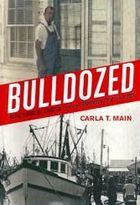
As that statement telegraphed, it didn’t go very well for the appellee in Main v. Royall, No. 05-09-1503-CV (July 25, 2011). In that case, the Texas Court of Appeals (Fifth District) held in a defamation suit that the author of a book about eminent domain is a member of the electronic or print media asserting a First Amendment claim, and was therefore entitled to appeal the interlocutory denial of a motion for summary judgment, and that the book for the most part was not defamatory as a matter of law.

As we noted earlier herehere, and here, Carla Main, the author of Bulldozed: “Kelo,” Eminent Domain, and the American Lust for

Continue Reading Texas App To Developer: Eminent Domain Book Just Not That Into You
Goodtobeking As Mel Brooks once said, “It’s good to be the King.” That’s especially true in eminent domain law. Even when you’re not the King.

Exhibit A: the plaintiff in this federal condemnation action was a railroad, the Dakota, Minnesota & Eastern Railroad Corporation. It brought suit against 97.943 acres of land, more or less, in Wyoming. But really agains the owners of those acres, Mr. and Mrs. Simmons.

Did the railroad need the land? Not really. It admitted it couldn’t build the project in the foreseeable future. It filed the action on the eve of the date that Wyoming’s post-Kelo eminent domain reform statutes took effect, leading to the inference it was merely land banking.

So the property owners fought the condemnation. But after a two week trial, on the eve of the district court issuing its ruling, the railroad — perhaps sensing the handwriting on the

Continue Reading Despite “Complete Vindication” After “An Abuse Of The Condemnation Process,” No Costs

In Edwards v. City of Jonesboro, No. 10-2405 (July 14, 2011), the U.S. Court of Appeals for the Eighth Circuit held that a takings claim brought in federal court after the property owner prevailed on the same claim in state court was not barred by the Rooker-Feldman doctrine, but that the state court judgment was final and precluded relitigation of the owner’s federal claims.

Methane gas, released by decomposing waste in the the city’s landfill, invaded adjacent land, rendering it undevelopable, so the owner sued the city. He filed an action in state court; alleging violations of his rights under state law (inverse condemnation, trespass, violations of the state constitution, and the like), and under federal law (takings, etc). With his third amended complaint, however, he filed an England reservation, withholding his federal claims from resolution in state court.

After a trial, the state court ordered the city

Continue Reading 8th Cir: No Rooker-Feldman, But San Remo Hotel Precludes Federal Takings Claim

In a case we’ve been following, a San Francisco Bay Area municipality has filed a cert petition asking the U.S. Supreme Court to review the Ninth Circuit’s opinion in International Church of the Foursquare Gospel v. City of San Leandro, No. 09-15163 (Feb. 15, 2011). In that case, the Ninth Circuit held that the church had established enough to get to trial under RLUIPA’s “substantial burden” provision, and reversed the district court’s grant of summary judgment to the city.

The court held that there was a triable issue of fact regarding whether the city’s denial of the church‘s request for a an amendment to the zoning code and a conditional use permit to allow the construction of new facilities on industrial land imposed a substantial burden on the church’s religious exercise under RLUIPA. The court applied the “strict scrutiny” standard of review, and held that the city failed

Continue Reading New Cert Petition: What Standard Of Review For RLUIPA “Substantial Burden” Cases?

In some states, Hawaii included, the question of whether a taking is “for public use” is entitled to full resolution before addressing the question of just compensation. See, e.g., Haw. Rev. Stat. § 101-34 (public use challenges are entitled to immediate trial, and as-of-right interlocutory appeal). This makes sense since questions of value come into play only after final determination of whether the condemnor can take the property at all. [Sidebar: in Hawaii, eminent domain cases have calendar preference over all other civil actions, and the courts have a statutory obligation to hear and decide condemnation actions “quickly.”  Haw. Rev. Stat. § 101-9.]

But this is not a matter of statute in some jurisdictions, including North Carolina. Meaning that its up to the courts to determine whether the interlocutory issue of whether a trial court’s public use determination is immediately appealable. In Town of Apex v. Whitehurst

Continue Reading NC App: Public Use Challenge Is Immediately Appealable