
January 2009

In Zaid v. United States, No. 08-020C (Jan 22, 2009), the Court of Federal Claims held that an attorney who had a one-third contingent fee arrangement with his client did not have a claim for a taking when Congress placed a 10% fee limitation in two private bills.

Attorney Zaid represented two FBI informants who infiltrated the American Communist Party and assisted the FBI for 22 years. The were promised payment but received none. After unsuccessfully representing themselves, they retained Zaid and agreed that he would take 1/3 of any recovery as his fee.
The attorney was ultimately successful, procuring from Congress two private bills to pay the informants $1 million each. A private bill is special legislation providing some benefit to a specific individual. More about private bills here. Unfortunately for the attorney, in the private bills, Congress included a provision that capped his fee at 10%

Continue Reading CFC: No Taking Of Attorney’s Contingency Fee Agreement By Congressional Limitation Of Fees

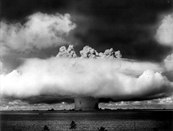
Boom How’s this for a raw deal: not only does the federal government seize both your land and your home, but it also takes your entire country with the intention of detonating multiple thermonuclear weapons where you once lived. Meaning you won’t be able to return to the homeland you loved for oh, let’s just say a very long time

Thirty years pass, and after you sue the government for a taking, it settles the dispute by entering into an agreement which creates a tribunal to settle all claims, payable from a trust fund. The trust fund, however, is woefully underfunded and could not possibly satisfy your claims and those of your compatriots (of the money in the trust fund, only 1/3 is designated to actually pay the victims; the other 2/3 is set aside to support the tribunal’s operations). Nonetheless, the tribunal awards you and your neighbors nearly $1

Continue Reading Federal Circuit To Bikini Islanders: Get In Line Behind The Auto Companies, The Banks, And Executive Bonuses

According to this report from the San Francisco Chronicle, the California Supreme Court has denied review of Defend Bayview Hunters Point Committee v. City and County of San Francisco, 167 Cal. App. 4th, 84 Cal. Rptr. 3d 486 (Cal. Ct. App. 2008), the decision held:

The Defend Bayview Hunters Point Committee (DBHPC) gathered the required number of signatures on a petition to force a citywide referendum on an ordinance adopting a redevelopment plan for the Bayview Hunters Point community. The City and County of San Francisco (the City) rejected the petition because it failed to include a copy of the 57-page redevelopment plan that had been incorporated by reference in the ordinance when the Board of Supervisors of the City and County of San Francisco voted to approve it. DBHPC’s ensuing petition for a writ of mandate compelling the Clerk of the Board of Supervisors (Clerk) to accept the referendum petition was denied by the trial court, and this appeal followed. We

Continue Reading Cal. Supreme Court Won’t Review San Francisco Redevelopment Initiative

Thanks to Charley Foster for pointing out this podcast of Susette Kelo’s recent appearance at the Cato Institute’s forum about the book Little Pink House: A True Story of Defiance and Courage, by Jeff Benedict (available from Amazon here):

The mp3 of the podcast can also be downloaded directly here.Continue Reading Cato Institute Podcast: A Story Of Eminent Domain Abuse Featuring Susette Kelo

In her state of the state address today, Hawaii Governor Linda Lingle had this to say about the “ceded lands” case, Hawaii v. Office of Hawaiian Affairs, No. 07-1372 (cert.granted Oct. 1, 2008):

Before concluding I want to take a moment to speakabout the case pending before the United States Supreme Court involvingthe issue of ceded lands.

The issue involved in this case is not whether ceded lands should or should not be sold.

Rather the issue involves the fundamental question ofwhether the State of Hawai‘i has clear title to the land transferred tous by the federal government at the time of statehood.

The roots of this case date back to a decision made byformer Governor Waihe‘e in the 1980s to sell certain ceded lands onMaui and Hawai‘i for the construction of affordable housing.

It was a decision he believed was in the best interest of all the people

Continue Reading Hawaii Governor On The SCOTUS “Ceded Lands” Case

The Honolulu Advertiser reports “Lingle wants Ka Iwi coast free of development,” about the Governor’s efforts “paving the way for the final step in preserving the most accessiblewild coastline on O’ahu for generations to come.”

And just how is the Governor proposing to “preserve” this privately-owned and urban-zoned land from the “threat of development,” you ask? “[B]y asking the stateLand Use Commission to reclassify the Ka Iwi shoreline from urban toconservation,” that’s how.  In other words, downzone it.

As the article notes, this area has long been a battleground between the right to make reasonable use of private property and at least one segment of the public’s desire to prohibit development. Several cases have arisen from the area, the most well-known of which was the “Sandy Beach” case involving the “5” and “6” parcels down the road from the : 

The land, while zoned preservation by the county

Continue Reading Here’s A Novel Proposition: How About Paying For It?

The circuit court has scheduled the next steps in County of Hawaii v. C & J Coupe Family Limited Partnership, No. 28882 (Haw. Dec. 24, 2008), the case in which the Hawaii Supreme Court held that the government must pay damages to a property owner when an attempt to take property by eminent domain fails, and that courts have an obligation to examine claims that the government’s asserted public purpose for a taking is pretextual, even when the taking is for a “classic” public use. The Court remanded the case to the circuit court for a consideration of the amount of damages owed to the property owners, and the pretext issue. [Disclosure: we represent the property owners.]

The schedule for the case is reported by West Hawaii Today here.Continue Reading Schedule In Kona Eminent Domain Pretext Case

The Office of Hawaiian Affairs has filed its Brief for the Respondents in the “ceded lands” case, Hawaii v. Office of Hawaiian Affairs, No. 07-1372 (cert.granted Oct. 1, 2008).

The U.S. Supreme Court is reviewing the Hawaii Supreme Court’s decision in Office of Hawaiian Affairs v. Housing and Community Dev. Corp. of Hawaii, 117 Haw. 174, 177 P.3d 884 (Jan. 31, 2008). The Court is considering a single Question Presented:

In the Joint Resolution to Acknowledge the 100th Anniversary of theJanuary 17, 1893 Overthrow of the Kingdom of Hawaii, Congressacknowledged and apologized for the United States’ role in thatoverthrow.  The question here is whether this symbolic resolutionstrips Hawaii of its sovereign authority to sell, exchange, or transfer1.2 million acres of state land-29 percent of the total land area ofthe State and almost all the land owned by the State-unless and untilit reaches a political settlement with native Hawaiians

Continue Reading OHA Brief In Ceded Lands Case

The property owner has filed its Reply in Support of Petition for a Writ of Certiorari in Charles A. Pratt Const. Co. v. California Coastal Comm’n, No. 08-668 (cert. petition filed Nov. 18, 2008) (SCOTUS docket report here). The petition seeks review of the California Court of Appeal’s opinion reported at 76 Cal. Rptr. 2d 466 (Cal. Ct. App. 2008), available here.

The issues presented in the case involve the Penn Central ad-hoc test for regulatory takings, and the “final determination” prong of the Williamson County ripeness rule. The Reply brief argues:

The Brief in Opposition is liberally salted with Respondent California Coastal Commission’s assertions of what it refers to as the “facts” (e.g., pp. 5, 11) as well as disparagement of the presentation in the Petition as having “no evidence” (e.g., pp. 7, 11) behind it.

The Brief in opposition thus highlights the problem that call for

Continue Reading Reply In Support Of Petition In Pratt v. Cal. Coastal Comm’n – Penn Central And Williamson County

A delay in publication of a legal notice won’t knock out a challenge to the legality of a city’s blight designation.

In Community Youth Athletic Center v. City of National City, No. D052584 (Jan. 22, 2009), the California Fourth District Court of Appeal held that the trial court abused its discretion when it dismissed a “reverse validation” complaint because notice of the complaint was not timely published.

While this decision isn’t directly about eminent domain for economicdevelopment or redevelopment, the situation that gave rise to is. The plaintiff challenged a local ordinance that declared its property (a community boxing gym that serves “at-risk” youth) and 700 other properties to be “blighted” and available for condemnation. The gym and its neighborhood are not “blighted” in the usual sense of the word, only in thesense of California’s Community Redevelopment Law, which contains adefinition of blight that is so broad that virtually

Continue Reading California Court of Appeal: No TKO Of Eminent Domain Challenge (Video)