
Here’s the latest in a case we’ve been following. (And an issue we’ve been following for a while.) [Disclosure: our shop filed an amicus brief in that case in favor of the property owner.]
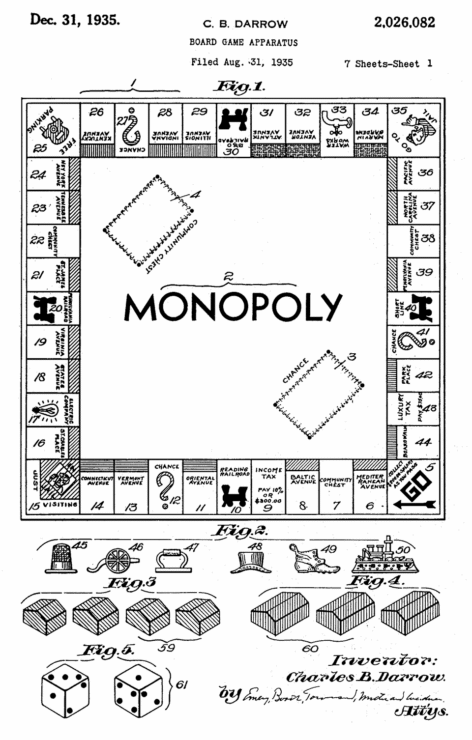
It has often been said that when it comes to eminent domain, the government doesn’t view private property as something invested with any meaning or value other than its naked (hypothetical) market price. A product that is totally fungible, to be treated as a square on the Monopoly board.
Township of Jackson v. Getzel Bee, LLC
Nothing might illustrate that more starkly than the Township of Jackson, New Jersey’s claims in the New Jersey Supreme Court case Township of Jackson v. Getzel Bee, LLC, No. 090404 (July 20, 2026).
The Township told the owners of two parcels that it was going to be taking their land by eminent domain “for open space purposes.” Open space is one of those uses that is generally considered public, so no sweat right? Well, not exactly. Follow along.
Land Swap
The Township first adopted an ordinance whose purpose was to enable the Township to exchange land it already owned (and land it didn’t yet own — which included the two privately-owned lots noted above — uh oh) with a private developer. In return, the developer would convey property it owned to the Township. As authorized by the ordinance, the Township next entered into a contract with the developer “to make the land swap.” Slip op. at 5. Nothing in the ordinance said anything about how the two parcels the Township didn’t already own were to be used.
Next, the owners of the two parcels received notice from the Township that it was “in the process of acquiring substantial acreage for open space purposes,” and would be instituting an eminent domain action if the two owners did not voluntarily sell. The Township next adopted a second ordinance that essentially mirrored the first, to add additional properties to the land swap with the developer.
Open Space?
The owners didn’t buckle under, and the Township filed separate complaints to condemn the two privately-owned parcels. The stated public use? “The complaints asserted that the Township needed to acquire the properties “’to [e]ffect a land exchange for the preservation of open space.’” Id.
What about that land swap? Not mentioned until the Township adopted a fourth ordinance, which again stated that it needed the two parcels for open space. This ordinance finally made the connection between the two condemnations and swapping the parcels to be taken with a private developer so its property could be used for open space:
The Township next adopted a fourth ordinance, Ordinance 26-23, on September 26, 2023. This ordinance repeated that the town needed to acquire Lots 84 and 90 so that it would “have access onto, over and through said privately owned” lots “for the purpose of open space.” Yet the ordinance also stated that the condemnation “will permit the Township to exchange the subject properties, along with surrounding properties, to protect and maintain open space within the Township.” The ordinance added that “[t]he land exchange, with the inclusion of [Lots 84 and 90], will permit the township to preserve open space in a desirable . . . centrally located portion of the Township.” With that language, the Township intimated for the first time that Lots 84 and 90 might not be used for open space.
Slip op. at 7.
The trial court concluded this was a public use, but the Appellate Division disagreed, concluding the taking violated both the Fifth/Fourteenth Amendment standards for public use, and the New Jersey statute that requires condemned property to be put to a public use. The New Jersey Supreme Court agreed to review the case.
New Jersey Supreme Court
The court rejected the Township’s claim that the taking was to acquire property for open space. It claimed that if you looked at its actions as a whole, the condemnor was taking property, and was going to end up with land devoted to open space. That the land it was taking was not the actual land that was going to be put to the public use was just irrelevant detail. Nothing to see here folks, move along!
The New Jersey Supreme Court looked at it through two lenses. First, New Jersey statutes like the Local Lands and Building Law (which delegates the power to acquire property by condemnation), and the Eminent Domain Act (which establishes substantive limitations on the power to take). And second, the requirements of the Public Use Clauses in both the U.S. and New Jersey Constitutions (the standards are similar).
The court applied Berman, Midkiff, and (of course) Kelo, and its own cases to conclude that indeed, “open space” is generally a public use. The court also noted a 2016 Utah Supreme Court opinion slapping down “land swap” takings:
The Utah Supreme Court reversed the judgment to condemn Evans’s property. The Court found that the “property exchange [did] not satisfy” the public use requirement of Utah’s eminent domain statutes. Ibid. As the Utah Supreme Court explained, “[i]t is not enough to accomplish a public use on some property; the condemnor must satisfy the public use requirement on the property subject to the condemnation.” Id. at 1267.
Slip op. at 20.
Statutory Limitations
The court first concluded that neither the New Jersey Eminent Domain Act, nor the Local Lands and Buildings Law “supports the taking in this matter.” Id.
As noted above, the LLBL empowers municipalities to condemn private land for a public purpose, such as open space, and the EDA outlines the condemnation process. Neither statute, however, supports the proposed taking in this matter. Here, the Township condemned private property, Lots 84 and 90, but had no intention to use either lot for a public purpose. Instead, it exchanged the condemned parcels for property a private developer owned. Lots 84 and 90 were left to be used in the developer’s discretion. Getzel Bee, LLC, 480 N.J. Super. at 603. They were not restricted for public use as open space, and nothing in the record suggests they were to be used in that manner.
Id. Moreover, “[t]he EDA does not contemplate a land swap. The government cannot take “someone’s land only to swap it for property of another that will be used for a public purpose.” Slip op. at 21. Your property cannot be used merely as “‘currency’ for the exchange.” Id. Property is just places on a Monopoly board, as we said above.
No Public Use, Either
Next, the court concluded that the land swap deal didn’t meet the requirements of the public use clauses, either:
The takings here are of a different character. The condemned private properties were not part of an area to be set aside for public use. The developer’s properties were. That invites several questions. Why didn’t the town condemn the developer’s land outright or exchange land the town already owned? The compelled transfer from private owner to private developer — from A to B, as Kelo said with disapproval — can raise questions about whether “a private purpose was afoot.” 545 U.S. at 486-87.
Slip op. at 22.
“Turn Square Corners”
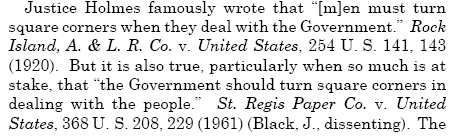
Finally, the court noted that the Township wasn’t being forthright, and failed to act as condemnors are required to act: “[w]e agree with the Appellate Division that the Township did not act forthrightly or faily with the owners of Lots 84 and 90.” Slip op. at 21. Yes, the “turn square corners” requirement. “The evolving language in the ordinances fell short of those standards.” Id.
The Township started off by proclaiming it would be exchanging land it owned with the developer who owned land the Township wanted for open space. “Both ordinances also referred to Lots 84 and 90, which the Township did not yet own.” Slip op. at 24. But “[n]either ordinance stated how any properties would be used or identified any public purpose tied to the proposed exchange.” Id.
The third and fourth ordinances, in which the Township adopted to effect the condemnation of the two lots, made it worse. These ordinances stated that the public use for taking Lots 84 and 90 were for open space (even though the properties were not going to be used for open space, and only were the “currency” to be traded with the developer so its property could be used for said open space). The New Jersey Supreme Court noted that when a taking is “value, inaccurate, and pretextual,” you know the condemnor isn’t behaving as it should:
As is now clear, neither private parcel was to be used for public space. After the Township acquired the properties by condemnation, both would be transferred to, and belong to, the developer for whatever lawful use it saw fit.
The above series of events reveals that the Township did not act forthrightly or turn square corners in its dealings with the LLCs. The asserted public purpose for the taking was, at times, vague, inaccurate, and pretextual.
Slip op. at 25.
The court finished up with the remedy. “We do not know what, if anything, has happened to Lots 84 and 90 since they were transferred to the developer.” Slip op. at 25. Remanded to the trial court to figure out what to do.
On that, may we suggest a reading of the North Carolina Supreme Court’s somewhat recent opinion in Town of Apex v. Rubin (Aug. 22, 2025), where the court held that restoration of the property is an available remedy.
Twp. of Jackson v. Getzel Bee, LLC, No. 090404 (N.J. July 20, 2026)