
Here’s the latest in an issue we’ve been following.
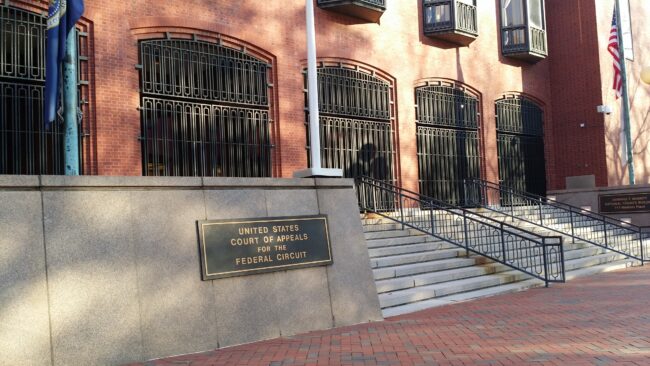
In Alban v. United States, No. 23-1363 (Dec. 22, 2025), the U.S. Court of Appeals for the Federal Circuit affirmed the Court of Federal Claims’s judgment concluding that the failure of the Corps of Engineers to properly operate two dams, which resulted in upstream flooding when Hurricane Harvey struck was a “permanent” taking.
The dams were built nearly 100 years ago to reduce downstream flood risks. The reservoirs are usually dry, and fill up when it rains a certain amount. At the time of construction, the Corps considered acquiring property which would be inundated when the reservoirs filled up to a certain level, but ultimately decided to not do so. The Corps made the decision to acquire only the properties predicted to be flooded in smaller storms. The Corps understood that flooding of additional property was predicted in more intense storms.
In 2017, Harvey became one of those events, and the water level in the reservoirs climbed higher than the level of government ownership of the property, which resulted in catastrophic flooding of private property “causing extensive damage.” Slip op. at 6. The flooding was not permanent in the sense that the floodwaters remained; the water eventually receded.
CFC takings lawsuits followed, “alleging that the operation of the Barker and Addicks Dams and the subsequent flooding constituted an uncompensated physical taking of their property. Slip op. at 6-7. The CFC eventually concluded that the feds are liable for a taking of flowage easements, “and that the government’s asserted defenses of police power and necessity did not absolve it of liability.” Slip op. at 7.
The Federal Circuit affirmed. It rejected the Corps’s argument that because the government was exercising “police power,” the owners didn’t own “private property.” The court also rejected the government’s claim that the flooding wasn’t a taking because it wasn’t permanent. Finally, the court rejected the argument that because the flooding was “necessary,” there was no taking.
On the property issues, the Federal Circuit undertook the proper analysis. The property interest alleged to have been taken was a flowage easement. It didn’t matter that the property was held subject to the police power (indeed, what property isn’t held subject to the power of the government to regulate it?).
Interestingly, it appears the government understood that the Federal Circuit has “rejected versions of those arguments” in prior decisions. Slip op. at 10. But to “preserve the issue[s] for further review,” it raised them here. Does this mean the government views the case as a vehicle to challenge existing doctrine? We shall see. In case you were wondering, the Federal Circuit again rejected the argument, concluding that yes, the plaintiffs possessed a property interest.
The court also rejected the government’s claim that there was no taking because the flood waters literally did not cover the owners’ land forever. Long ago, we took the position that the distinction between “temporary” and “permanent” is a rabbit hole and that the doctrine can’t rest on such metaphysical, illusory distinctions. The Federal Circuit recognized that the lay definitions of temporary and permanent are not dispositive, and even flooding that is not, you know, permanent, is considered “permanent” if it inevitably recurring. Slip op. at 11. And here the CFC determined the flooding as “permanently recurring.” Good enough, to the Federal Circuit:
We hold that the flooding of Plaintiffs’ properties gave rise to a permanent taking. The Supreme Court has distinguished between “intermittent but inevitably recurring overflows,” which give rise to permanent takings, Ark. Game & Fish Comm’n v. United States, 568 U.S. 23, 32 (2012) (quoting United States v. Cress, 243 U.S. 316, 328 (1917)), and “takings temporary in duration,” id. at 32, such as when a claimant was able to permanently “‘reclaim[] most of his land which the government originally took by flooding.’” Id. at 33 (quoting United States v. Dickinson, 331 U.S. 745, 751 (1947)). Where “land is not constantly but only at intervals overflowed, the fee may be permitted to remain in the owner, subject to an easement in the United States to overflow it with water as often as
necessarily may result from the operation of the” dam. Cress, 243 U.S. at 329. Our predecessor court specifically held that “only one actual flooding is enough when the property is upstream of the dam and below the contour line to which the dam is designed to impound water.” Stockton v. United States, 214 Ct. Cl. 506, 518–19 (1977). These cases confirm that whether flooding is inevitably recurring turns not on mere frequency, but on whether there is a “government action that will foreseeably produce intermittent invasions by flooding without identifiable end into the future.” Ideker Farms, 71 F.4th at 979. When that is true, “the government takes a permanent right of access, akin to an easement in gross, even if used only intermittently,” and has effected a per se taking. Id. at 980.
Slip op. at 12-13.
You may ask yourself “what does this case add to the oeuvre?” In our view, nothing. The Supreme Court’s and the Federal Circuit’s approach to this seems pretty well-established. But that doesn’t prevent the government from giving it yet another go, and pushing what seems to be arguments flatly and firmly rejected by the courts. Arguments that would get you and me risking sanctions if we made ’em. We have seen this approach before, so count us not surprised.
The Federal Circuit also noted in dicta that even if this is only a “temporary” invasion by floodwaters, the owners would still win even if the case were not subject to the categorical permanent rule and the case were subject to a Penn Central type analysis. Slip op. at 14 (“Even if the flooding of Plaintiffs’ properties were temporary, we would still hold that the government took Plaintiffs’ properties.”).
Finally, the Federal Circuit correctly rejected the government’s argument that the “necessity defense” relieved it from the obligation to provide just compensation. Slip op. at 17. This wasn’t a case where the government took some action because the owners were engaged in a nuisance-like activity, or the government was responding to some “unforeseeable exigency.” Id. Not at all.
This was a case where government chose some property owner to be protected, and selected others to take the hit. In these cases, it is the prime function of the Just Compensation Clause to “flatten the economic curve” and spread the economic burden on everyone, and not keep it focused on those whom the government decided were to be sacrificed:
Instead, the government, as it does in every flooding case, allocated the location of water between private citizens. In doing so, it aided some property owners (downstream residents) and harmed others (upstream residents). “The Fifth Amendment’s guarantee that private property shall not be taken for a public use without just compensation was designed to bar [g]overnment from forcing some people alone to bear public burdens which, in all fairness and justice, should be borne by the public as a whole.” Armstrong v. United States, 364 U.S. 40, 49 (1960). Accordingly, we reject the government’s necessity defense.
Slip op. at 17-18.
The opinion continues with analysis of the just compensation judgment, but we shall cover those in another post.
Stay tuned.
Alban v. United States, No. 23-1363 (Fed. Cir. Dec. 22, 2025)