August 2025

Every year at this time, it seems, we realize once again that as you get older, you overlook birthdays. Time speeds up, or maybe slows down. Very Proustian.

Thus, it occurred to us only yesterday that that this blog’s “birthday” was looming and we almost let it slip by without notice.

It hardly seems like nineteen years ago today that we posted for the first time. In interweb years, that’s quite a while, even though we’re still in our teens. 
Thanks to you, our readers and contributors, we’re still here, and still going pretty strong over 5,000 posts and nearly two decades later. We can’t post every day, but we try to keep current.

It seems appropriate on our birthday to announce that although we’ve been hosted on one of the original platforms, Typepad, since the beginning, our host has recently announced it is shutting down.

Continue Reading They Say It’s Your Birthday, Well It’s Our Birthday Too: Entering Our Nineteenth Year (With Some Behind-The-Scenes Changes Coming)
AZ unclaimed

Check out the U.S. Court of Appeals for the Ninth Circuit’s opinion in Garza v. Woods, No. 24-1064 (Aug. 25, 2025). 

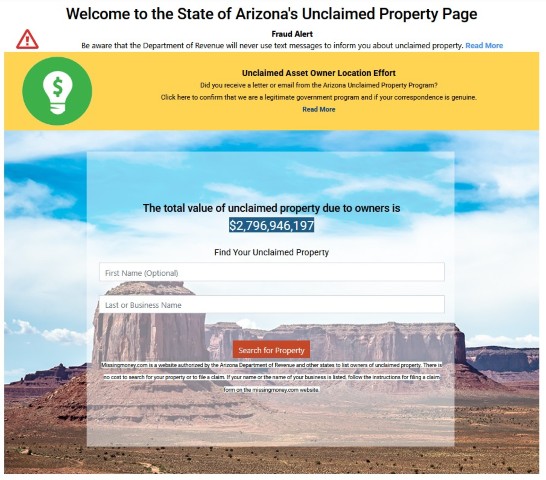
The court concluded that Arizona’s abandoned property statute is not a taking, because the State was not exercising or claiming some kind of ownership of abandoned property (as in those cases where abandoned property escheats to the government), but was merely holding it in trust until the owner claims it (or doesn’t).

Arizona’s Unclaimed Property Act allows the state to take possession of property that is “presumed abandoned.” Not a big surprise there, as our system of property is built on the assumption that the active user of property has better rights than the owner who neglects it (think adverse possession, for example). Arizona’s UPA deems property to be abandoned if an owner has not “indicated an interest” in that property for a period of time, usually one

Continue Reading CA9: Government Holding Your Unclaimed Property In Trust Isn’t A Taking (But It Might Be A Deprivation)

Here’s one from the U.S. Court of Appeals for the Federal Circuit, involving ERISA (yikes!), which is the comprehensive federal regulatory framework for employer-provided pension plans, and takings.

In King v. United States, No. 23-1956 (Aug. 8, 2025), pensioners challenged Congress’s 2014 reduction of benefits as a taking, alleging both physical and regulatory theories. As you might expect, there’s a lot going on in this area, and there’s enough ERISA goodness in this opinion to satisfy the most committed maven. Check out pages 3-8 for a pension primer. (And here you thought takings is a complex area.)

The short story is that in 2014 after it “became concerned about the fiscal health of many of the nation’s multiemployer pension  plans,” slip op. at 9, Congress amended ERISA to deal with the actual or threatened insolvency of multiemployer pension funds. What happens if a pension is obligated to pay, but

Continue Reading Fed Cir: Reducing ERISA Pension Benefits Was Not A Taking
Muchmagnacarta

Here’s the latest in a case we’ve been following which presents an important issue. So much so that we filed an amicus brief in support of the property owner.

In Town of Apex v. Rubin, No. 206PAA21 (Aug. 22, 2025), the North Carolina Supreme Court held that if a taking is determined to be for private benefit and not a public use or purpose, title and right of possession “revest” with the original owner.

The court also held that if, as here, the condemnor had already seized the land and completed construction, a court is not powerless to address it and may order the condemnor to “restore the land to its pre-construction condition. Whoa.

In short, this is an important one that is well worth your review. 

Before we get underway, a note: recall that the North Carolina Constitution does not have a “takings” or “just compensation” clause. Does

Continue Reading NC: If A Taking Is Determined To Lack A Public Use, Title Revests In Private Owner. If Construction Already Taken Place, Restoration Is An Available Remedy

Yes, the mysterious ducks remain — and seem to have multiplied.

It’s that time of the year again. Fall’s-a-coming, and that means that starting today, we’re back at the William and Mary Law School in Williamsburg, Virginia to teach two courses:

  • Eminent Domain and Property Rights (W&M is one of the few law schools in the country that offer a course in eminent domain, just compensation, and takings)
  • Land Use Controls (an especially hot topic at the moment)

The registration numbers for both courses are good (really good), and two full classrooms of Dirt Law goodness tells us something about this area of law — it’s really interesting, and a good place to make your way in the practice, and law students recognize that.

PXL_20240819_121031630.MP
We don’t use $400 casebooks in either class.

Time to jack back into the (takings and land use) Matrix.

6a00d83451707369e20240a476d216200c-800wi
Continue Reading Back To School For Dirt Law @ William & Mary, Season 8

If your brain goes full mobius strip when trying to figure out the California Court of Appeal’s rationale in Anaheim Mobile Estates, LLC v. State of California, No. G063421 (Aug. 13, 2025), you are not alone. 

Here’s the bottom line in this facial challenge to a California statute that limits mobilehome parks located in two municipalities from increasing the rental rate more than 3% + cost of living (or 5%) and limits the number of times a long-term tenant may be subject to such increases: the court held that the absence of a mechanism to challenge the restriction on the grounds it does not provide a fair rate of return does not render the statute unconstitutional, because the challengers have not shown the statute does not provide a fair rate of return. 

The park owner asserted that under California precedent, “a price control statute must have an individualized

Continue Reading Cal App: No Fair Return Procedures Required Unless You First Show Lack Of Fair Return

“A brighter tomorrow is only a day away.”

So held the U.S. Court of Appeals for the Fifth Circuit in an important case, DM Arbor Court, Ltd. v. City of Houston, No. 23-20385 (Aug. 12, 2025). 

The issue was whether the City of Houston’s denial of a rebuilding permit after a flood was a Lucas taking. De facto taking, regulatory taking, involuntary regulatory servitude. Call it what you will, the theory is the same. You mavens understand what that means: a regulation or other government action has deprived the property of all economically-beneficial uses. So even though the owner retains title and ownership, the lack of such uses means that from the owner’s perspective, the government might as well have taken the property by eminent domain.

The appraisers for the parties agreed that the denial of the permit “ended Arbor Court’s economic life.” Slip op. at 7.

Continue Reading CA5: Land Value From “Holding For Investment” (aka Speculation) Is Not An Economically-Beneficial Use

Here’s a recent cert petition which asks the Supreme Court to take up the case of a small property owner in West Hollywood, California, whose case was dismissed when he asked “[h]ow far can a city expand rent control to advance general socioeconomic policies before crossing constitutional property protections?” Pet. at 3. 

Here are the Questions Presented:

1.  Whether a municipality may transform temporary emergency rent restrictions and occupancy mandates adopted at the start of the COVID-19 pandemic into permanent rent control measures that expand benefits to tenants and the public at large at the expense of private property owners, without triggering scrutiny under the Takings and Due Process Clauses of the Fifth and Fourteenth Amendments of the U.S. Constitution.

2.  Whether the denial of leave to amend, despite the viability of property claims for takings and due process violations, constituted an abuse of discretion under this Court’s liberal standard

Continue Reading New Cert Petition: Is Expanding Temporary Emergency Measures Into Permanent Rent Control A Problem?