June 2021

Here’s the latest in a case we’ve been following.

In Jim Olive Photography v. Univ. of Houston, No. 19-0605 (June 18, 2021), the Texas Supreme Court affirmed the court of appeals, concluding that a public university’s unauthorized use of a photograph on its website was merely copyright infringement, and not a taking. 
The opinion is short, and mostly mirrors the rationale of the court of appeals, so if you just want to read our summary of the court of appeals’ opinion, you may stop here. But if not, read on.

The facts: Jim Olive took a photograph that the University of Houston used on its website after stripping off all attribution. When Olive discovered the unauthorized use, he demanded the University take it down. It did, but it refused to pay for its use. Olive sued in a Texas state court for taking his intellectual property

Continue Reading Texas: Makin’ Copies Of A Photograph Is Copyright Infringement, Not A Taking

In Protect and Preserve Kahoma Ahupuaa Ass’n v. Maui Planning Comm’n, No. SCWC-15-0000478 (June 16, 2021), the Hawaii Supreme Court reaffirmed the idea that all members of the public have a right under the Hawaii Constitution to a “clean and healthful environment,” and that this is a “property” right entitled to due process protection under the state constitution. We say “reaffirmed” because this is merely the latest case so holding (see here for the first).

Like a lot of important Hawaii cases, this one came up in the context of standing to participate in the administrative review process. A Maui developer sought a permit under the Hawaii Coastal Zone Management Act from the Maui Planning Commission for an affordable housing project near Lahaina. Members of the Association, all of whom asserted they owned property adjacent to the project, asked the Planning Commission to intervene in the

Continue Reading HAWSCT: Anyone Claiming That An Affordable Housing Project Might Impact Their Property Interests In A “Clean And Healthful Environment” Has Standing To Object

A detour from our usual fare today, as we post what now is the final complete case that we participated in before we traded in our private practice hat for public interest law back in February.

In a short (5 page) Summary Disposition Order, the Hawaii Intermediate Court of Appeals held that any member of the public has standing to request that a court unseal previously sealed documents, and that a court must hold a hearing on the request. Here, the trial court concluded that Judges for Justice (an association of retired judges who are interested in remedying wrongful criminal convictions) lacked standing to request the unsealing of certain documents that the court had previously kept from public disclosure, and sanctioned Judges for Justice $17,000 for making the request. The appeals court not only concluded it was error to deny the request, but that the trial court abused its discretion

Continue Reading Hawaii Court Of Appeals: You Can’t Sanction A Member Of The Public For Merely Asking To Unseal Court Records

The facts that compelled the U.S. Court of Appeal to conclude as it did in Yawn v. Dorchester County, No. 20-1584 (June 11, 2011) are pretty straightforward.

In response to a threatened public health viral crisis (no, not COVID, but Zika [remember that one?]), the county decided to spray insecticide. Some areas could not be reached by truck, so it was decided that aerial delivery was the way to go. The county put out press releases, and called local beekeepers to allow them to cover their hives (the insecticide, you see, doesn’t discriminate between mosquitos and bees, and is equally fatal to the latter unless the hive is covered). The pilot even testified that he had a map of the location of beehives, and that he turned off the sprayers as he approached those areas.

But Yawn, a beekeeper, did not get the warnings. The result: lots

Continue Reading CA4: No Taking When Aerial Pesticide Spray Killed Bees … But Not Why You Think

IMG_20180720_152126_1

A short, land-usey one today, from the Massachusetts Supreme Judicial Court. In Styller v. Zoning Board of Appeals, No. SJC-12901 (June 7, 2021), the court held that the plaintiff’s “occasional” use of a home to rent to others short-term is not a legal primary use of property in a “single residence’ zoning district.

The facts were not in dispute:

  • 5,000 sf, five bedroom, single-family home, three acres of land
  • “single-residence” zoning district
  • owner rented premises 13 times, totaling 65 days
  • rentals were between 2 and 15 days
  • most were 5 days or less
  • use during the rentals: reunions, board meetings, business retreats,

The town cited the owner, and the Land Court agreed that these uses were illegal “additional” uses because they constituted unauthorized use either as a boarding house or a tourist home. 

The owner appealed, and the SJC took over the case. The owner argued that these uses

Continue Reading Euclid Lives! Mass SJC: “Short-Term” Rental Is Not A Permissible Primary Use In A Residential Zone Because Not Of “Residential Character”

IMG_20180720_152126_1

A short, land-usey one today, from the Massachusetts Supreme Judicial Court. In Styller v. Zoning Board of Appeals, No. SJC-12901 (June 7, 2021), the court held that the plaintiff’s “occasional” use of a home to rent to others short-term is not a legal primary use of property in a “single residence’ zoning district.

The facts were not in dispute:

  • 5,000 sf, five bedroom, single-family home, three acres of land
  • “single-residence” zoning district
  • owner rented premises 13 times, totaling 65 days
  • rentals were between 2 and 15 days
  • most were 5 days or less
  • use during the rentals: reunions, board meetings, business retreats,

The town cited the owner, and the Land Court agreed that these uses were illegal “additional” uses because they constituted unauthorized use either as a boarding house or a tourist home. 

The owner appealed, and the SJC took over the case. The owner argued that these uses

Continue Reading Euclid Lives! Mass SJC: “Short-Term” Rentals Is Not A Permissible Primary Use In A Residential Zone Because Not Of “Residential Character”

PASH symposium

Back in February, we were honored to be part of the University of Hawaii Law Review’s symposium “25 Years of PASH,” a retrospective of one of the Hawaii Supreme Court’s most famous (or infamous) decisions, Pub. Access Shoreline Haw. v. Haw. Cnty. Plan. Comm’n, 79 Haw. 425, 903 P.2d 1246 (1993), cert. denied sub nom., Nansay Haw. v. Pub. Access Shoreline Haw., 517 U.S. 1163 (1996) (PASH). 

At the conference, we spoke on the panel about “PASH and the Changing Coastal Environment” (see video here at the 2:02:25 mark if you want to watch our panel’s summations).

The speakers also produced short written comments for the Law Review’s upcoming issue, and ours is finally in a shape where we think it is OK for public consumption, so we’ve posted it on SSRN here (or you can download the pdf “Takings,

Continue Reading New Article: “Takings, PASH, and The Changing Coastal Environment” (U. Haw. L. Rev., forthcoming)

PXL_20210402_173956850
The New Mexico Supreme Court

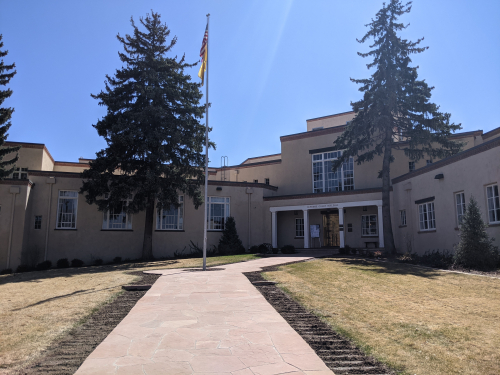
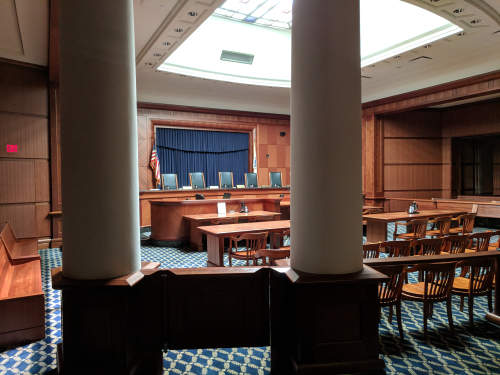
In what amounts to an advisory opinion, in State of New Mexico v. Wilson, No. S-1-SC-3850 (June 7, 2021), the New Mexico Supreme Court (courthouse pictured above) concluded that the State’s public health orders that impose “restrictions on business operations regarding occupancy limits and closures cannot support a claim for a regulatory taking requiring compensation[,]” either under the New Mexico Constitution or under New Mexico’s statutes.

We just published an article in the William and Mary Bill of Rights Journal about the subject of “coronavirus takings,” so naturally we’re intrigued by what the New Mexico court has to say. If you are also interested, read on.

PXL_20210402_173846557

This case is in the Supreme Court as a result of the State’s petition, asking the court to weigh in after 14 separate lawsuits were filed by business owners and others challenging the state’s orders that “restricted mass

Continue Reading NM Supreme Court’s Advisory Opinion: COVID Orders “cannot support a claim for a regulatory taking” – Health Measures Are “Background Principles”

Here’s the latest in a case we’ve been following. It’s not exactly a “new” cert petition, but one which we missed when it was filed back in February.

This one comes up via the Court of Federal Claims and the Federal Circuit, with the latter vacating the CFC’s award of partial compensation, concluding that the petitioner did not have a compensable property interest in the entire property it alleged was taken.

The petitioner bought some of a steel mill’s assets in bankruptcy. Those assets included piles of some of what is known as slag, scrap, and kish. EPA later determined that the piles were leaching contaminants. And you know what that means: remediation. EPA reduced the size of some of the piles and left others in place. The owner sued for a taking of the kish, slag, and scrap the EPA recovered from the site. 

After trial

Continue Reading New(ish) Cert Petition: Kish, Scrap, And Slag Takings From Environmental Remediation

Title page

Wondering about so-called “covid takings” such as business lockdowns, seizures, commandeerings, eviction moratoria, and whether these might be takings?

If so, check out our latest article, Evaluating Emergency Takings: Flattening the Economic Curve, just published in the latest issue of the William and Mary Bill of Rights Journal.

Here’s the Intro to the article:

Desperate times may breed desperate measures, but when do desperate measures undertaken as a response to an emergency trigger the Fifth Amendment’s requirement that the government provide just compensation when it takes private property for public use? The answer to that question has commonly been posed as a choice between the “police power”—a sovereign government’s power to regulate property’s use in order to further the public health, safety, and welfare —and the eminent domain power, the authority to seize private property for public use with the corresponding requirement to pay compensation. But that should not be the question. After all, emergencies do not increase government power, nor do they necessarily alter constitutional rights, and an invocation of police power by itself does not solve the compensation question, but is merely the predicate issue: all government actions must be for the public health, safety, or welfare, in the same way that an exercise of eminent domain power must be for a public use.

This Article provides a roadmap for analyzing these questions, hoping that it will result in a more consistent approach for resolving claims for compensation that arise out of claims of emergencies. This Article analyzes the potential takings claims stemming from emergency measures, mostly under current takings doctrine. Which types of claims are likely to succeed or fail? In “normal” times, it is very difficult to win a regulatory takings claim for compensation. In the midst of emergencies—real or perceived—the courts are even more reluctant to provide a remedy, even when they should, and emergencies are a good time to make bad law, especially in takings law. Can a better case be made analytically for compensation?

Part I summarizes the economic “flattening the curve” principle that motivates takings claims for compensation. Part II sets out the prevailing three-factor Penn Central standard for how courts evaluate claims that a health, safety, or welfare measure “goes too far” and requires compensation as a taking, examining the character of the government action, the impact of the action on the owner, and the extent of the owner’s property rights. Deep criticism of the Penn Central standard is beyond the scope of this Article, and here, I accept it as the default takings test. But I argue that the government’s motivation and reason for its actions—generally reviewed under the “rational basis” standard—should not be a major question in takings claims. Rather, as this Article argues in Part III, the government’s emergency justifications should be considered as part of a necessity defense, not subject to the low bar of rational basis, but a more fact and evidence driven standard of “actual necessity.” Part IV attempts to apply these standards and examines the various ways that emergency actions can take property for public use: commandeerings, occupations of property, and restrictions on use. I do not conclude that the approach will result in more (or less) successful claims for compensation, merely a more straightforward method of evaluating emergency takings claims than the current disjointed analytical methods.

In sum, this article argues there is no blanket immunity from the requirement to provide just compensation when property is taken simply because the government claims to be acting in response to an emergency, even though its actions and reasons may satisfy the rational basis test. Instead, claims that the taking is not compensable because of the exigency of an emergency should only win the day if the government successfully shows that the measure was actually needed to avoid imminent danger posed by the property owner’s use and that the restriction on use was narrowly tailored to further that end.

One final word: the editors at the Bill of Rights Journal have been fantastic to work with to get this piece publication ready. Offering helpful comments, gently suggesting that certain parts are not working (but never insisting, and giving the author a lot of discretion), and getting the citations squared away: I could not have asked for more helpful editing. Congratulations on the publication of your latest issue. 

Thomas, Evaluating Emergency Takings: Flattening the Economic Curve, 29 Wm. & Mary Bill of Rights J. 1145 (2021)

Continue Reading New Law Review Article (Ours) – “Evaluating Emergency Takings: Flattening the Economic Curve,” 29 Wm. & Mary Bill of Rights J. 1145 (2021)