
2015

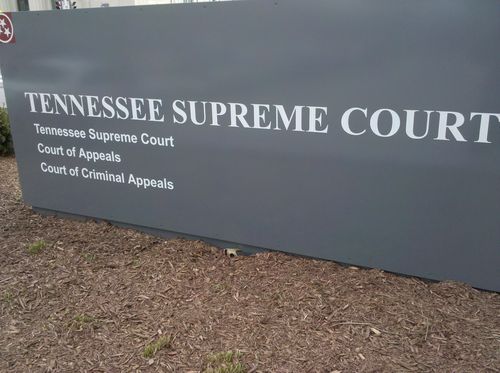
2010-03-24 15.25.46

More from our end-of-year clearing of the opinion hopper.

Winston Churchill reportedly said, “Never give in–never, never, never, never, in nothing great or small, large or petty, never give in except to convictions of honor and good sense. Never yield to force; never yield to the apparently overwhelming might of the enemy.”

Well, the case of City of Memphis v. Tandy J. Gilliland Family LLC, No. W2014-02472-COA-R3-CV (Dec. 16, 2015) might prove the point.

The opinion was the second time the Tennessee Court of Appeals considered issues regarding the taking of the Gilliland Family’s land by the Memphis Light, Gas, and Water Division (nice use of the Oxford comma there, MLGW) for utility poles. The first time up, the question involved public use. The court concluded the taking was for public use, even though MLGW allowed the poles to be shared by private telecommunications and cable providers. In the

Continue Reading Tenn App And The Churchill Principle: On Further Review, We Goofed

We have quite a few court decisions in the hopper, and as 2015 draws down we’re going to post them with only minimal analysis, hoping to clear the queue before January.

Here’s the first, a recent opinion from the Indiana Court of Appeals, in which Mr. Kerr objected after noxious odors from a city owned and maintained sewage line entered his house. He brought claims for both tort (for injuries to his health), and for inverse condemnation (the gases eventually forced him to leave the home).  

The court of appeals concluded that his tort claim would have been viable, except that he had not instituted it within the time allowed by the statute of limitations. Kerr admitted he knew of his potential health problems as early as 2005, but didn’t bring the claim for more than 7 years.

However, the court allowed at least part of the inverse

Continue Reading Ind App: Statute Of Limitations On “Continuous” Inverse Condemnation Claim Renews With Each Injury

Barista’s note: last week, the Hawaii Supreme Court issued a 4-1 ruling in Friends of Makakilo v. D.R. Horton-Schuler Homes, LLC, No. SCAP-13-0002266, holding that the State Land Use Commission was not prohibited from adopting a boundary amendment (akin to a rezoning under Hawaii’s state-heavy land classification scheme) while the process for designating Important Agricultural Lands plays out. 

Earlier this year, on June 25, 2015, court heard oral arguments, and our colleague Paul Schwind, who has guest posted before on this and other important cases, kindly attended the arguments, and had the the following report, which we’re posting while we digest the majority and dissenting opinions.

According to the Judiciary web site summary of the case, here are the issues:

In this case, Appellants Sierra Club and Clayton Hee appeal from the Decision and Order of the Circuit Court of the First Circuit, which dismissed their appeal

Continue Reading Guest Post: HAWSCT Oral Arguments In Hoopili – Is The State Prohibited From Rezoning “Potential” Important Ag Land?

Here’s one that combines two of our practice areas, election and admin law. Land users should also pay attention because admin law issues frequently arise there, also. 

In Green Party of Hawaii v. Nago, No. CAAP-14-0001313 (Dec. 18, 2015), the Hawaii Intermediate Court of Appeals concluded that certain practices by the State Office of Elections were not “rules,” and thus need not have been adopted via the rulemaking procedures in the Hawaii Administrative Procedures Act

The procedures complained of were reactions to the shortage of printed ballots and other well-known difficulties the Elections Office had during the 2012 General Election. The ICA acknowledged “[i]t is undisputed that mistakes were made.” Slip op. at 2. See also slip op. at 24 (“In sum, mistakes were made in conjunction with the 2012 General Election.”). 

Election law types know that courts are generally pretty reluctant to intervene when the plaintiff

Continue Reading “Mistakes Were Made” – Elections Office Practices Are Not “Rules”

Lawprofs and other academics will tell you that nuisance law is about “negative externalities” and the like, but to us, it has always been about the smell.

Especially when it comes to nuisance claims about farms and ranches. Excessive noise, dust, weird hours. No question, those can be disturbing to neighbors and the public, but man, the smell. As one Indiana court put it about a pig farm, “so long as the human race consumes pork, someone must tolerate the smell.” Shatto v. McNulty, 509 N.E.2d 897, 900 (Ind. App. 1987). 

Deciding who has to tolerate the smells is of the main driving forces behind “right to farm” acts, adopted by many states. These laws generally restrict the ability to bring nuisance lawsuits, or even prohibit them, against farmers and ranchers for the usual “negative externalities” which result from normal farming operations. Hawaii has a right to farm

Continue Reading Pa Supreme Court Loves The Smell Of Biosolids In The Morning: “Normal Agricultural Operation” Under Right To Farm Act For Judge, Not Jury

Here’s your daily dose of election law action (don’t worry, land users, we’ve got one of those in the hopper for today as well), the latest on what has been labeled the “Costco” election and the “Oprah” election. The former premised on the notion that a seat at the convention now has all the worth of a Costco membership, the latter on the action by the purportedly private organization holding the election calling it off and declaring that all candidates could participate after the Supreme Court enjoined ballot counting and result certification.   

Well the other shoe has dropped, and the latter action has resulted in a Motion for Civil Contempt, filed yesterday in the U.S. Supreme Court, asking the Court to slap the State, the Governor, OHA and its trustees, and Nai Aupuni (and others, including the ironically-named Akamai Foundation) for violating the Court’s injunction that

Continue Reading More SCOTUS Action In Oprah/Everyone Wins Election

Here’s one in a land use case we’ve been following, both because it is a huge issue and because our partners Greg Kugle and Matt Evans represent the prevailing land owner.  

All Hawaii land users need to read this, a 4-1 decision (Justice McKenna writing for the majority, with Justice Pollack in in dissent) that involves the LUC, the “Important Agricultural Lands” process, and reclassification. We haven’t yet read it in detail, but here’s the holding:

This appeal involves a long-standing issue in this state: balancing agricultural and urban land uses.

Pursuant to Save Sunset Beach Coalition v. City & County of Honolulu, 102 Hawaii 465, 476, 78 P.3d 1, 12 (2003), Article XI, Section 3, standing alone, is not self-executing; rather, its mandate is carried out through the provisions of Part III. Therefore, the plain language of Article XI, Section 3 does not require the LUC

Continue Reading HAWSCT: Land Use Comm’n Need Not Impose Moratorium Until After “Important Ag Lands” Process Is Complete

Back to the Hawaiian-only election. Here’s an interview from ThinkTech Hawaii which asks “Is Nai Aupuni Sponsored by the State Government?

The interview is conducted by the plaintiff in the Akina v. Hawaii case, and the interviewees are one of the lawyers for the plaintiffs, Michael Lilly, and the other is U. Hawaii lawprof Williamson Chang. Each has their viewpoint of course (Professor Chang has argued that Hawaiians should be independent, and not relegated to tribal status, while Dr. Akina and Mr. Lilly are challenging the election), but whatever your view of this thing is, the program is a very good 1/2 hour education on the principles at stake.

The quote in this post’s title is from Professor Chang, whose answer to the question posed by the video’s title is clearly “yes.” If Hawaiians want independence, then those efforts should not be funded by the very

Continue Reading “When Thomas Jefferson was writing the Declaration of Independence, he did not apply for a grant … from [King] George.”

When we hear the word “trona,” we think of Trona, California, a hardscrabble San Bernardino County town near Death Valley.

We just thought we’d get that out of the way, because today’s case from the Federal Circuit, Barlow & Haun, Inc. v. United States, No. 15-5028 (Oct. 9, 2015), doesn’t involve the town, but it does involve trona mining (in Wyoming). 

It seems that the federal government preferred trona mining to oil and gas development. The Bureau of Land Management “indefinitely suspended” oil and gas leases on federal public lands in one part of Wyoming, because oil and gas development posed risks to trona mining. Barlow had 26 oil and gas leases with BLM, and it sued for a taking, and for breach of the leases. 

After trial, the Court of Federal Claims concluded that the breach of contract claim failed on the merits, and that

Continue Reading Fed Cir: Claim That BLM Suspension Of Oil And Gas Leases Was A Taking Isn’t Ripe Because BLM Didn’t Really Suspend The Leases