
Barista’s note: we posted a version of this story before, on the 30th anniversary of the date the Court issued the opinion (December 4, 2009), but thought we would reprint a more detailed view, recently published in our firm’s newsletter, complete with photos.
Damon Key Celebrates Thirtieth Anniversary of Landmark U.S. Supreme Court Victory
What do you call a court opinion that has been cited by 627 othercourts, expressly followed in 42 cases, distinguished in 24 others, andhas been cited 1,041 times in law reviews and 147 times in legaltreatises?
We call it a landmark.
In 1979, the U.S. Supreme Courtissued its decision in Kaiser Aetna v. United States, a truly landmarkcase, argued and won by Damon Key attorneys Charlie Bocken and DianeHastert.
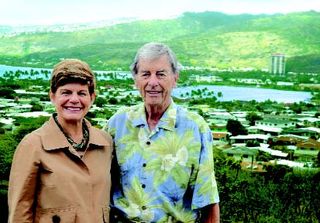 Onbehalf of the developer of Hawaii Kai, Charlie and Diane took on thefederal government and overturned over a century of seemingly adverseprecedent. Kaiser Aetna was the first modern case finding a “regulatorytaking,” which required the government to pay compensation if it wantedto open private property to public access.
Lawyers who practiceproperty, eminent domain, or navigation law know this as the case inwhich the majority opinion, authored by Justice William Rehnquist, held that the navigational servitude is not a blanket exception to the Takings Clause, and just because a waterway is subject to regulation does not mean it is
open to public access.
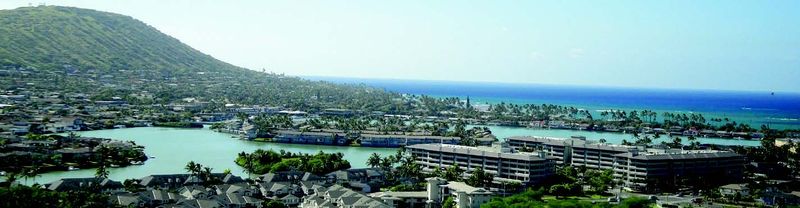
Hawaii residents know this as the case that kept Hawaii Kai Marina (the former Kuapa Pond) private, a status it continues to enjoy today.
Our firm knows this as the standard by which we have consistently measured ourselves: a case that looked difficult and required creative thinking and determined lawyering to resolve.
The facts of the Kaiser Aetna case are especially fascinating, starting with the creation of Kuapa Pond, as the Court recounted, in the “late Pleistocene Period, near the end of the ice age, when the rising sea level caused the shoreline to retreat, and partial erosion of the headlands adjacent to the bay formed sediment that accreted to form a barrier beach at the mouth of the pond, creating a lagoon.”
Diane’s primary task with co-counsel Rick Morry was drafting thepetition for certiorari that convinced the Court to review the case,and the Opening and Reply Briefs that set out the legal arguments. Thearguments turned, in part, on the treatment of Hawaiian fishponds underancient custom and Kingdom law, and the condition of Kuapa Pond atvarious points in its history.
 Charlie argued the case on the opening day of the Court’s Term, October1, 1979. Opening day is filled with pomp and ceremony with the U.S.Attorney General and the Solicitor General attending in formal attire. Charlie, however, declined to appear in morning coat and tails.
Arguing a case in the U.S. Supreme Court is a rare privilege and onethat can make even the most experienced advocates just a touchapprehensive. Charlie, however, was not intimidated and presented hisargument forcefully:
MR. BOCKEN: Your Honors, I just want to conclude with this thought: If Kuapa Pond is burdened with the public navigation servitude, as the government urges, there will be, one, a public confiscation of private property for public recreational use ofan area that was conceived, built, paid for and maintained by privatefunds, and confiscation would not only be servitude of the waters butthe use of all of these improvements to which I just made mention.
And, two, such a result is constitutionally proscribed by the Fifth Amendment. It is not justified by any legitimate public interest and reeks of inequity.
Two months later, a majority of Justices agreed. The Court issued itsopinion on Tuesday, December 4, which coincidentally is Charlie’sbirthday. “It was the best birthday present I could receive!” he said.Charlie and Diane’s handling of Kaiser Aetna established the firm’sreputation as forceful advocates and experts in property and navigationlaw. In the intervening thirty years, the firm has cemented thisreputation, championing the rights of property owners, including twoother similar cases against the federal government.
In 1990, Diane and Robert Thomas (with Charlie providing guidance) beat the Corps of Engineers in a case involving a Molokai fishpond that had been converted into a navigable lagoon. The federal government claimed that by virtue of its improvement, the lagoon was open to public access. On behalf of the property owner, Diane and Robert maintained the lagoon’s private status in a federal court trial, and preserved the judgment in the government’s appeal to the Ninth Circuit.
In 1999, the Damon Key team defended a San Francisco Bay property owner who was being mistreated by the Corps of Engineers and the Port of Oakland. In a complex, multi-jurisdictional case that made national headlines, Diane and Robert (with Charlie continuing to provide sage counsel) once again broke new ground, resulting in the first decision in which the Court of Federal Claims ruled that a property owner was entitled to compensation for the taking of submerged property. The case required evidence of historical records dating back to the original Spanish grants for the property, and proof of the land’s condition at California statehood. The case settled only after the Damon Key team filed a petition in the U.S. Supreme Court.
Here’s the Marina as it appears today:
Find out more about these cases at our website, www.hawaiilawyer.com.Or email Charlie at rcb@hawaiilawyer.com to wish Kaiser Aetna (and him) Happy Birthday.