
April 2008

Bulldozed_homeIf you can fight blight, why not create beauty?  If not beauty, why not bounty?

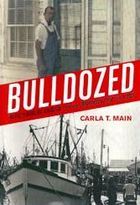
With that phrase, author Carla T. Main, in Bulldozed: “Kelo,” Eminent Domain, and the American Lust for Land,accurately and succinctly sums up the devolution of the Supreme Court’sview of the role of judicial review in eminent domain from Berman, to Midkiff, to Kelo.

Bulldozed is accessible to both lawyers and non-lawyers, andis no dull scholarly summation of the current state of Public UseClause law.  Rather, it places the issues in an understandable contextby framing the legal details with the story of the Gore family ofFreeport, Texas, and their straight-out-of-Forrest Gump shrimpprocessing business.  The taking of the Gore’s property and businessfor Freeport’s “economic development” resulted in the case Western Seafood Co. v. United States, No. 04-41196 (5th Cir. Oct. 11, 2006) (a case I blogged about here).

Continue Reading Book Review: Bulldozed – “Kelo,” Eminent Domain, and the American Lust for Land

On the topic of the Willets Point case, inequitable precondemnation activities, and condemnation blight, thanks to Professor Gideon Kanner for reminding us of his seminal article on the subject, Condemnation Blight: Just How Just Is Just Compensation?, 48 Notre Dame Law Review 765 (1973) (the Notre Dame Law Review was then called the Notre Dame Lawyer).

I read it a while ago, but it’s worth revisiting.  It received the Shattuck Prize from the American Institute of Real Estate Appraisers (now the Appraisal Institute) and it was the sole authority relied on by the Oregon Supreme Court in rejecting the New York Clement rule.  More about the subject here (Professor Kanner’s Gideon Trumpet blog).  Check it out.Continue Reading Condemnation Blight and Clouding Use

Thanks to No Land Grab for informing us of the latest eminent domain action from New York City, this time with an interesting twist.  In Willets Point Industry and Realty Ass’n v. City of New York, No. 08-1453 (E.D.N.Y. filed Apr. 9, 2008), land and business owners in Queen’s, N.Y. filed a federal court complaint alleging that the City purposefully withheld vital infrastructure improvements such as sewers, paved streets, and trash removal, among other things. 

4.  Why are the City Defendants waging this campaign of neglect against one of the City’s own neighborhoods?  The reasons probably have changed over the decades but, on information and belief, at least one of the reasons behind the current campaign is clear.

5.  New York City is undertaking a project to acquire Willets Point, evicting the existing businesses (which likely will lead to their destruction), and replace them with businesses that the City

Continue Reading Blighting Property by Inequitable Precondemnation Activities

Today, we filed the Opening Brief in County of Hawaii v. Richards, No. 28882, the consolidated appeal from two eminent domain lawsuits filed by the County in 2000 and 2005.  I won’t go into detail about the case and will let the brief speak for itself since I am part of the legal team representing the appellant/property owner. 

The issues in the case include:

  • application of Haw. Rev. Stat. § 101-27 (1993), the statute that provides that the government must make a property owner whole and pay damages when an attempt to take property by eminent domain is discontinued or dismissed
  • whether the government may concurrently prosecute more than one condemnation lawsuit at the same time
  • the standards for demonstrating that the government’s claim of public use is pretext to hide private benefit

The brief, minus Appendices, is posted here (1.8mb pdf)

A link to the trial court’s findings

Continue Reading Opening Brief in Kona Eminent Domain Appeals: Damages for Failed Condemnations, Abatement, and Pretext

The recording of today’s oral arguments in Unite Here! Local 5 v. City and County of Honolulu, No. 28603 has been posted here.  (Be prepared — it’s a 93mb file).  The briefs of the parties are posted here.

A report from KHON-TV2, with video of the site and the arguments is posted here.

The appeal involves the question of whether the City should haverequired the Kuilima Resort to prepare a supplemental EnvironmentalImpact Statement.

Update: Charley Foster has posted a summary of the arguments and analysisContinue Reading Oral Arguments in ICA Appeal on Kuilima EIS (mp3)

On April 9, 2008, the Hawaii Intermediate Court of Appeals will be hearing oral arguments in Unite Here! Local 5 v. City and County of Honolulu, No. 28603, the appeal involving the question of whether the City should have required the Kuilima Resort to prepare a supplemental Environmental Impact Statement.  Here are the main merits briefs of the parties:

The issue, as stated by the Appellants:

Does the Hawai’i Environmental Protection Act (HEPA) [Haw. Rev. Stat. § 343-1, et seq.] and the Environmental Council Rules (HEPA Rules) obligate a public agency to determine whether a project requires a Supplemental Environmental Impact Statement (Supplemental EIS or SEIS) where new circumstances and evidence bring to light likely increased environmental impacts not previously dealt with in the project’s twenty-two (22) year old EIS?

Opening Brief at 1. 

Continue Reading Merits Briefs in Upcoming ICA Appeal on Kuilima Resort Environmental Impact Statement

To all those who attended today’s seminar, thank you.  Here are the links to the cases I mentioned.  From the morning session on Case Law Update:

  • Franco – District of Columbia Court of Appeals – allegations of pretext cannot be summarily dismissed
  • Goldstein v. Pataki – Second Circuit – government’s claim of public use trump claims of pretext – cert. petition filed March 31, 2008
  • Brescia – shoreline setback and equitable estoppel – HAWSCT holds you gotta get your “official assurances” from the right party
  • Private agreements and public process – development and settlement agreements not a substitute for zoning process

From the afternoon session

Continue Reading Cases and Links From Today’s Seminar

Remember that whopping $36.8 million inverse condemnation judgment against the City of Half Moon Bay, California by the U.S. District Court back in November 2007?  Yamagiwa v. City of Half Moon Bay, No. 05-4149 VRW (Nov. 28, 2007).  The city said at the time it was going to appeal, and it hired some pretty impressive guns to do so.  Now, however, it appears that the city has changed its mind, as reported in the San Francisco Chronicle’s story, “Half Moon Bay’s plan to avert fiscal ruin.”

In a move to save their citygovernment, Half Moon Bay officials tonight approved a settlementagreement with a developer who won a $36.8 million court judgment lastfall that threatened to leave the city in financial ruins.

The Half Moon Bay City Council signed off on an $18 millionsettlement to developer Charles “Chop” Keenan, whose trustee wanted tobuild an 83-unit subdivision on

Continue Reading Discretion Wins Out Over Valor in Half Moon Bay Inverse Condemnation Case

The homeowners threatened with eminent domain for the Atlantic Yards project in Brooklyn, New York have filed a petition for a writ of certiorari in Goldstein v. Pataki, 516 F.3d 50 (2d Cir. 2008).

The petition points out the schizophrenic nature of Public Use analysis after Kelo: on one hand, the Court’s holding that “pretextual” takings are prohibited, and incidental public benefits are not enough, seems to invite inquiry into the motivations of the condemnor and the “actual purpose” of the taking.  On the other, the Court’s continuing reliance on the sweeping language of Berman and Midkiff may suggest that any reason that is “conceivable” would insulate a taking from further judicial scrutiny.  The Second Circuit in Goldstein chose the latter path.  As I wrote here:

The crux of the issue in Goldstein was whether factual allegations of pretext could be trumped by the invocation of the

Continue Reading Cert Petition in Goldstein v. Pataki: How to Plead Kelo Pretext