
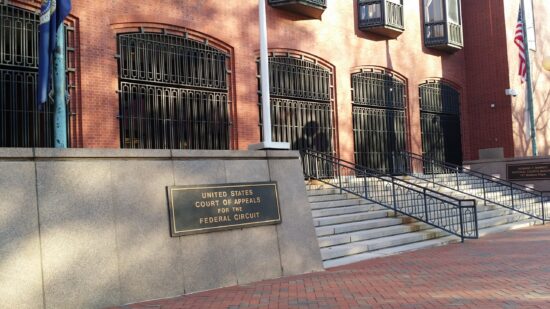
An interesting one from the U.S. Court of Appeals for the Federal Circuit, Ligado Networks, LLC v. United States, No. 25-1792 (Mar. 9, 2026). In an unsigned opinion, the court held that it couldn’t determine whether the plaintiff suffered a physical taking of its radio license because the parties had not adequately briefed the argument that a federal statute created a private property right.
There’s a lot of detail about whether the FCC in an 2020 order authorizing Ligado to “provide certain wireless services using specified radio frequencies[,]” (aka a license) created a private property right. See slip op. at 3. If we’re understanding this correctly, after the FCC granted the license, other federal agencies like the Department of Commerce and the Defense (ahem, War) Department wanted “coordination,” and these desires turned into Congress making “Ligado’s ability to offer service even more dependent” on federal government agencies other than the FCC. Id.
That didn’t sit well with Ligado, which sued in the Court of Federal Claims, asserting that these actions prevented it from launching its services. “Ligado sought damages for what it alleged to be an uncompensated taking for what it assert was a property right it had relating to the spectrum at issue based on the 2020 Order.” Slip op. at 4.
Here’s the gravamen of the takings claim:
The complaint focused on what we summarize, for present purposes, as two forms of government action assertedly effecting a taking: (a) use of the spectrum at issue by DoD itself; and (b) non-cooperation by DoD, NTIA, and Commerce with Ligado’s efforts to meet the conditions for commencing service. Ligado also asserted a taking based on Congress’s enactment of the 2021 NDAA, but that claim is not now before us.
Id. The complaint asserted for takings theories (the opinion calls them “takings claims,” but we know that there’s just a single takings claim, although there are several theories/arguments to make such a claim). A physical taking “based on DoD’s use of spectrum within and/or adjacent to Ligado’s licensed portion,” a categorical Lucas economic wipeout, an ad hoc Penn Central regulatory taking, and a “legislative taking.” Id.
The first substantive issue was whether the plaintiff owns Fifth Amendment private property. The opinion labels this the “central issue” in the case. Slip op. at 9. The plaintiff asserted
it obtained a sole-use property right in the spectrum at issue, protected by the Takings Clause unless and until the grant has been modified in a relevant way by the Commission, which it has not been. Further, Ligado contends, the property right runs even against non-FCC federal agencies and, still more specifically, against the two forms of agency action at issue: DoD use of the spectrum at issue (at least use of the very portion licensed to Ligado, perhaps also adjacent spectrum); and agency (DoD, NTIA, and Commerce) non-cooperation in Ligado’s efforts to fulfill the license preconditions to its commencing service.
…
Ligado agrees that, if it has a property right in this case, the right must have its source in federal law, namely, the Communications Act and Commission actions under it. Specifically, the only po-tential basis for the property right asserted is the federal government grant—the Commission’s 2020 Order—issued under 47 U.S.C. §§ 307, 309.
Slip op. at 10-11.
The court declined to decide, concluding that “[t]his contention depends on too many insufficiently addressed considerations raised by its several components for us to decide, at present[.]” Slip op. at 10. The right Ligado asserts isn’t a leasehold (which is a recognized private property right), and isn’t like a water rights granted by a lease, which are “traditional property rights recognized in property law and protected by the Takings Clause.” Slip op. at 12.
So what is it? The court held it didn’t have enough to decide. It could be private property, or it might not be, depending on whether Ligado has the kind of guarantees that look like private property, whether these rights can arise in the regulated environment, and whether an owner of these statutorily-granted rights rightly had expectations the law is bound to respect. See slip op. at 15.
And for that we need more. Slip op. at 16 (“Although some of the analysis has been done in the briefing before us, not all that is needed has been done.”).
With respect to the statutory context and also with respect to the particulars of the FCC actions, the parties have spoken at too high a level of generality to produce a clear understanding of the legal details that could make an important difference to the answer to the property-right question. We conclude that it is inadvisable to rule on the property-right issue without a more detail-focused analysis, which might clarify what the answer and rationale should be. A remand would permit development of the fuller and more concrete analysis required.
Id.
The court highlighted several questions (dare we say “factors?”) relevant to the inquiry, including the statutory purpose and statement that the licenses granted no rights beyond the rights granted, the exclusivity of these licenses, and whether and how these licenses can be alienated or revoked.
Remanded for more.
Two lessons we take from this one:
First, it is important — nay, critical — in a takings case to clearly define the private property which is alleged to have been taken. This case, which involves government-recognized property, of course emphasizes that requirement. But we have also seen it be a central issue as recently as the Pung arguments. Is it a fee simple interest, some recognized “stick” in the bundle, or something else? The court is going to want to know, so you might as well be as clear as you can. Even where the private property right asserted isn’t traditional, and is sourced in a statute.
Second, even the Big Guys don’t always do it to the court’s satisfaction. Check out the first page of the opinion for the listing of the plaintiff’s counsel. Woo, that’s an impressive list of heavy-hitters which includes a former United States Solicitor General. So yes, the “private property” question isn’t always presented in such a way that a court is ready to process.
Ligado Networks, LLC v. United States, No. 25-1792 (Fed. Cir. Mar. 9, 2026) (per curiam)