
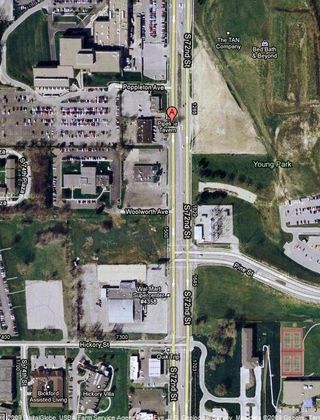
In City of Omaha v. Tract No. 1, No. A-09-323 (Jan. 26, 2010), the Nebraska Court of Appeals held that a post-Kelo “no takings for economic development” statute did not prohibit the city from taking property for a decleration lane on a public road simply because the lane leads to a “well-known national retailer of consumer goods.” (Can we say Wal-Mart?)
The statute, Neb. Rev. Stat. § 76-710.04, provides:
(1) A condemner may not take property through the use of eminent domain… if the taking is primarily for an economic development purpose.
(2) For purposes of this section, economic development purpose means taking property for subsequent use by a commercial for-profit enterprise or to increase tax revenue, tax base, employment, or general economic conditions.
(3) This section does not affect the use of eminent domain for:
(a) Public projects or private projects that make all or a major portion of the property available for use by the general public or for use as a right-of-way, aqueduct, pipeline, or similar use.
The court held that the statute only prohibits takings that are “primarily for an economic development purpose,” slip op. at 254 (emphasis original), and that even though the lane is contiguous to the retailer’s property, “the primary purpose of the deceleration lane clearly is to promote traffic safety and the efficient flow of traffic on the City’s streets.” Id.
Four factors supported the court’s conclusion:
- the city owns the lane
- the deceleration lane will not increase the tax revenue or tax base of the city
- the acquisition did not serve the primary purpose of increasing employment, and
- there was no evidence that the city used its eminent domain power to improve the city’s “general economic conditions”
Id. at 253-54. Even though there might have been an incidental benefit to the retailer, any benefit was collateral and the taking was not primarily to foster economic development.