
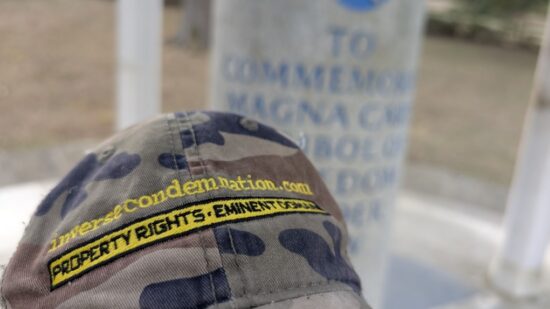
We’re in England for the upcoming Brigham-Kanner Property Rights Conference, and instead of heading directly to London from Heathrow, thought it would be a good time to take a short diversion to nearby Runnymede for what must be the O.G. Property Rights Pilgrimage (those visits we do from time to time to the actual sites of well-known cases).

About a 15-20 minute drive from the airport is the Runnymede area, and the geography — an open plain/meadow adjacent to the Thames, hills above, and about halfway between Windsor (where King John was), and Staines-upon-Thames (where the rebel barons were located), and can immediately understand why it was chosen as the neutral and safe-from-attack meeting site.
Indeed, even before the famous 1215 meeting that produced Magna Carta, the area was used as a gathering site. There’s even speculation that Runnymede means “regular meeting” and “meadow” in Old English.
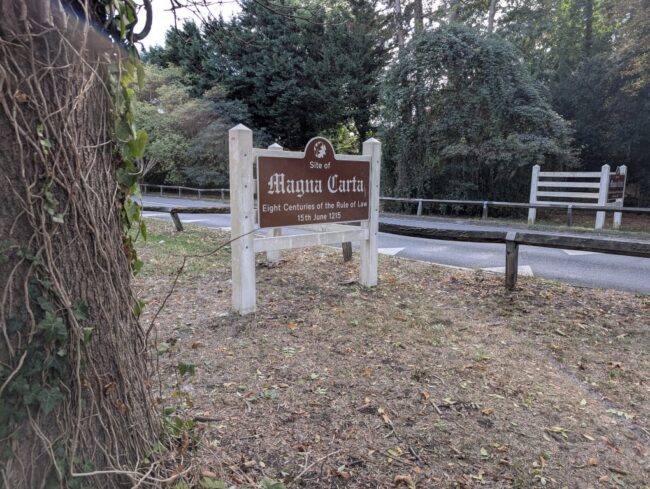
Even though the area is somewhat nondescript, there’s a lot of civic pride in the One Big Thing that happened here.
Thumbs up for the Rule of Law!
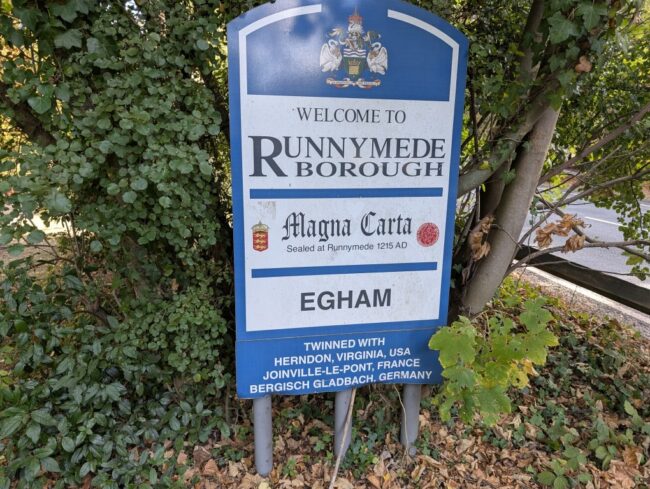
In case you wondered, the place is twinned with Herndon, Virginia. As in Dulles Airport? Well, we guess that makes sense because other than Magna Carta stuff, the big thing you notice here — as in Herndon — are the ever-present jets taking off and landing from nearby Heathrow. Ah, now we get it.
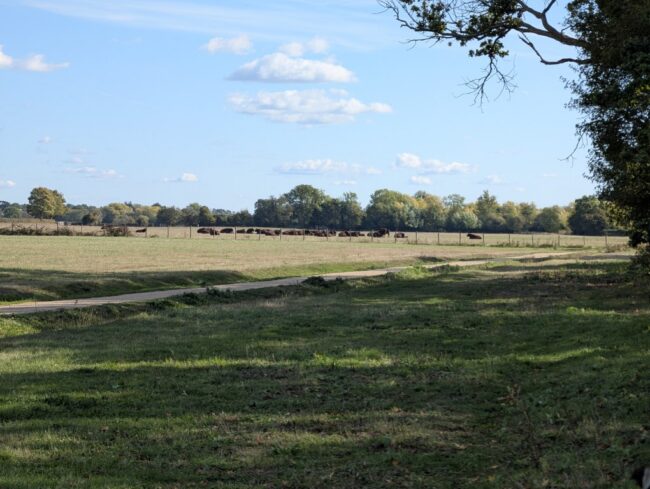
When we say “nondescript” we don’t mean blah, only that there’s nothing particularly notable here, just some bucolic English countryside and some beef…err cattle if you prefer English to your Norman French (remember, the 1215 Magna Carta was, in essence, a peace treaty between the grandson of William the Conqueror and his Norman barons about how much tribute they and their vassals needed to fork over for John Softsword’s efforts to retake parts of France he had surrendered a few years before).
But the meadow in the photo above is the place that we can best figure was the site. No one knows for sure. Was it here? On an island in the nearby Thames? Under a longstanding hew tree?
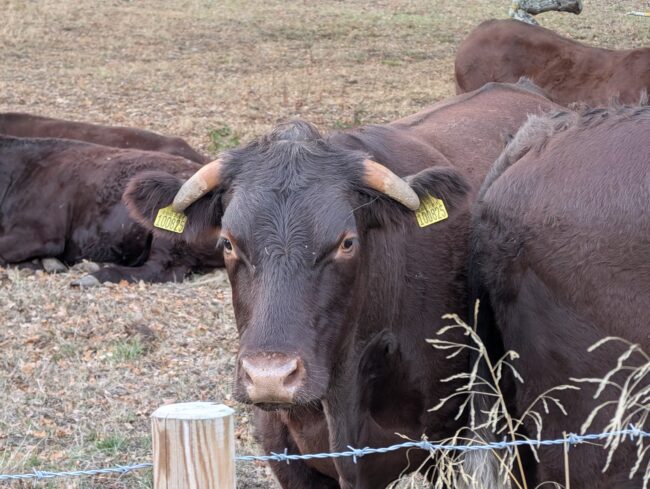
Catel or boeuf? Lawyer or attorney? Petitioner or plaintiff?
We can have both, so why choose?
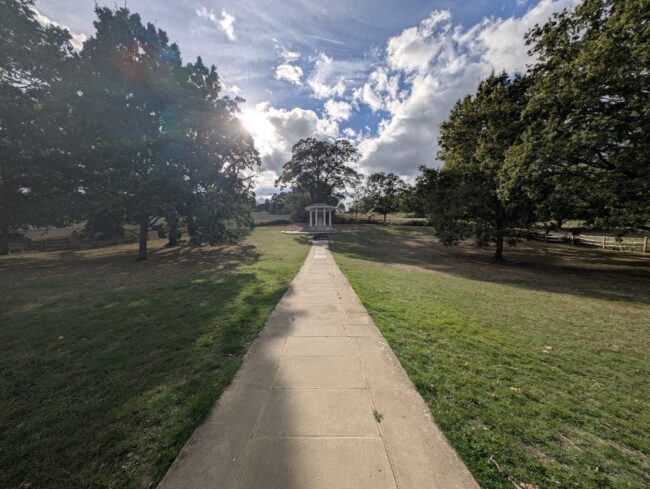
The American Bar Association memorial (built in 1957, and rededicated from time to time since then) serves as kind of a stand-in, with many people assuming it was built on the site of the sealing (back then they didn’t sign documents, but rather impressed it with the royal seal).
It’s a short bit up on a gently sloped hill, behind a gate.
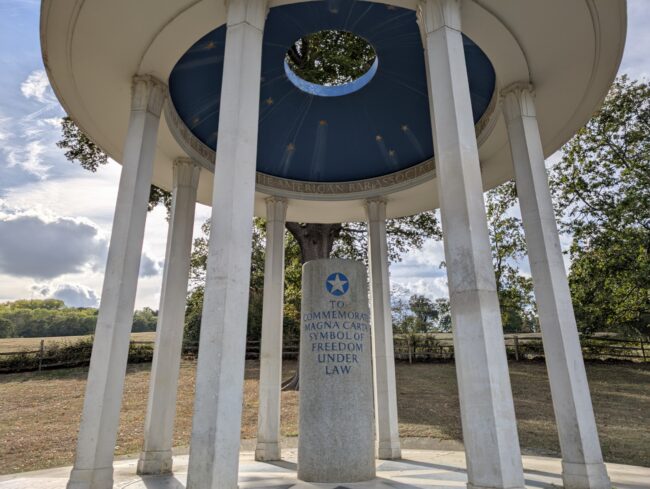
The one thing that surprised us was the modest size of the structure. From photos, we assumed it was much bigger.
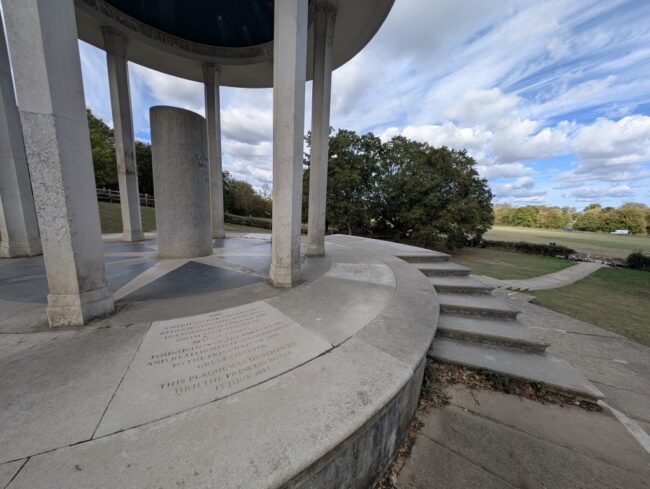
That is was the American Bar Association that installed a monument to Magna Carta perhaps illustrates best the different ways in which the great charter is viewed. American law types trace the DNA of our system and Constitution directly to M.C., because the Founders did. Ask where the weird backwards syntax of the Fifth Amendment comes from and its easy to see from Article 28 of M.C. (“No constable or other bailiff of ours is to take anyone’s corn or other chattels, unless he pays cash for them immediately, or obtains respite of payment with the consent of the seller.”)
Also ask why is the Takings/Just Compensation Clause part of the same Fifth Amendment that spells out the right against self-incrimination, due process, and similar criminal prosecution related stuff, and again, M.C.’s other articles provide the answer.
Maybe we should just call the Fifth Amendment the “Magna Carta Clauses?”
The English, by slight contrast, view M.C. a lot more amorphously, understanding that the original 1215 version was more of a peace treaty (soon broken by John) about what we’d call a privileged fight (king vs barons), and not some early effort to ensure the plebes (you and me) had our rights recognized. No doubt it was a start down that path (and the subsequently-reissued Magna Cartas would do a better job at that), but not the direct DNA that we tend to view it as.
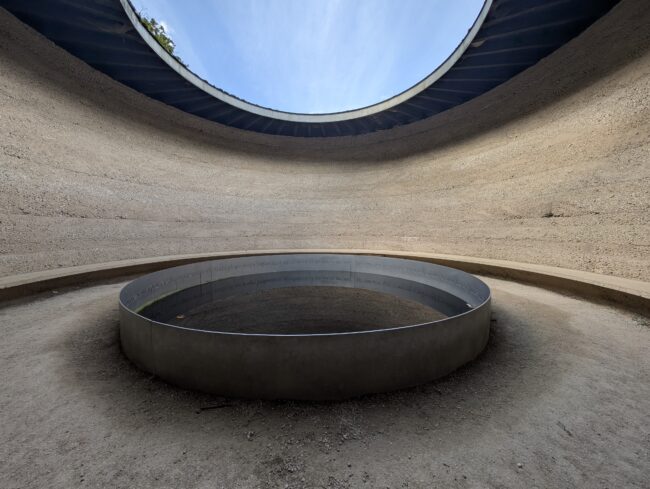
Strolling to the far end of the meadow you come to a concrete structure that looks like a water cistern (or maybe a septic tank that was never installed). Resist the temptation to pass it by, because this is an art installation and walking inside is very cool.
An open air reflecting pool that, quite literally, reflects some of the more famous parts of M.C. The words are inscribed as a mirror image, meaning that in order to read them, you look at their reflection in the pool.
The water is very still (that’s a leaf floating in the pool).
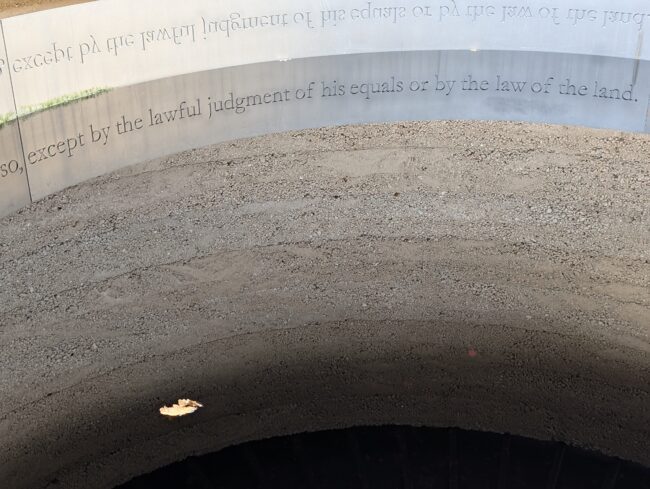
It’s hard to get a sense of this from still photos, so try this vid to get a more accurate view.
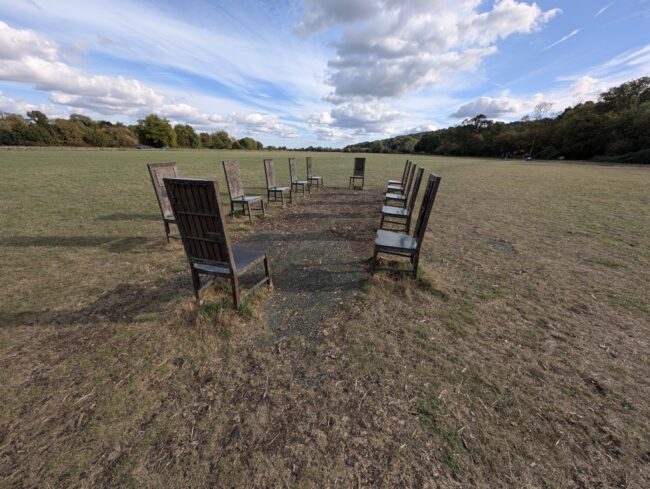
Installed nearby with a view towards the famous meadow is another art installation celebrating M.C.’s impact in the eight centuries hence. This one is about … you guessed it, the role of the jury.
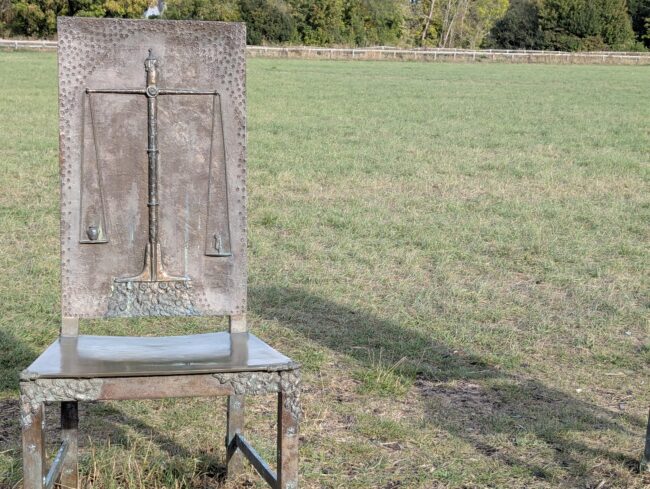
Twelve metal chairs, each depicting some key event where the principles of Magna Carta were put into play. Nelson Mandela’s cell (he argued M.C. in his murder trial), and similar.
Yes, you are encouraged to sit on them.
The scales of justice.
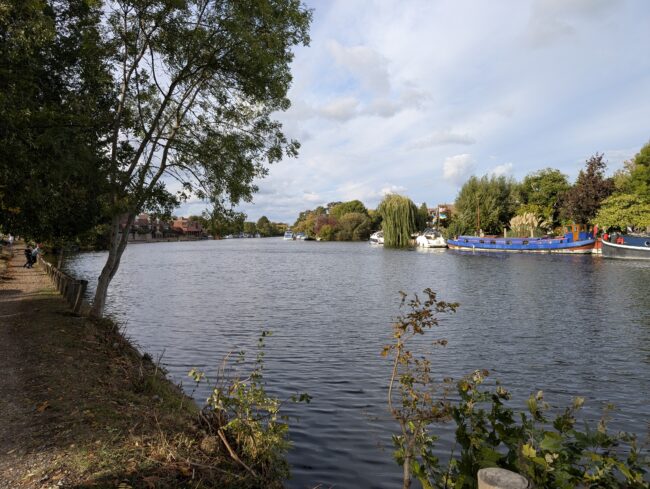
As we noted above, this is very close to the Thames. Here, looking upriver towards Windsor Castle.
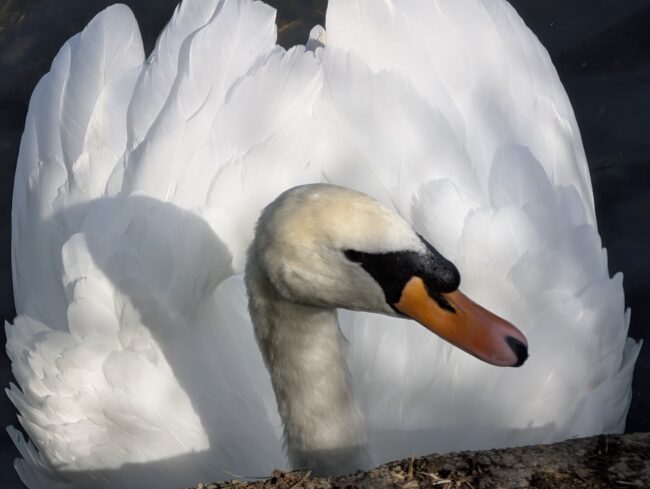
Another pilgrimage we’re considering is the location of the Case of the Swans, another famous property law case from Lord Coke. But that’s for another day. In the meantime, a swan.
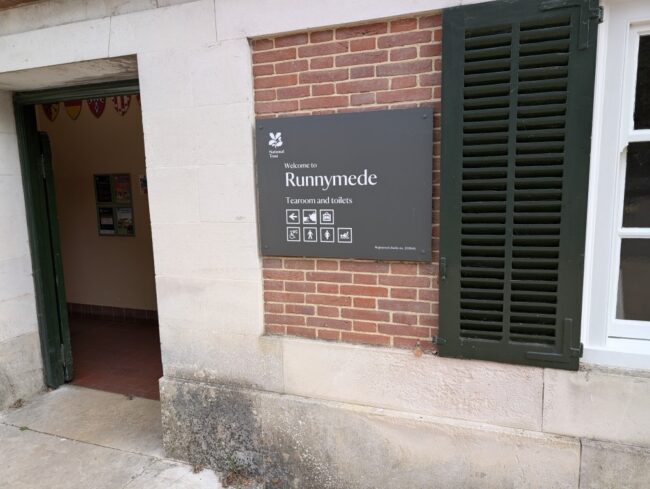
Tea and toilets: everything we need.
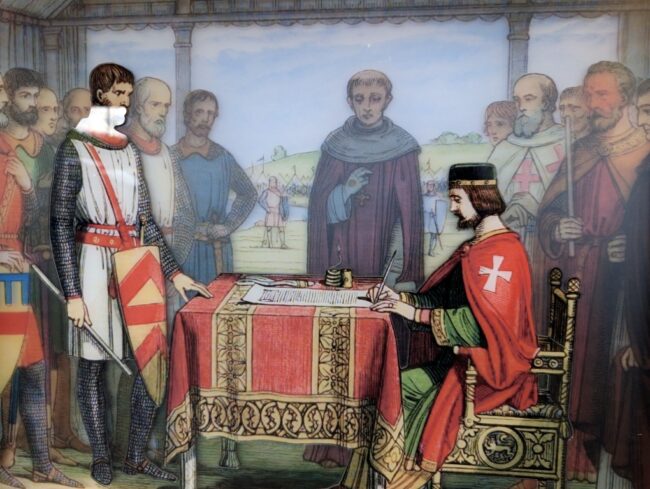
King John: I will seal this Charter limiting my powers and
subjecting the sovereign to the rule of law.
After all, what could go wrong?
If you are nearby, consider checking it out. Well worth a short diversion from whatever you are doing.