November 2023

Like a lot of us, Ball State University student Keller Mellowitz didn’t care for “remote” or “Zoom” virtual classrooms which were imposed on us in varying degrees during the Co-19 thing.

But he didn’t take it lying down. Believing that remote learning wasn’t what was promised to him in return for his tuition dollars, he sued the University for breach of contract and unjust enrichment. He was fighting the fight for not just himself: he brought the claim as a class action on behalf of his fellow students similarly deprived.

Not to allow that sort of thing, the Indiana legislature adopted a statute — applicable retroactively — that prohibits class actions against “postsecondary educational institutions for contract or unjust enrichment claims to recover losses stemming from COVID-19.” In response, the trial court limited Mellowitz’s claims to those only on his own behalf, and not on behalf of the class

Continue Reading Indiana: Depriving Litigant Of Ability To Bring Class Action Challenging Co-19 Zoom Classes Isn’t A Taking

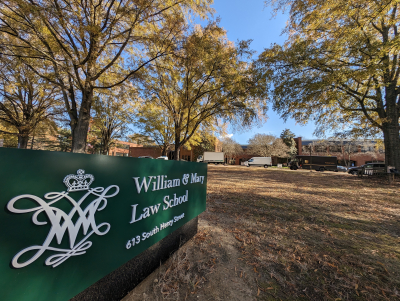
PXL_20231128_160444946
A crisp autumn day at the Old School (truly – founded 1779)

We have just wrapped another semester of dirt law classes at William and Mary Law School in Williamsburg, Virginia. Today was the last day of instruction in our Land Use course, as well as in our Eminent Domain & Property Rights class.

Many law schools feature Land Use Law courses, but only a few are so bold as to include a course on Eminent Domain and Property Rights in their offerings (and a substantial three-credit course, at that). William and Mary Law School is an excellent and very appropriate place to study these topics.

What a great law school, and wonderful, committed, students. I learned way more than I conveyed. A welcoming administration, faculty and staff, too.

A huge thank you to law school Dean Benjamin Spencer, Professor Emerita Lynda Butler (for entrusting me with her beloved

Continue Reading Closing Another William and Mary Law School Season

The U.S. Court of Appeals’ opinion in Barlow v. United States, No. 22-1381 (Nov. 22, 2023), isn’t a groundbreaking opinion on takings (although yes, it did reverse the Court of Federal Claims’s dismissal of the property owner’s rails-to-trails takings claim), but is still worth a quick read.

The major issue was whether, under Illinois property law, a grant of a “right of way” intended to grant a fee simple absolute estate to the grantee (as the United States argued, and the CFC held), or whether it was an easement. The Federal Circuit came down on the side of the latter, holding that although there is a presumption of a grant in fee, “that presumption was rebutted by other express words in the [grant].” Slip op. at 9.

The grant included the words “right of way” (which indicate an easement), but also other words and terms indicating an easement and

Continue Reading CAFED: “Right of Way” For Railroad Shows Intent To Grant An Easement

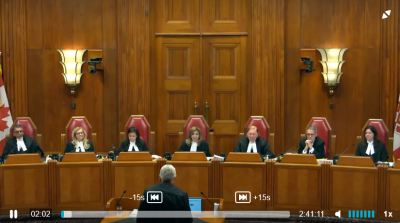
Screenshot 2023-11-27 at 08-13-43 Supreme Court of Canada - SCC Case Information - Webcast of the Hearing on 2023-11-16 - 40302
“Good morning, Justices”

You know that from time to time — mostly thanks to our friend and colleague Shane Rayman and his firm — we cover property goings-on north of the border when a good property rights case comes before the Supreme Court of Canada (see here and here for past examples).

Well, here’s another one, this time involving “de facto [or constructive] expropriation” (or, as we call it, “regulatory takings”), where the question before the Court is how compensation is calculated after it was determined that the application of very restrictive zoning to otherwise developable property was is deemed a taking. Must valuation include or exclude the effects of the challenged regulation?

The oral arguments in the case were held last week (click here to watch a recording [English or French, your pick]).

Applying what in Canada is known as the “Pointe Gourde principle” — the

Continue Reading La Cour suprême du Canada Considering Effect Of “The Scheme” On Takings And Compensation

Pace
22nd annual Alfred B. DelBello Land Use
and Sustainable Development Conference

Come, join us (and others) on Thursday-Friday, December 7-8, 2023, at Pace Law School in White Plains, New York for the Land Use and Sustainable Development Conference (this year’s conference theme is “Balancing Economic Realities with Environmental and Social Concerns”).

We’re speaking about the 100th anniversary of the modern regulatory takings doctrine, which got its start nearly 101 years ago with the Supreme Court’s opinion in Pennsylvania Coal Co. v. Mahon, where the Court held that property may be regulated, but if the regulation “goes too far,” it will be deemed a taking.

Here’s a description of the program:

The 100th Anniversary of Pennsylvania Coal vs. Mahon: How the Takings Clause Became the Primary Check on Government Power When SCOTUS Abandoned Review Under the Due Process and Contracts Clauses During the New Deal

The Takings Clause and 100

Continue Reading Join Us For 100 Years Of Pennsylvania Coal (Pace Land Use Conference, Dec. 8, 2023)

Screenshot 2023-11-24 at 11-46-32 Tyler v. Hennepin County - Harvard Law Review

Check this one out, the Harvard Law Review‘s summary of Tyler v. Hennepin County, the “home equity theft” takings case decided unanimously by the Supreme Court.

Some highlights:

Beginning with traditional principles, Chief Justice Roberts suggested that a property interest in surplus equity had English origins — King John proclaimed in the Magna Carta that when collecting debts owed to him by a deceased person, any surplus “shall be left to the executors.” Parliament endorsed this principle, giving the Crown the power to seize and sell a taxpayer’s property to satisfy a tax debt but requiring the surplus to be returned to the original owner.And according to Blackstone, the English common law required the same.

So too did historic and contemporary American laws.

While the Tyler Court continued the trend of a robust Takings Clause, it introduced novel evidence of a taking: a lack of internal consistency

Continue Reading Harvard Law Review On Tyler v. Hennepin County: Reflecting The “Diminishing” Role Of State Property Law In Takings

46508371_10155973930825208_4800191308415107072_o

On this Thinks…uh Thanksgiving holiday, we’re grateful for all you property law and property rights mavens out there. Drive on, friends.

And no Thanksgiving gathering would be complete without the obligatory dramatic reading of John Stossel’s timeless holiday classic, “Private Property Rights Made the First Thanksgiving Possible.” We’re certain your relatives are eagerly awaiting your performance, including your interpretive dance.

They’ll be very thinkful, we’re sure.Continue Reading We’re Thinkful For All You Dirt Law Lovers

Euclid_front

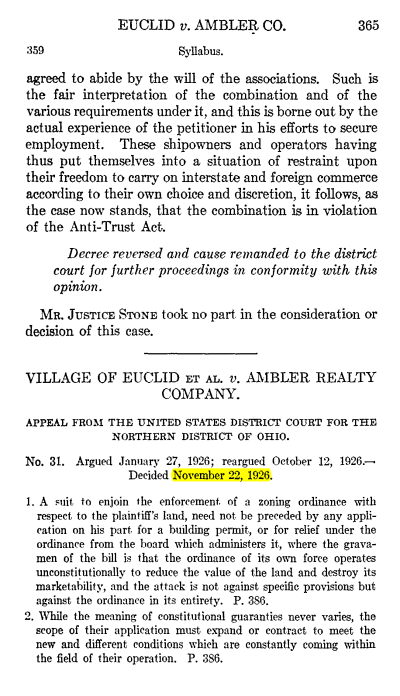
On this day in 1926, the United States Supreme Court issued its landmark opinion in Village of Euclid v. Ambler Realty Co., 272 U.S. 365 (Nov. 22, 1926).

You know this one (shame on you if you don’t!) – it is the case in which the Supreme Court first upheld — against a facial due process challenge — the validity of this thing we call “zoning.” While in the intervening century, zoning has become a catch-all term for regulatory restrictions on the uses of real property, land users know that “zoning” — ackshually — refers only to the regulation and separation of uses, and restrictions on density, and height regulation.

While “Euclid” and “Euclidean zoning” have become part of the land use lexicon and landscape, the decision might have been seen at the time as somewhat surprising. After all, the Supreme Court was in

Continue Reading (Un)Happy 97th Birthday, Euclid!

“No need to ask, he’s a smooth operator…”

Here’s the amicus brief we just filed in a case we’ve (obviously) been paying close attention to.

This is Devillier v. Texas, the case in which the Supreme Court is considering what does the it mean when it describes the Just Compensation Clause as “self-executing?” Do you need statutory authorization in order to bring a takings or just compensation claim, or can you sue directly under the Constitution? Does it matter that Congress has adopted a statute which authorizes damages suits against local governments (“persons”), but has not expressly done so against states qua states?

We say no and our brief explains why.

Note that there’s no Eleventh Amendment issue here, because Devillier filed his federal claims in a Texas court, and it was the State of Texas that removed it to federal court (thus forfeiting any 11A claim, because

Continue Reading “The courts don’t need Congress’s permission to enforce the self-executing constitutional right to just compensation.”

Check this out, our law firm colleague Joshua Thompson talks about regulatory takings, and his big Supreme Court victory in Cedar Point Nursery.

If you are reading this blog, you already know what that means. Regulatory takings. Bundle of sticks. Penn Central (bleh), and right to exclude. Here’s the description of the program:

In this thought-provoking episode, Bob Stetson and Joshua Thompson, Director of Equality and Opportunity Litigation at the Pacific Legal Foundation, discuss the landmark case of Cedar Point Nursery vs. Hassid and explore the intricate balance between private property rights and public interests. What constitutes a ‘taking’ and how far government regulations can go in the name of the public good?

Stream it above, or listen on Spotify here.

(Our own thoughts on the Cedar Point case here.)Continue Reading New Podcast: The Cedar Point Takings Case (From The Guy Who Argued Cedar Point)