November 2022

Check it out: our Pacific Legal Foundation colleagues Jim Burling, Jon Houghton, and Jeff McCoy, along with Jeremy Hopkins (Cranfill & Sumner, North Carolina), share with us the latest on property rights, Sackett, takings, the future of Penn Central, and the upcoming SCOTUS arguments in Wilkins v. United States (is the Federal Quiet Title’s statute of limitations jurisdictional?).

Don’t miss it.Continue Reading Video: “The Future of Private Property Regulation in America”

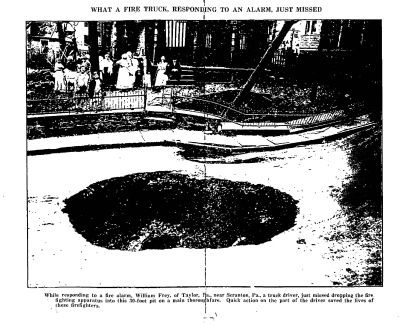
Just missed

Yes, the granddaddy of all SCOTUS regulatory takings cases, from which we got such phrases as these was argued 100 years ago this day.

  • The general rule, at least, is that, while property may be regulated to a certain extent, if regulation goes too far, it will be recognized as a taking.”
  • Government hardly could go on if, to some extent, values incident to property could not be diminished without paying for every such change in the general law.
  • “We are in danger of forgetting that a strong public desire to improve the public condition is not enough to warrant achieving the desire by a shorter cut than the constitutional way of paying for the change.”
  • “As long recognized, some values are enjoyed under an implied limitation, and must yield to the police power. But obviously the implied limitation must have its limits, or the contract and


Continue Reading It Was A Hundred Years Ago Today … Happy Argument Birthday, Pennsylvania Coal v. Mahon
To “slow the spread” in the early days of the Co-19 thing, the City ordered businesses to shut down. But not Wal-Mart, liquor stores, or churches. Golden Glow, a tanning salon objected, and told anyone who would listen that it could operate without person-to-person contact. Sorry, no exceptions.

Federal lawsuit followed, alleging the claims you might expect: equal protection and takings claims. Predictably, the district court granted summary judgment to the City.

And just as predictably, in Golden Glow Tanning Salon, Inc. v. City of Columbus, No. 21-60898 (Nov. 8, 2022), the U.S. Court of Appeals for the Fifth Circuit affirmed. The opinion, as you might expect is short.

Was Golden Glow treated differently from other businesses similarly situated without a rational reason? No. First, Golden Glow is similar to other shut down businesses: “[e]ach class of shut-down business provides recreational, social, or, as some would say, ‘nonessential’ services

Continue Reading Tanning Beds v. Liquor Stores – No Equal Protection, No Physical Take, No Lucas Take For Co-19 Biz Shutdown Order

Florida law makes it really difficult for municipalities to adopt rent controls. State statutes and the Florida Constitution erect all sorts of substantive and procedural hurdles that must be crossed. For example, a statute requires findings that any such measures are responding to an emergency, a “grave … menace to the general public,” and places the burden on the municipality to not just make findings, but back up those findings with facts, and show that rent control will actually “eliminate” the emergency. Single-family properties cannot be rent controlled. And any ordinance adopted by a municipality must be approved by the voters.

Facing what it concluded was a problem — a shortage of 26,500 housing units and a population increase of 25% in the last decade – Orange County’s County Commission voted, 3-2, to control rents. The measure limited the frequency and amount of rent increases.

After the measure was placed

Continue Reading County: We’re Short Of Housing, So Let’s Do Rent Control! Court: Not So Fast.

The County of El Dorado requires everyone seeking a building permit for new development to pay a fee to mitigate the additional traffic that the proposed development is predicted to cause. But the County doesn’t calculate the fee by actually looking at a proposed development and predicting what traffic impacts in may be responsible for. Rather, it has a generic fee schedule that applies to all proposed developments broken down by location and type (residential, commercial, etc.). We don’t care whether your development actually causes more traffic (or if it does, the extent of the increase), we’re hitting you all up.

Or as the California Court of Appeal put it in Sheetz v. County of El Dorado, No. C093682 (Oct. 19, 2022), “[i]n assessing the fee, the County does not make any ‘individualized determinations’ as to the nature and extent of the traffic impacts caused by a particular project

Continue Reading Whether $23K Traffic Fee Is Proportional To One Single-Family Home Is Beyond The Ken Of Judges

Remember that First Circuit opinion from a few months back, which held – contrary to a prior 2-1 Ninth Circuit panel – that just compensation claims are not dischargeable in a governmental bankruptcy?

Well, the government recently filed a cert petition asking the Supreme Court to take the case and hold that there’s nothing special about a just compensation judgment or claim, and that the govermnent’s obligation to provide compensation for takings is just plain-old debt. And you know what happens to plain-old debt in bankruptcy: the creditor often gets bupkis. 

And before we go further, a disclosure: we represent some of the property owners/Respondents in the case. So we’re not going to comment in detail, but shall leave it to you to review the petition, and the Question Presented:

The decision below is the first by a circuit court in history to hold that the Constitution prohibits a

Continue Reading New Cert Petition: Just Compensation Claims Can Be “Adjusted” (Eliminated Or Reduced) In Bankruptcy, Right?

Ideker Farms, Inc. v. United States, No. 21-1849

As written up in the FedCircuitBlog (a must-follow for all you federal takings mavens):

It concerns the federal government’s liability for taking private property. Specifically, in this case, the Federal Circuit will review the conclusion of the Court of Federal Claims that the government’s action was the cause-in-fact of flooding damage and that, as a result, a taking-by-flooding occurred. The government appeals the CFC’s judgment, while Ideker Farms cross-appeals.

Behrens v. United States, No. 22-1277

Also from the FedCircuitBlog:

Behrens v. United States, which concerns a claim the federal government was liable for taking land for public use through the National Trails System Act. Specifically, in this case, the Federal Circuit will review the determination by the Court of Federal Claims that the plaintiffs were not entitled to compensation because the scope of the easement in question was broad

Continue Reading CAFED Hears Arguments In Two Takings Cases

Takingspanel

For the last week, the blog has been a bit idle. That hasn’t been because we’re slowing down, but was mostly the result of our blog platform being worked on behind-the-scenes, which knocked a lot of the hosted blogs offline, this one included. But things look good now, so here we are.

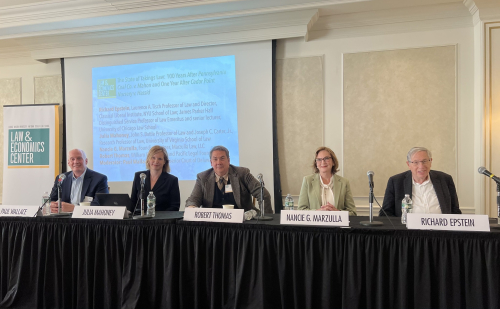
We were also on the road, traveling to New York for the Seventeenth Meeting of the American College of Business Court Judges, where we were able to join an august panel of takings mavens (pictured above, L-to-R: Judge Paul Wallace, Professor Julia Mahoney, some guy, Nancie Marzulla, and Professor Richard Epstein) to talk about the state of takings law.

The title of our program was “The State of Takings Law: 100 Years After Pennsylvania Coal Co. v. Mahon and One Year After Cedar Point Nursery v. Hassid,” and we spent our time discussing and debating

Continue Reading What’s “The State of Takings Law: 100 Years After Pennsylvania Coal Co. v. Mahon and One Year After Cedar Point Nursery v. Hassid”? Incoherent (But Getting Better)