
February 2021

How about buying what you thought was a retirement home, only to be told that if you want the local government’s ok change the form of ownership of the property you’ve got to offer any tenant a lifetime lease? Here’s the cert petition, filed today in a case we’ve been following for a while, first as an outside observer, now as a (minor) participant.

This one seeks review of the Ninth Circuit’s ruling in Pakel v. City and County of San Francisco, in which a 2-1 panel affirmed the dismissal of a regulatory takings claim which the District Court threw out for not being ripe under Williamson County‘s “state procedures” requirement, and because the exaction imposed was accomplished by a generally-applicable legislative requirement and not via an administrative action. The Ninth Circuit rejected en banc review with beaucoup judges dissentaling.

Here are the Questions Presented:

Continue Reading New Cert Petition: “Final Decision” Takings Ripeness, Exhaustion; Unconstitutional Conditions & Legislative Exactions

DSCF1327

When we think “New Mexico,” we imagine scenes like this. Endless sky, seemingly infinite open roads, high desert … you know, “the West.”

But after reading the New Mexico Supreme Court’s opinion in City of Albuquerque v. SMP Properties, LLC, No. S-1-SC-37343 (Feb. 25, 2021), we’re going to think “inverse condemnation.” (Yeah, that may be sad, but come on, remember the title of this blog!)

The case: the city did a partial taking of SMP’s property for a road project. Just a thirty foot wide strip of SMP’s nearly 10 acres. But prior to the taking, the city told one of SMP’s tenants, “hey, we’re going to be taking this strip and doing a road project.” As a result, SMP’s inverse condemnation claim alleged, the tenant decided to not renew its lease. See slip op. at 11 (“SMP alleges that its claim for inverse condemnation arose prior to the

Continue Reading Enchanted: Inverse Condemnation For Damaging Is A Fact Thing – City Could Be Liable For Chasing Away Tenant

We’ve been meaning to post this one, a short per curiam opinion from the Ohio Supreme Court, for some time. Not because it deals with earth-shattering substantive eminent domain issues, but because it highlights a somewhat niche, but pretty important, procedural issue. 

Say an owner challenges the take, either by way of a public use or a necessity challenge. Some jurisdictions, Ohio included, permit the owner whose challenge is initially denied, to an immediate interlocutory appeal. The question before the court in State ex rel. Bohlen v. Halliday, No. 2020-1245 (Jan 27, 2021) was whether, while that appeal was being considered by the court of appeals, the trial court could move forward and determine just compensation. The trial court thought it could, and set a trial date. The property owners thought otherwise, and sought a writ in the Supreme Court.

This mostly turned on a question of how Ohio’s

Continue Reading Ohio: It Doesn’t Make A Whole Lot Of Sense To Have A Compensation Trial When The Necessity Question Is Being Appealed

6a00d83451707369e20240a51cc266200b-800wi

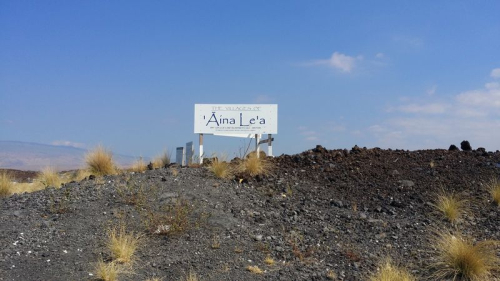
We were hoping for better news in a case we’ve been following in its various forms for what seems like forever. But today, the U.S. Supreme Court in this order declined to issue a writ of certiorari to review the Ninth Circuit’s decision in Bridge Aina Lea, LLC v. Hawaii Land Use Comm’n, No. 20-54, a case in which a federal court jury concluded the property owner suffered both a Lucas and Penn Central taking, but the Ninth Circuit reversed, concluding that no reasonable jury could have found a taking.

We’ve always been told that bright lines are not appropriate in takings. That there are myriad ways in which government can affect property interests and property rights. That the courts should defer to the government’s exercise of regulatory power. That per se rules such as Lucas and Loretto are not generally applicable. Instead, we’re told, go prove a taking

Continue Reading Thomas, J., Dissenting From Denial Of Cert In Penn Central And Lucas Takings Case: “If there is no such thing as a regulatory taking, we should say so. And if there is, we should make clear when one occurs.”
IMG_20180720_152126

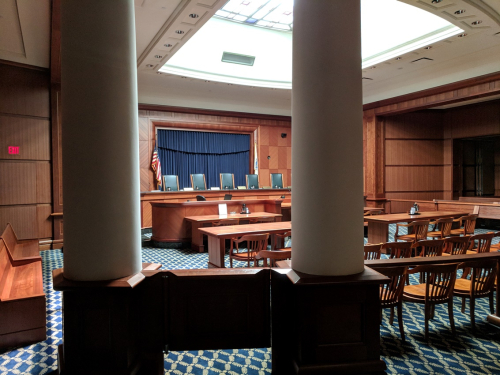
If you are ever in Boston, it is worth a few minutes of your time to pay a visit to the John Adams Courthouse. The interior architecture is pretty neat, it is full of history (Oliver Wendell Holmes was here), and it is one of the few places in the country where the state’s supreme court is actually below the intermediate appellate court. 

On that last one, we’re being very technical and a bit cheeky: yes, the Massachusetts Supreme Judicial Court is indeed the “supreme” court jurisdiction-wise, but it is located on the second floor, while the Appeals Court is on the third.

Our story today takes place in the SJC (courtroom depicted above).

In Abuzahra v. City of Cambridge, No. SJC-12920 (Feb. 17, 2021), the court was faced with what to do in a quick take: can an owner who accepts the pro tanto payment

Continue Reading Mass SJC: In Quick Take, Owner Can Accept The Pro Tanto Payment (Deposit) And Also Challenge The Take
We all know that Knick v. Township of Scott, 139 S. Ct. 2162 (2019) only knocked out the “state action” prong of the two-part Williamson County takings ripeness requirement. You may not need to pursue and lose compensation via state procedures to ripen a takings claims, but still active is the “final decision” requirement under which the alleged taker must have made a decision applying the regulation to the property owner, so that a reviewing court can determine what, if any, uses the owner may make of the property under the regulation. 

Here’s the latest on that one, from the U.S. Court of Appeals for the Fifth Circuit. In DM Arbor Court, Ltd. v. City of Houston, No. 20-20194 (Feb. 12, 2021), the court was faced with a choice between final decision ripeness on one hand (and the notion that an unripe case can become ripe down the

Continue Reading CA5: Final Decision Takings Ripeness Is All About Timing (So Yes, A Filed-Too-Early Case Can Become Ripe On Appeal)

The situation in Hamen v. Hamlin County, No. 28671 (Feb. 10, 2021), a recent opinion by the South Dakota Supreme Court seems pretty bad, but a road we’ve gone down before. Believing that a suspect was inside, the local SWAT team (along with the county Special Response Team — drone and two armored vehicles included) damaged the mobile home belonging to the suspect’s parents:

To create the communication portholes for the Hamens’ trailer, an armored vehicle pulled away the front stairs and deck, which were not attached to the mobile home or secured in the ground, and pushed in the front door with a ram. The second armored vehicle opened three portholes on the opposite side of the mobile home by breaking through windows and a sliding patio door, causing significant damage to the walls and the septic system.

Well, it turns out the suspect wasn’t there. “Shortly after

Continue Reading The “Or Damaged” Part Of South Dakota’s Constitution Doesn’t Really Add Much: Damages From Police Actions Are Neither Takings, Nor Damagings

When we hear “Pennsylvania” and “coal,” our ears perk up and we naturally think of this case and regulatory takings.

But the Pennsylvania Supreme Court (Western District)’s opinion in DPBS Coals, Inc. v. Penn. Dep’t of Transportation, No. 41 WAP 2019 (Jan. 20, 2021) isn’t a regulatory takings case, but dealt with more traditional inverse condemnation. We’ve been meaning to post about the case for some time, but in the interim a colleague has written it up on his blog, so our own post shall be short. Check it out: “Coal Companies in Pennsylvania Fail to Make Out Inverse Condemnation Claim” by Matt Hull. (PS – don’t feel bad if you are sometimes a procrastinator; delay can be rewarding and could save you some work.)

Matt’s post summarized the facts:

The companies held the mineral rights to a large tract in southwestern Pennsylvania. A portion of the

Continue Reading A Pennsylvania Coal Takings Case (No, Not That One)

A landowner in Afghanistan sued the United States for taking land he allegedly owned for use as a combat base.

Prove you own this land, the Government responded. The first step to doing that is to attach to the complaint documents that make out a prima facie case of ownership. Otherwise, dismissal for failure to state a takings claim (no plausible allegation that the plaintiff owned “property”). 

The plaintiff complied with the Court of Federal Claims’ order for more definite statement and attached to his complaint documents he said showed he owned the property which the U.S. Army used to build Combat Outpost Millett. The CFC concluded these were not good enough under Afghanistan law (specifically, something called the “Law of Land Management Affairs,” which the court noted was “revised by the Taliban in 2000 and by the Afghan government in 2008[.]” This law looks for formal registration, which none

Continue Reading Fed Cir: No Taking Because Plaintiff Can’t Prove Ownership Of Afghanistan Property Army Used For Combat Base

Regulatory takings challenges are no doubt tough. Especially Penn Central regulatory takings challenges. Facial Penn Central regulatory takings claims, moreso.

The U.S. Court of Appeals’ opinion in Clayland Farm Ents, LLC v. Talbot County, No. 19-2102 (Feb. 9, 2021) – the latest in this case we’ve been following – proves the point. The court affirmed the district court’s summary judgment on the property owner’s takings, due process, and civil conspiracy claims.

The property owner brought its claims in Maryland state court claiming, among other things, that the County’s two indefinite moratoria on development and sewer availability — which prohibited owners from seeking or obtaining County subdivision — was a facial taking:

Clayland’s appellate briefing asserts that Bill Nos. 1214, 1257, and 1229 constitute a facial regulatory taking under both federal and state law. Bill No. 1214 temporarily reduced the permissible density of VC-zoned properties from four units per acre

Continue Reading CA4: No Facial Penn Central Taking By Development Moratoria