2021

A fitting way to bid adieu to 2021: Ruble v. Tate-Nadeau, No. 4-20-0641 (Dec. 28, 2021), in which the Illinois Appellate Court held that the governor’s tavern and dine-in restaurant Covid-19 shut-down orders were not takings of personal property under section 7(4) of the Illinois Emergency Management Act.

This was not a claim for a constitutional taking, but only under the Act, which obligates “the State to pay just compensation” if it “take[s] possession” of personal or real property. The plaintiffs alleged that the governor had taken possession of their properties by forbidding use of their businesses. The trial court dismissed the petition for failing to state a claim.
Because the plaintiffs’ claims were “solely and exclusively” under the Act, the appeals’ court’s analysis was limited to statutory construction of the term “take possession of” personal or real property. The court concluded that “[t]his language contemplates the physical

Continue Reading Illinois Governor Did Not “Take” Property Within Meaning Of Emergency Act By Co-19 Business Shut-Down Orders

In Rural Empowerment Ass’n for Community Help v. North Carolina, No. COA 21-175-1 (Dec. 21, 2021), the North Carolina Court of Appeals, the plaintiffs have a beef with hogs. Specifically, nearby hog farms that they allege are nuisances (see this story for a report on porky goings-on in NC). 

They want to sue, but they can’t. North Carolina likes the local pork industry. North Carolina has a Right to Farm Act that limits the ability to sue for a common law nuisance. See here for more on RTF Acts, generally.

The plaintiffs sued to invalidate the Act, claiming the statute violates their rights under the N.C. Constitution’s law of the land clause, and their “fundamental right to property.”

NC’s law of the land clause is the “equivalent of the Fourteenth Amendment’s Due Process Clause in the Constitution of the United States.” Slip op. at 11. An invalid exercise

Continue Reading NC Right To Farm Act Is Not A Taking Of Nuisance Claims

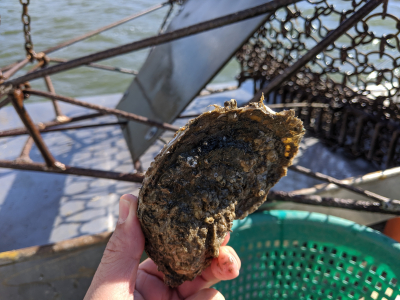
IMG_20191108_121950_1

We like oysters. When we think “oysters,” that means going to a restaurant or oyster bar, sitting down, and ordering up a dozen or more. Easy stuff.

But the real work of oyster farming is “arduous, backbreaking work requiring a special dedication.” Avenal v. State, 886 So. 2d 1085, 1110 (La. 2004). It “takes a lot of labor effort,” is “pretty difficult work,” and oyster farmers “have to put in blood, sweat and toil to sometimes turn muddy water bottoms into an area that could be used for oyster cultivation.” Planting and harvesting the oysters means even more work. Knowing the effort that goes into delivering up oysters to consumers just makes us appreciate them all the more.

But the last time we reported on a takings case involving oysters, we had to conclude that the court did not like oysters that much. As property, that is. Yes

Continue Reading Citing Locke’s Labor Theory, CFC Finds “Property” In Oysters

Here’s a must-read from the Texas Court of Appeals (Second District).

In City of Grapevine v. Muns, No. 02-19-00257 (Dec. 23, 2021), 

Before 2018, the city’s 1982 zoning ordinance authorized “single-family detached dwellings” and didn’t say anything about short-term renting (short-term being defined as less than 30 days). The ordinance didn’t expressly authorize it, but it didn’t prohibit it either. The ordinance was one of those that say anything not expressly authorized is prohibited. Bed and breakfast operations were recognized in a 2000 amendment, but these operations require, among other things, that the owner live on-site.

But after the introduction of platforms such as AirBnB and VRBO, the short-term market “exploded” and the usual complaints from neighborhood residents followed. Slip op. at 6 (“criminal mischief, domestic disputes, parking violations, alarm calls, and noise disturbances”). Next came studies, public hearings, and the city’s assertion that it didn’t really need to

Continue Reading Tex App: “Property” Includes Right To Rent It Out – City’s Short-Term Ban May Be A Taking

Here’s the State of Texas’s amicus brief in support of the property owners in the case now pending in the Texas Supreme Court about whether the developer of the proposed Dallas-Houston “bullet train” may exercise the delegated power of eminent domain as a “railroad company” or an “interurban electric railway company” as those terms are defined by Texas statutes.

The brief argues that no, this private entity isn’t a railroad company because that definition requires that the rail be presently operating, and this outfit isn’t. The AG also argues that the company doesn’t qualify as an interurban electric railroad because a bullet train isn’t a “small, localized, interurban railway expressly contemplated by statute.” Br. at 14.

And in what is to us the most interesting part of the brief, Texas also argues that an exercise of eminent domain power by this private entity would run afoul of the state constitutional

Continue Reading Texas AG: Saying You’re Working On The Railroad Isn’t Enough To Actually Be Operating A Railroad, Bullet Train

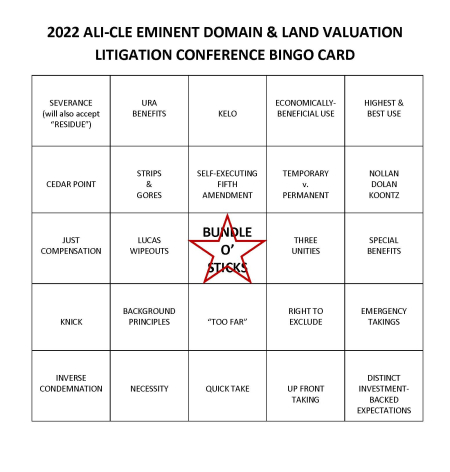
ALI-CLE 2022 Bingo card

Are there going to be prizes at the 2022 ALI-CLE Eminent Domain and Land Valuation Litigation Conference, January 26-29, 2022 at the McCormick Ranch Resort in Scottsdale, Arizona? Oh yes.

But to win, you gotta play. To play, you first gotta join us and register (more info here), preferably in-person in Scottsdale, or via our live webcast (either the whole shebang, or ala carte). After you register, next step is to make your own bingo card (or you can use our card, above). To make your own, download the MS Word template here (ALI-CLE 2022 Bingo card BLANK.docx).

Then open the doc and from the suggested list of entries, cut-and-paste into the blank squares (all but the center, which is a freebie). 

Bingocardscreenjpg
(click the pic if it is too small to be viewed on your screen)

You are not bound by these suggested entries and

Continue Reading Your 2022 ALI-CLE Eminent Domain & Land Valuation Litigation Conference BINGO Card

In this season of “regifting,” this one from the Hawaii Supreme Court about an attempt to “re-seize” property by civil forfeiture.

In Alm v. Eleven (11) Products Direct Sweepstakes Machines, No. SCWC-15-848 (Dec. 20, 2021), the unanimous court held that the notice and related procedures in Hawaii’s civil forfeiture statute are mandatory, and that the two-year statute of limitations governing when the government must institute forfeiture proceedings or return the goods is not the sole time constraint the government must adhere to.

It all started back in 2012, when Five-O (not really, it was HPD), pursuant to a search warrant seized 77 devices allegedly used for gambling. The statute of limitations on the government bringing a forfeiture action is the same as the underlying offense (here, two years). Well, nearly two years passed and HPD began the forfeiture process, but at about the same time cancelled

Continue Reading Timing Requirements In Hawaii’s Forfeiture Statute Are Not Mere Internal Deadlines

The latest episode of Clint Schumacher’s Eminent Domain Podcast has dropped.

A Holiday Special in which Dave Arnold, Kristen Bennett, Ivy Cadle, Anthony DellaPelle, Carolyn Elefant, Clint Harbour, Justin Hodge, Patrick McCallister, Richard Rothfelder, and Adam Sanders share their seasonal traditions.

We also visit with Clint for a preview of the upcoming ALI-CLE Eminent Domain & Land Valuation Litigation Conference, Jan 26-29, 2022, Scottsdale, Arizona.

As always, check it out!Continue Reading Episode 80, Eminent Domain Podcast: Holiday Special (And ALI-CLE Conference Preview)

You probably already know our Toronto friend and colleague Shane Rayman. He’s the lawyer responsible for the fascinating Supreme Court (Canada, naturally) decision in Antrim Truck Centre, wherein the Court recognized that under the Expropriation Act, Ontario had an obligation to compensate a property owner for “injurious affection” even though the highway project did not formally expropriate any part of the owner’s truck stop.

Shane is also a regular guest lecturer at our William and Mary Law School Eminent Domain and Property Rights class (where he speaks on comparative property rights), and has been a faculty member at the ALI-CLE Eminent Domain and Land Valuation Litigation Conference. He also recommended we visit Montreal’s Mirabel Airport (a trip only a true dirt lawyer could love).

To catch up on the latest from Shane, check out this Canadian Lawyer story, “Expropriation expands with more infrastructure projects,” in

Continue Reading Shane Rayman On Expropriation And Compensation In Canada