
2020

As we noted in this post (“CA4 (Over Dissent): No Taking When Maryland Outlawed ‘Rapid Fire Trigger Activators’“), it was likely that a cert petition would follow after the U.S. Court of Appeals for the Fourth Circuit held (over a strong dissent) that it was not a taking when Maryland outlawed previously lawful personal property, but did not require the owners to physically turn over the banned property — here, devices that allow semi-automatic rifles to fire rapidly — to the government.

Well, here it is. In this cert petition, the owner argues that “[t]he Fourth Circuit’s decision also creates a direct conflict with the Federal Circuit which has long applied
Lucas to personal property and held that personal property is protected without regard to whether the government or a third party takes possession.” Pet. at 8.

Here are the Questions Presented:

This case is about whether

Continue Reading New Cert Petition: Declaring Property Illegal To Own Is A Taking, Even If The Govt Doesn’t Confiscate It

A short one from the Florida District Court of Appeal (Second District) on exactions.

More precisely, what is an “exaction.”

In Murphy Auto Group, Inc. v. Fla. Dep’t of Transportation, No. 2d19-1236 (Nov. 20, 2020), the court held that the requirements of Nollan/Dolan (nexus and rough proportionality) apply when the DOT demanded the owner spend money to improve government-owned land as a condition of granting a permit to develop the owner’s own land.

Initially, the DOT demanded that the owner dedicate a strip of land as a condition of the DOT’s grant of a drainage and driveway connection permits the owner needed to develop its commercially-zoned property (DOT controlled access to the adjacent highway). The owner declined to make the dedication, and in a counter-proposal, the DOT “required that Murphy, at its sole expense, reconstruct the drainage collection system as a condition for approval of the drainage

Continue Reading It’s An “Exaction” When Govt Requires Landowner To Spend Money To Improve Govt Land

A short one from the Virginia Supreme Court. In Palmyra Associates, LLC v. Comm’r of Highways, No. 191680 (Dec. 17, 2020), the court upheld the exclusion of evidence about a property’s “before” condition in a partial take case, concluding that the proffered evidence of the property’s development potential was too speculative. Or, more accurately, that the trial court did not stray beyond its wide discretion to keep the evidence out.

VDOT needed a portion of Palmyra’s property for a roundabout. The big question was the damage to the remainder (or “residue”) property and its highest and best use. Owner said commercial development; VDOT said existing use.

The owner offered testimony that it intended to develop the property (consistent with the County’s general plan), and had drawn up site plans years ago. But it had not secured entitlements, and further government approvals were needed before those plans could come to

Continue Reading Trial Court Had Discretion To Exclude Unapproved, Conditional, 10-Year-Old Site Plans From “Before” Condition

Photo

Here’s a big development in a case we’ve been following for a while (and in which we filed an amicus brief in support of the prevailing property owner).

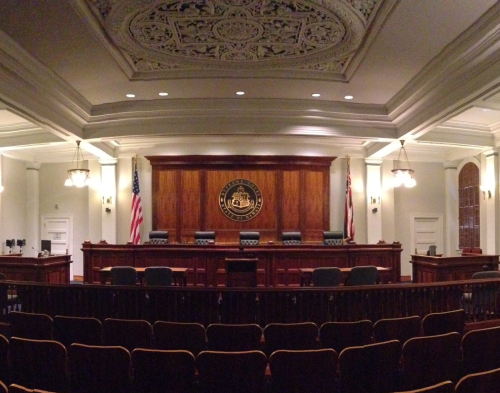
In DW Aina Lea Dev., LLC v. State of Hawaii Land Use Comm’n, No. SCCQ-19-156 (Dec. 17, 2020), the unanimous Hawaii Supreme Court held that the statute of limitations governing a regulatory takings claim under the Hawaii Constitution’s “takings or damagings” clause is six years.

The case started out in a Hawaii state court, and was removed to the U.S. District Court by the State Land Use Commission. The district court dismissed the state takings claim for missing the limitations cut-off. Hawaii has not adopted a statute of limitations expressly for takings or inverse condemnation claims. Thus, the question is what is the closest analogue claim. If there isn’t one, Hawaii has a “catch all” statute (six years) for civil claims.

Continue Reading Hawaii: State Takings Are “Self-Executing” Constitutional Violations (Not Torts Or Breaches Of Contract), Subject To A Six-Year Statute Of Limitations
Charlie Brown got a bag of rocks for Halloween.

But you aren’t so cruel, and want to give better gifts this holiday season to the dirt lawyer in your life, no? Here are our 2020 suggestions for stocking stuffers that will make property mavens celebrate the season. 

Start with this one, Professor Bart Wilson’s newly-published “The Property Species – Mine, Yours, and Human Mind.” As describe in the book blurb: “Arguing that neither the sciences nor the humanities synthesizes a full account of property, the book offers a cross-disciplinary compromise that is sure to be controversial: Property is a universal and uniquely human custom. Integrating cognitive linguistics with philosophy of property and a fresh look at property disputes in the common law, the book makes the case that symbolic-thinking humans locate the meaning of property within a thing.”

Property book cover image

We are so confident that the book is sure


Continue Reading Holiday Suggestions For The Dirt Lawyer On Your List (2020 Edition)

Before it condemned a parcel of land in Bastrop County, the State of Texas made a bona fide offer to purchase to the owners of the fee as mandated by Texas law, which requires that a condemnor make an offer to the “property owner,” and provide a statement “to the landowner[.]”

But in In re Texas, No. 03-20-00447 (Dec. 2, 2020), the land being taken was also subject to an easement. And Texas didn’t make any kind of offer to the owners of the easement, whose parcel would otherwise be landlocked. The trial court abated (dismissed), and Texas sought mandamus review, arguing that the owners of the easement are not “property owners” as contemplated in the statute.

The court of appeals agreed. The statute does not expressly define “property owner.” After noting that the plain meaning controls, the court glossed over the plain meaning of “property owner” (under which

Continue Reading Tex App: Term “Property Owner” In Statute Requiring Bona Fide Offer Does Not Include Owner Of Easement

Earlier this week the U.S. Supreme Court heard oral arguments in its latest takings case.

Wait, what? Did we miss something? A takings case, argued this week?

No, you didn’t miss a land use or eminent domain case, but one in which Holocaust victims sued Germany in a U.S. court for seizure of property in the Second World War. The issues centered around the Foreign Sovereign Immunities Act, under which foreign countries are mostly immune from being haled into an American courtroom. But there is an exception for “expropriation,” when property is “taken in violation of international law.”

The plaintiffs argued that their property — artwork and medieval treasures — were literally taken from them by German and Hungarian authorities, so they qualified under the “taken” exception. The German and Hungarian governments, supported by the United States, argued that “taken” means expropriated, as in seized in the sense

Continue Reading The Latest Supreme Court Takings Case, Argued This Week

Often, the dispositive question in many takings cases tuns on whether the plaintiff owns “property,” and if so, what rights does that recognize. If you define the property in such a way that ipse dixit excludes the “stick” the owner claims was taken, then the answer is always going to be no property, no taking. To us, this is largely a question of definitions and policy: is this interest, in a judge’s view, worthy of constitutional protection?

And that’s the wrong approach, because this analysis often seems more like a semantic exercise, undertaken by the wrong party. Instead of concluding, for example, that the property in a case is a lease (a recognized property interest) and then going on to ask whether there’s been a sufficient interference with an owner’s distinct investment-backed expectations, the question shifts from what we think is the proper focus (a fact question of the impact

Continue Reading Surf And Turf (Our Beef With The Virginia Oyster Takings Case): Although Leases Are “Property,” They Don’t Confer A Right To Exclude Government Sewage

We’re taking a slight detour today from our usual fare, to cover a case in which we represented the petitioner that involves effective assistance of counsel. Appellate counsel. It’s a post-conviction relief case and not takings, but if you are interested in appellate practice, read on.

In Villados v. State of Hawaii, No. SCWC-15-0000111 (Dec. 9, 2020), the unanimous court confirmed that “a criminal defendant has the right to effective assistance of counsel on certiorari review” to the Hawaii Supreme Court. slip op. at 2.

The petitioner was convicted by a Maui trial court, and the court of appeals affirmed the conviction. His court-appointed appellate attorney first declined to seek discretionary certiorari review in the Hawaii Supreme Court, but later changed her mind and informed the petitioner that she would file a writ. But she did not do so within the thirty days allowed by statute. The petitioner, acting

Continue Reading Sidebar: Hawaii Supreme Court And Ineffective Assistance Of Appellate Counsel

You know what SCOTUS nerds want for Christmas? These words, in a federal court of appeals opinion:

We are aware that our decision conflicts with the Ninth Circuit’s recent holding in Sierra Club v. Trump. That case involved a parallel challenge to the Government’s use of § 2808 funds to build the border wall. Nine states “alleged that the Section 2808 diversion of funds will result in economic losses, including lost tax revenues.” Addressing Wyoming, the Ninth Circuit acknowledged that “[i]t may be appropriate to deny standing where a state claims only that ‘actions taken by United States Government agencies . . . injured a State’s economy and thereby caused a decline in general tax revenues.’” Nevertheless, the court concluded that the states’ alleged tax-loss injuries were “analogous to those in Wyoming v. Oklahoma.” The court held that the “injuries in the form of lost tax revenues resulting from

Continue Reading Border Wall Funding Case Headed To SCOTUS? CA5: “We are aware that our decision conflicts with the Ninth Circuit’s recent holding in Sierra Club v. Trump.”