
Fourth Circuit: Challenge To Natural Gas Act Delegation Of Eminent Domain Power Must Go Through Admin Process First
Here’s the opinion in a case we’ve been following. In Berkley v. Mountain Valley Pipeline, LLC, No. 18-1042 (July 25, 2018), the U.S. Court of Appeals for the Fourth Circuit held that the federal Natural Gas Act allows the Federal Energy Regulatory Commission to delegate eminent domain authority to Mountain Valley, and that any challenges
When An Agency Is Given Emergency Powers, Pretty Soon Everything Looks Like An “Emergency”
Stewart Yerton (a reporter who is also a lawyer) today published this report (“This Murky Law Could Give The Governor Broad New Powers“) in Honolulu Civil Beat about a new Hawaii statute that gives administrative agencies the power to adopt emergency rules to respond to court rulings.
Is the statute innocuous, merely a
No New Trial In Hawaii Regulatory Takings Case; Next Stop, Ninth Circuit
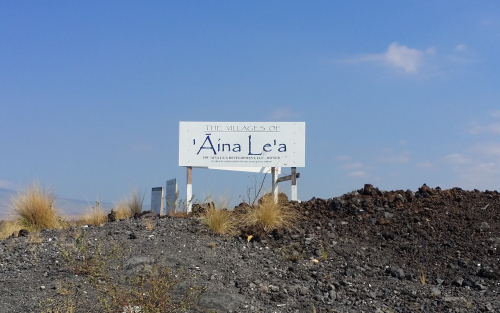
Here’s the latest in a case we’ve been following, a regulatory takings dispute from the Big Island of Hawaii.
Last we reported, the jury (after deliberating for a grand total of 15 minutes) held the State of Hawaii Land Use Commission liable for a regulatory taking. But unbeknownst to the jurors, the court
Tuesday Reading List – Flood Takings, Cuba Property, Beach Access, And … Space Aliens
Here’s what we are reading (or listening to) this Tuesday:
- Richard Epstein’s podcast on “Is it a Taking When the Government Floods Your House?” (Federalist Society)
- Teaching takings: Professor Stephen R. Miller on Contemporary Issues in Teaching Land Use: Question 8: Hot Topics in Takings (lawprof blawg)
- “Communist-run Cuba to recognize private
What Might A Justice Kavanaugh Mean For Takings, Land Use, And Other Issues?
Clare Trapasso has a Realtor.com piece on what a Justice Kavanaugh could mean for real estate, property, and land use issues, “What Supreme Court Nominee Brett Kavanaugh Could Mean for Real Estate,” where she correctly notes that “while commentators have been scrutinizing Kavanaugh’s record on hot-button topics like abortion and immigration, there’s been
Vermont: Sewage Backup Wasn’t Permanent, Therefore No Taking
The City’s sewage pipe backed up into several residences. The City has known for decades that these pipes were “cracked, structurally unsound, and that they had significant root intrusion.” The City took measures, but apparently these were not enough, and after “an extremely intense rain and hail storm,” three million gallons of wastewater overflowed into
New Cert Petition: Legislatively-Imposed Exactions Subject To Nollan-Dolan-Koontz?
Here’s one that’s been a long time coming (or coming back, more accurately).
In this recently-filed cert petition, the issue is whether an “exaction” imposed by the legislature should be subject to the nexus and rough proportionality requirements of Nollan, Dolan, and Koontz, or is merely subject to rational basis review (i.e.
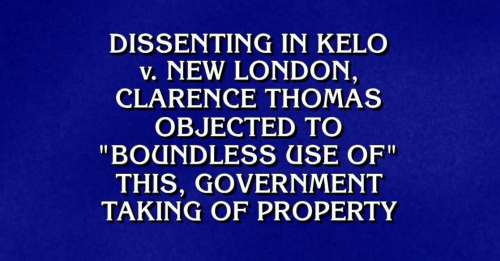
What Is “Eminent Domain,” Alex?
Links And Materials From Today’s Transportation Research Board Session
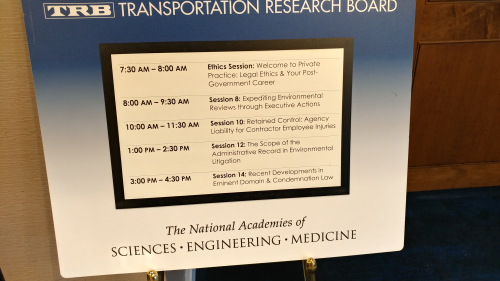
Here are the cases and other items I either spoke about or mentioned at today’s Transportation Research Board‘s 57th Annual Workshop on Transportation Law in Cambridge, Massachusetts:
- The Colorado public use cases: public use vs. public purpose: Lafayette and Carousel Farms
- On the Supreme Court docket: Violet Dock Port (SCOTUS, Louisiana)
- The Louisiana Supreme