January 2018

As we reported earlier (“Mississippi: Statute That Says No Private Takings For Access Within City Limits Means Just That“), as in many other states, in Mississippi, a private property owner may institute eminent domain proceedings to take a neighbor’s land when doing so is necessary for a landlocked parcel to gain ingress and egress. In that case, the Mississippi Supreme Court held that the requirements of the statute must be adhered to by a private condemnor, and invalidated the taking.

But the court rejected the owner’s request for attorneys’ fees as part of the appeal because the statute provides that these costs are recoverable “in a separate action.”

After the court issued its opinion, the property owner sought attorneys’ fees under a separate statute in the eminent domain code, but the special court concluded the statute didn’t apply because the Supreme Court “has made it abundantly clear that

Continue Reading Private Condemnor Liable For Attorneys Fees When Condemnation For Access Road Fails

A recent report in Honolulu Civil Beat asks the question: “Why Isn’t Honolulu Helping Businesses Hurt By Rail Construction?” (The Civil Beat editorial board asks the same question.)

According to the report:

Two years ago, the Honolulu City Council created a fund to help businesses hurt by construction of the 20-mile long rail project. But there was a hitch: the council never appropriated any money for it.

Then last April, the council put a line item in the budget for fiscal year 2018, which began July 1 and ends June 30, offering $2 million in property tax breaks to businesses suffering losses from work on the rail line.

With five months left to go in the fiscal year and no effort to distribute those tax breaks, that offer is looking like an empty promise.

The Civil Beat story continues with reports of failing businesses, the Honolulu Authority for Rapid

Continue Reading “Why Isn’t Honolulu Helping Businesses Hurt By Rail Construction?” (Because It Doesn’t Want To, And No One Is Making It)

Here’s the amici brief filed earlier this week in Sammons v. United States, No. 17-795, a case we’ve been following. Here’s the cert petition

The issue in this case is the same as in two cases already pending in the Supreme Court, the first a patent case argued in December, and the other a rails-to-trails case in which the cert petition is pending (we filed an amicus brief in the latter case).

Now, we’ve joined a brief in Sammons which argues that like these two cases, this one presents the same issues:  

This petition for certiorari concerns essentially the same issues raised in Oil States and Brott.

In Oil States this Court will decide whether an adjudication before an Article I tribunal “violates the Constitution by extinguishing private property rights through a non-Article III forum without a jury.” In Oil States a non-Article III board invalidated an

Continue Reading New Amici Brief: Of Juries And Article III Courts – Required In Takings Cases?

One word is conspicuously absent from the Federal Circuit’s opinion in Alpine PCS, Inc. v. United States, No. 17-1029 (Jan. 2, 2017): “exhaustion.”

We all know that exhaustion of administrative remedies isn’t usually required before bringing a constitutional takings claim, but make no mistake — despite the absence of the word in the opinion, the rationale of the court was that the property owner could not bring a takings claim under the Tucker Act in the Court of Federal Claims because it had not exhausted its administrative remedies. 

The property owner asserted that telecommunications licenses it possessed had been taken, and the federal government breached a contract, when the licenses were cancelled after it didn’t make required payments. The CFC dismissed the action for lack of jurisdiction, concluding the federal Communications Act provided a comprehensive statutory scheme under which Alpine could have raised its contract claim, thus depriving the

Continue Reading Williamson County, Federalized: No CFC Tucker Act Jurisdiction Because Owner Didn’t Exhaust Agency Procedures

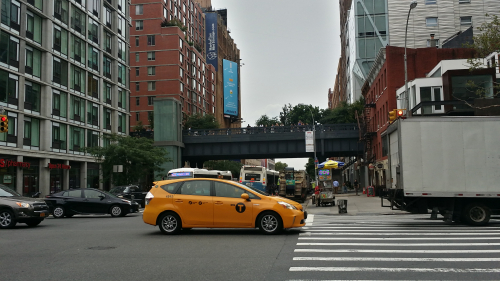
20170814_152652_Richtone(HDR)

At first, you might not pay much attention to it. After all, it doesn’t really stick out — elevated rail lines aren’t that unusual in a big city. Street-level trains and pedestrians don’t mix well, and in the early 20th Century, New York State adopted a law which moved some of the lines above the street. Indeed, some portions of New York’s subway are still above grade, especially once you are out in the boroughs.

These elevated routes, like many rail lines, were not constructed on land the railroad owned in fee. Instead, the owners of the land granted an easement to the rail lines to use the land “for railroad purposes.” Which meant that the grant of easement remained only as long as the easement holder used the land for a railroad or related purposes. Again, nothing out of the ordinary there.

But then you remember that Manhattan’s

Continue Reading New York City Uncompensated Takings Pilgrimage, High Line Edition