2017

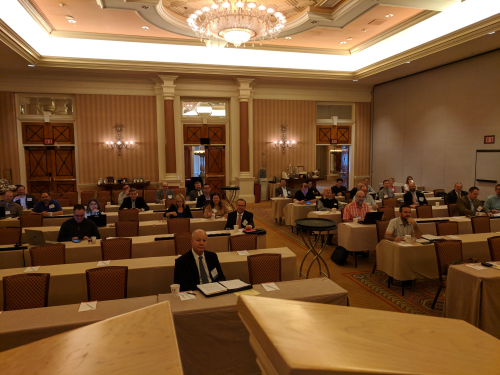
IMG_20171211_090714This photo of the view from the lectern at the start of the day
proves we really
were in the room and not distracted by all the distractions
possible in Las Vegas

Here are the materials and cases which I spoke about earlier today at the CLE International Eminent Domain Conference in Las Vegas. I had the lead off session on updates, and my talk focused on cases that I didn’t cover in the written materials:

Continue Reading Links And Materials From Today’s Las Vegas Eminent Domain Conference

 A short one, an unpublished and unsigned opinion from the U.S. Court of Appeals for the Eleventh Circuit, Warner v. City of Marathon, No. 16-10086 (Dec. 8, 2017).

As the title of this post indicates, the claims made by the plaintiff included a regulatory takings claim. The facts and details of their claims are in the opinion if you want to read them, but for our purposes today, they aren’t really important. It’s enough to note that the plaintiffs brought their takings claim in Florida state court. A prudent move, given Williamson County requires a property owner to first seek and be denied compensation through available state court procedures before the federal takings claim becomes ripe. 

The City of Marathon removed the case to federal court, as it can do under City of Chicago v. International College of Surgeons, 522 U.S. 156 (1997). That case gives the governmental

Continue Reading Williamson County Farce: 11th Circuit Bounces Case Removed From State Court, Because Plaintiff Didn’t Seek Compensation In State Court

It’s a shame that we have to be posting this again, but we noticed the hits going up on the posts we did earlier on inverse condemnation liability for damage caused by wildfires out west:

Continue Reading Inverse Condemnation And Wildfires

TEblog

Ten years is a long time, even in non-blogging years. But in blog years, it’s darn near an eternity. Law blogs aren’t too hard to start, but they take a lot of time and effort to maintain: Finding materials of interest to your reader. Digesting and understanding those materials. Posting analysis that you can live with being attributed to you, forever.  All at the speed of the internet, day-in, day-out. And the monetary rewards? Positively … nada. (But there are other rewards that make it worthwhile.)

Today, our colleague Tred Eyerly enters the rarefied group of law bloggers who have kept it up for a decade, and is marking a well-earned birthday for his blog, Insurance Law Hawaii. Where we go for all of our questions on insurance coverage, nationwide. He posts frequently, on the latest issues in that area of law.

Congratulations, Tred. Keep it up.Continue Reading Ten Years Of Law Blogging With Tred Eyerly

Remember Brott v. United States, the case we last posted about here (“New Cert Petition: Property Owners Entitled To Jury & Article III Judge In Federal Inverse Cases“)? The Question Presented in that case is whether “the federal government take private property and deny the owner the ability to vindicate his constitutional right to be justly compensated in an Article III Court with trial by jury?” 

Well, here’s another, recently-filed cert petition which asks at least one of the same questions: 

1. Whether the Takings Clause of the Fifth Amendment is a self-executing waiver of sovereign immunity, therefore vesting review of federal takings suits in Article III courts.

2. Whether Congress violates Article III of the Constitution to the extent Congress forces plaintiffs with federal takings suits over $10,000 to litigate these suits before the Article I judges of the United States Court of Federal Claims.

Sammons

Continue Reading (Another) Cert Petition: Property Owners Entitled To Article III Court In Federal Inverse Cases

Here’s a case about the denominator in a regulatory takings case from July 2017, just after the U.S. Supreme Court issued its opinion in Murr v. Wisconsin. We somehow missed the opinion when it was issued, but since we think it must be the first case which attempted to apply the Murr majority’s multi-factor test, figured we better post it.

In Quinn v. Board of County Commissioners, Queen Anne’s County, No. 16-1890 (July 7, 2017), a panel of the U.S. Court of Appeals for the Fourth Circuit upheld the district court’s dismissal of a regulatory takings claim that the County’s regulations, “designed to limit overdevelopment of the area” on South Kent Island. Slip op. at 3. But not as you might expect (on Williamson County ripeness grounds), but on the merits.

Practice note: when you are the property owner’s lawyer and an opinion starts by characterizing your

Continue Reading The First Post-Murr Case? Fourth Circuit: No Taking Because Anti-Development Merger Regulations Actually Make Property Developable

A very interesting public use opinion from the Colorado Court of Appeals. In Carousel Farms Metropolitan District v. Woodcrest Homes, Inc., No. 2017COA149 (Nov. 30, 2017), the court invalidated an attempted taking of Woodcrest’s property, concluding that the condemnation was neither for a public purpose, nor necessary for that purpose.

The facts of the case are straightforward, and rather than paraphrase, we’ll just quote the opinion:

¶ 1    Appellant, Woodcrest Homes, Inc., owned a .65-acre parcel of land (referred to as Parcel C) outside the Town of Parker. Century Communities, Inc., and its subsidiaries (collectively, the Developer) acquired the parcels to the north and south of Parcel C, with a plan to create a development — Carousel Farms — comprising all three parcels. Under its agreement with the Town, the Developer could not move forward with its development plan until it acquired Woodcrest’s land.

¶ 2    Woodcrest, though

Continue Reading Attempted Taking For Public Road Not A Public Purpose, Not Necessary: Alter Ego Developer, Not The Public, Is Beneficiary Of The Taking

…this is might be it: Lampkins Crossing, LLC v. Williamson County, No. 3:17-cv-00906 (Nov. 14, 2017), in which the District Court dismissed substantive due process, procedural due process, and equal protection claims for not being ripe under Williamson County‘s “final decision” prong. The Williamson County case decided on Williamson County grounds.

Now, we’re just being cheeky with our title, of course, and this case may not present a good vehicle for addressing the most troubling prong of Williamson County (the “available state remedies” requirement in takings cases), but with the real County being the defendant here (and not the Williamson County Planning Commission), who could resist? Just think of the law review article titles, and the confusion in oral arguments about “Williamson County.”

Short story here is that the plaintiff’s claims against the County were not ripe in the court’s view, because the County still might

Continue Reading If There Ever Was A Perfect Case To Address Williamson County …

20170918_171435_Richtone(HDR)

If case you were thinking you might have missed a big property case that made its way to the Supreme Court, fear not. All of the above issues were raised in the course of yesterday’s arguments in a patent case.

As the transcript in Oil States Energy Services, LLC v. Greene’s Energy Group, LLC, reveals, the issue in that case is whether the Patent and Trademark Office’s Patent Trial and Appeal Board is unconstitutional because it can deprive a patent holder of its rights without the benefit of adjudication in an Article III court. A patent is property (yes, it is a creature of statute, and not a common law right, but it is property), and the owners of patents can’t be deprived of their property except in an Article III court. Or so the Petitioner’s argument goes.

If that issue sounds familiar, it is. In Brott v. United

Continue Reading Supremes Consider Unconstitutional Conditions, Vested Rights, And Property … In A Patent Case

According to this story (“Scott Walker signs bill inspired by western Wisconsin cabin-owners’ court fight“), Wisconsin’s governor has signed into law a new bill which remedies the problem the Murr family faced after the U.S. Supreme Court ruling in Murr v. Wisconsin, 137 S. Ct. 1933 (2017).

In that case, as you recall, the Court’s majority concluded that the Murrs’ two adjacent parcels had — for the purposes of evaluating their regulatory takings claim — been effectively merged into a single parcel. Thus, both parcels together were the “denominator” against which the regulation’s economic impact was measured. The parcels were not actually or formally merged, and the Court’s ruling only meant that Wisconsin’s regulations which prohibited the Murrs from separately developing their second lot, or selling it to an unrelated party, was not a taking.

The new law would allow the Murrs to sell their undeveloped, “substandard”

Continue Reading Murrs Offered Succor; Owners In Other 49 States … Not So Much