June 2017

Here’s the opinion of the Connecticut Supreme Court in a case we’ve been following, Barton v. City of Norwalk, No. SC 19671 (July 4, 2017). 

As we noted in our earlier post where we detailed the facts, the case involved two non-contiguous parcels, one of which was used for a parking lot which the City later condemned to build a police station. The parking lot had provided parking for the commercial building on the other parcel (the City had required the owner to build the lot, after the City curtailed street parking). In the eminent domain case taking the parking lot, the owner claimed damage to the commercial operation and lot, but the court prohibited evidence of that damage.
So the owner instituted a separate inverse condemnation claim, seeking recovery for damage to the commercial operation and lot caused by the loss of parking across the

Continue Reading The Connecticut Supreme Court “Gets” The Larger Parcel Issue: It’s About Joint Use Of The Two Parcels

If you are within striking distance of Madison next month, consider attending the “Property Rights and Land Use in Wisconsin” symposium at the U. Wisconsin Law School. 

This is a one-day conference, and as you might expect, one of the big focuses of the day will be the U.S. Supreme Court’s decision in Murr v. Wisconsin. The speakers will also cover legislative developments, as well as the Wisconsin Supreme Court’s decision in McKee v. Fitchburg (which reminds us to get this opinion out of our queue and onto the blog, which we will do shortly). 

Register here (a very modest $100 for the entire day). 

Brochure, U. Wisconsin’s “Property Rights and Land Use in Wisconsin” Symposium (July 20, 2017) 

Continue Reading U. Wisconsin Property Rights & Land Use Symposium (July 20, 2017)

IMG_20170629_100649

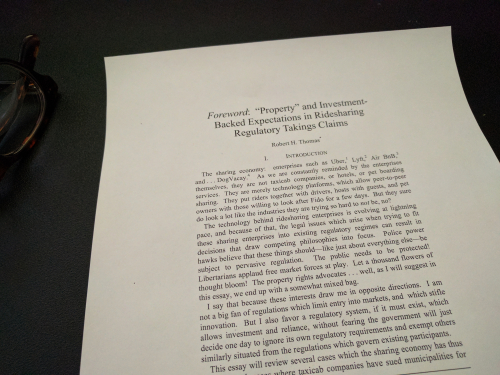
Earlier this year, I had the honor of moderating a panel speaking about transportation sharing legal issues at the University of Hawaii Law Review‘s sharing economy symposium. The editors have been hard at work since, and the symposium issue is being printed as we speak.

They also permitted me to pen this little missive, a short essay in which I discuss several recent cases about transportation sharing to illustrate what I see as one of the problems with how regulatory takings claims are framed. 

This essay will review several cases which the sharing economy has thus far produced, cases where taxicab companies have sued municipalities for allowing ridesharing services to operate without medallions, most often employing a regulatory takings theory. I argue that the approach employed by these courts wrongly focus on the property interests involved, rather than where the real analytical question resides: what are the investment-backed expectations

Continue Reading New Article: “Property” And Investment-Backed Expectations In Ridesharing Regulatory Takings Claims

IMG_20170627_123314 (1)

So how does a property lawyer salve the wounds of the last few days, which saw a really bad Supreme Court ruling in a regulatory takings case, and shortly thereafter the justices deny review of your just compensation petition while you just happen to be in Los Angeles, California?

Langer’s Deli, that’s how. 

IMG_20170628_103746

First, some background.

Many years ago, when my mother was still alive, she resided in Honolulu at an assisted living place. Very nice it was, and it allowed her to remain independent much longer than she might otherwise have been able to alone, and in my estimation probably added 10 years to her life. One of her fellow apartment owners was Robert Corn, a lawyer who had retired from his long career as a senior deputy District Attorney in (and for) the County of Los Angeles.

When he learned I too was a lawyer, we’d

Continue Reading The Larger Parcel, Eminent Domain, And The World’s Best Pastrami Sandwich

After Murr, the pending cert petition in Lost Tree was D.O.A., and today, the Court made it official. Cert denied. We thought that the Federal Circuit’s denominator analysis was the better one (although pretty much anything would have been better than what Justice Kennedy and his Immortals came up with in Murr). But since Lone Tree was a property owner win in the Federal Circuit, cert denial isn’t a bad thing.

The denial also let stand the Federal Circuit’s (correct) rule that it isn’t an economically beneficial use when the only use left after a regulation is that the property may recover its value some time in the future (aka “investment value”). This blows significant holes in the government’s common argument that the regulation isn’t a wipeout or a significant loss under Penn Central, because property usually rises in value so one day, the economic impact

Continue Reading Cert Denied In Lost Tree (Relevant Parcel)

IMG_0006

Here’s the Honolulu Star-Advertiser latest story on the Honolulu rail authority’s condemnation of the property of Blood Bank of Hawaii, “Blood bank sues over city push to take land for rail.” 

The state’s lone blood supplier is pushing back in court against the city’s efforts to acquire the land fronting its Dillingham Boulevard offices for rail.

In a countersuit filed Thursday, the Blood Bank of Hawaii accuses the Honolulu Authority for Rapid Transportation of acting “in bad faith” and “recklessly subjecting Hawaii’s blood supply to grave but unnecessary risks.”

It further questions the benefit of taking the parcel when the city still lacks the funds to build the full 20-mile line to Ala Moana Center.

Full details here, in our Answer and Counterclaim. 

Blood Bank Counterclaim by Honolulu Star-Advertiser on Scribd

Continue Reading Not Satisfied With Merely Taking Land For Rail, Now The City Wants Blood

What to make the Justice Kennedy-authored 5 justice majority opinion in Murr v. Wisconsin, No. 15-214 (June 23, 2017)? 

There, the majority adopted — maybe “created from whole cloth” would be a more accurate description — a multifactor test for determining the “larger parcel’ or “denominator” in regulatory takings cases where the owner possesses more than a single parcel of land.  We quoted the opinion’s list in this post, and won’t repeat it entirely here, but below is a short list of things that now must be considered by lower court judges (not juries) when they are deciding how much of the property the plaintiff owns can be used to measure the impact of the regulation on the parcel which she claims was taken:

  • The “treatment of land.” Yes, the actual metes-and-bounds of the legal parcel, but also, get this, the “expectations … an acquirer of land must


Continue Reading Justice Kennedy’s Social Justice Warrior Test For Takings Clause “Property” In Murr v. Wisconsin

We obviously wish we had better news, but today, the U.S. Supreme Court in this order declined to review the Mississippi Supreme Court’s decision in a just compensation case in which we represented the petitioner

Justice Gorsuch, joined by Justice Thomas filed this brief statement:

When a State negotiates an easement limited to one purpose but later uses the land for an entirely different purpose, can the State limit, by operation of statute, the compensation it must pay for that new taking? The Mississippi Supreme Court held that it may do just that. But this decision seems difficult to square with the teachings of this Court’s cases holding that legislatures generally cannot limit the compensation due under the Takings Clause of the Constitution. See Monongahela Navi. Co. v. United States, 148 U. S. 312, 327 (1893). Tension appears to exist, too, between the decision here and decisions of

Continue Reading “Important” Issue And A Lower Court Split, But Cert Denied In Just Comp Case

Update: Here are my first thoughts on Murr – “Justice Kennedy’s Social Justice Warrior Test for Takings Clause Property in Murr v. Wisconsin

Lot-lines-color-2

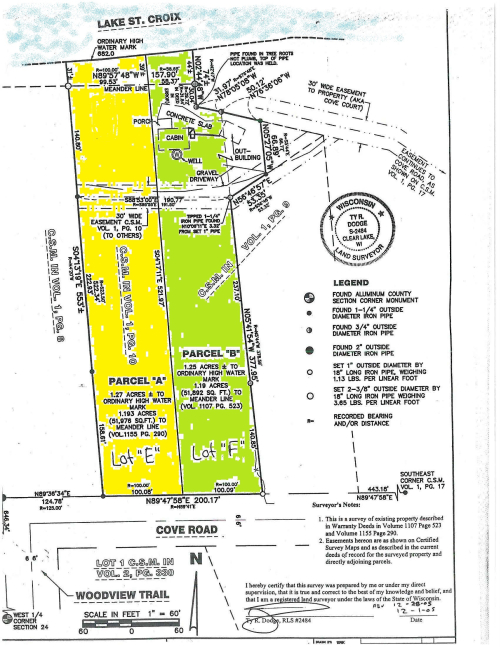
The title alone should tell you this was authored by Justice Kennedy, which means that, as we thought it might do, today the U.S. Supreme Court held in Murr v. Wisconsin, No. 15-214 (June 23, 2017) that in determining the “denominator” in regulatory takings cases — in other words, what “property” owned by the plaintiff is the claimed diminution in value of the taken property compared — that “a number of factors” make up the inquiry, including: (1) “the treatment of the land, in particular how it is bounded or divided, under state and local law” (i.e., title); (2) the “physical characteristics” of the property (your guess is as good as ours); and (3) the “value of the property under the challenged regulation”

Continue Reading SCOTUS, 5-3 Affirms Murr By Penn Centralizing Parcel As A Whole Analysis, Which Must Consider “A Number of Factors”

SCOTUSblog takes note of our cert petition in Bay Point Properties, Inc. v. Mississippi Transportation Commission, No. 16-1077 (cert. petition filed Mar. 3, 2017), a case which seeks U.S. Supreme Court review of a decision by the Mississippi Supreme Court. We represent the Petitioner.

In the “Petitions to Watch” segment, Aurora Barnes writes:

In its conference of June 22, 2017, the court will consider petitions involving issues such as whether the just-compensation clause prohibits a legislature from limiting how just compensation for a taking is calculated and whether the just-compensation clause allows the jury to value the fee interest taken as if it were still encumbered by a discontinued highway easement; and whether the anti-retaliation provision for “whistleblowers” in the Dodd-Frank Wall Street Reform and Consumer Protection Act of 2010 extends to individuals who have not reported alleged misconduct to the Securities and Exchange Commission and

Continue Reading SCOTUSblog Notes Bay Point Just Comp Case As “Petition To Watch”