
July 2016

20160722_141908

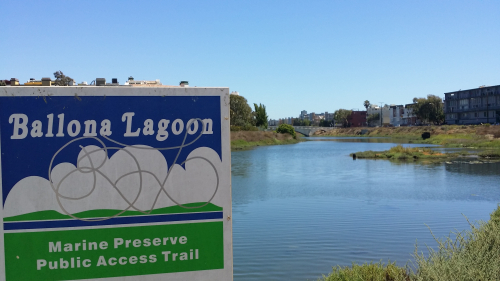
Petitioner owns the fee title to property known as the Ballona Lagoon, a narrow body of water connected to Marina del Rey, a manmade harbor located in a part of the city of Los Angeles called Venice. Venice is located on the Pacific Ocean between the Los Angeles International Airport and the city of Santa Monica.”
Summa Corp. v. Cal. State Lands Comm’n, 466 U.S. 198, 199-200 (1984). 

As you know, when we’re in the neighborhood, we like to visit the sites of famous cases. In the past, we’ve stopped by the sites of the Hadacheck, Kaiser Aetna, Nollan, Dolan, and PruneYard cases.

Here’s the latest, the location of a somewhat obscure case (if any Supreme Court case can be called “obscure”), smack dab in the middle of urban Los Angeles. As the above quote from the case notes, Ballona Lagoon lies

Continue Reading Public Trust, Tidelands, And Land Titles: A Short Visit

Last year, we posted about the Brigham-Kanner Conference, the annual meeting at William and Mary Law School where we talk all things property rights and award the Brigham-Kanner Property Rights Prize. (By the way, this year’s conference will be held in The Hague, The Netherlands in October. But more on that soon, in a separate post.)

What we are posting today is a follow-up about Mike Berger’s presentation at the 2015 conference. His article — then only in draft form — is a critique of the theories of the 2015 Brigham-Kanner prizewinner, Harvard lawprof Joseph Singer. Recall that Berger was presented with the prize in 2014 — the first and thus far only practitioner to receive the award — which makes this article even more important.  

Berger’s article is now finalized, and has been published by the Brigham-Kanner Property Rights Conference Journal: “Property, Democracy, &

Continue Reading Must Read: Michael Berger On “Property, Democracy, & The Constitution”

Here’s one we’ve been meaning to post up for a while. Not because it isn’t an important decision, but because other things intervened. 

In State of West Virginia ex rel. West Virginia Dep’t of Transportation v. Burnside, No. 15-1112 (June 13, 2016), the Supreme Court of Appeals of West Virginia held that under the statutory quick-take scheme, the condemnor has the total discretion to determine the amount of the deposit, an estimate of just compensation. In that case, the DOT took land formerly occupied by a service station, which needed some environmental clean up due to old gas and oil storage tanks buried on the land.

The DOT calculated the deposit supporting the quick-take by adding up the overall value of the land, the severance damages to the remainder, and the value of the fixtures and the temporary construction easement, and then subtracting the cost of the clean up which

Continue Reading W Virginia: Govt, Not Judge, Gets To Determine Quick-Take Deposit

Kauaipark

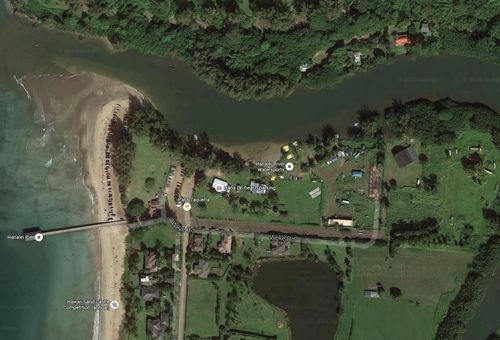
Here’s the latest in that case we told you about a couple of months ago, a published ruling in an eminent domain case from the Hawaii Intermediate Court of Appeals. We wrote that in our view, the court got it really wrong on one of the three issues in the case, whether two parcels which the condemnee alleged he used together could be considered the “larger tract” for purposes of severance damages.

The case involves three parcels on Kauai — one of which is owned by a fellow who has been a thorn in the County’s side — which were condemned by the County for the expansion of a public beach park. The County was taking Parcels 49, 33, and 34. Sheehan owned 49, and HRH, a corporation, owned 33 and 34. Sheehan asserted his use of Parcel 49 stretched across 33, 34, and Area 51 — a portion of

Continue Reading Hawaii Supreme Court Amicus Brief: In Eminent Domain, Parcels Need Not Abut In Order To Be Considered Part Of A Larger Tract

Apparently (if the level of media coverage is any measure), the question of public access to beaches is a big thing in Maine:

This question has also already resulted in a couple of decisions which we’ve covered:

And here’s the latest, an opinion from the Maine Supreme Judicial Court, Cedar Beach/Cedar Island Supporters, Inc. v. Gables Real Estate LLC, No.

Continue Reading Maine Supreme Court Considers Public Prescriptive Easements For Beach Access

Another flooding case, this time from the Indiana Court of Appeals.

In Birge v. Town of Linden, No. 54A01-1509-PL-1495 (July 25, 2016), the court considered a pure legal question (the issue was up on appeal after the trial court dismissed for failure to state a claim): does governmental immunity under the state tort claims act apply to inverse condemnation cases? The court held no, “to the extent the trial court concluded that immunity under the ITCA would bar the Birges’ claim for inverse condemnation, the trial court erred.” Slip op. at 10. The town may be entitled to immunity for flooding which it was alleged to have caused, but that immunity “will extend only to tort claims brought under the ITCA.” Slip op. at 11.

More about the case in this story: “Farmers win reversal in drainage appeal against town” from the Indiana Lawyer

Birge v.

Continue Reading Indiana App: No Gov’t Immunity For Inverse Condemnation

.

Yesterday came the news I’ve been dreading, but was hoping might never arrive. Congressman K. Mark Takai lost his final fight, a battle with pancreatic cancer.

I am devastated. He was not only a client, but one of the rare people in public life who actually showed political courage to do the right thing when literally not one of his colleagues had the guts to join him. He was one of the plaintiffs in the Hawaii reapportionment case, something we got a lot of behind-the-scenes attaboys about from his fellow politicians, but only Takai signed on the dotted line.

This was the litigation spurred by the fact that Hawaii does not count resident active duty military members and their families in its reapportionment population. Yes, we gladly accept the billions of dollars which their presence inject into the Hawaii economy, but count them as “residents” who are

Continue Reading Taps For A Good Man, K. Mark Takai

Today, in a case we’ve been following (because we filed a brief in support of the property owner), the California Supreme Court in a unanimous opinion essentially rewrote California’s precondemnation entry statute to give the government a pass.

The court assumed that entries which exceed the relatively minor entries contemplated by its prior decisions are takings (they are physical occupations, after all), but held that the burden is on the landowner to sue for inverse condemnation, and that the California Constitution doesn’t require a predeprivation process or payment of just compensation. 

The vibe of the government’s argument has always been that were the California Supreme Court to affirm the ruling by the Court of Appeals — that as takings, these entries themselves are subject to the protections of the eminent domain process — the sky was going to fall. It would just be so bloody inconvenient for condemnors.

Continue Reading California Supreme Court Rewrites Eminent Domain Entry Statutes To Give Government A Free Pass

Like many high-profile cases, the legal challenge to the actions of the State Office of Elections tracks two threads. On one hand, the Office’s travails are well known and frequently reported. The public understands only too well the difficulties the Office encountered when it failed to print enough ballots, and had other problems in recent Hawaii elections. The media reports in the wake of the disastrous oral argument (from the Office’s perspective) focused on how upset the Justices seemed to be with the way the Office approached the situation, and its arguments in the case. We had a similar view when we wrote, “After A Judicial Feeding Frenzy, The Hawaii Supreme Court Searches For Rules To Fix The Office Of Elections.” 

On the other hand, judicial opinions (particularly by a unanimous court) tend to focus on the legal nuances which a case presents, by detailing things like

Continue Reading Hawaii Supreme Court: Some Office Of Election Ballot Practices Are “Rules,” Some Maybe Not

We’re not going to go into much detail about the Court of Federal Claims’ ruling in Katzin v. United States, No. 12-384L (July 15, 2016): (1) it’s long (44 single-spaced pages), (2) it’s a post-trial ruling and not from an appellate court, and (3) we’re busy today.

But we still recommend you read it, eventually, because it looks like a fascinating case. Here’s the CFC’s ruling, to start:

This post-trial opinion addresses claims by plaintiffs Dr. Richard Lewis Katzin (“Dr. Katzin”), Mary Beth Katzin Simon (“Ms. Katzin”), and Rose Marie Kjeldsen Winters (“Ms. Winters”) that the United States (the “government”) interfered with their ownership rights to a parcel of land (“Parcel 4”) which overlooks the Atlantic Ocean on Culebra Island, Puerto Rico, and that the interference effected a taking in contravention of the Fifth Amendment.

. . . .

This case raises factual questions of property ownership that

Continue Reading Pirate Of The Carribean: Govt Claiming Ownership And Clouding Title Is A Physical Taking