
Enjoyed the 2016 ALI-CLE Eminent Domain Conference in Austin? Let us know what you liked, what we can do better, and where you’d like to see a future conference: drop me a line at rht@hawaiilawyer.com.
Continue Reading 2016 ALI-CLE Eminent Domain Conference: Feedback, 2017 Venue Suggestions
Decisions Discussed at ALI-CLE Eminent Domain National Forum
Here are the opinions in the cases discussed at today’s National Forum at the 2016 ALI-CLE Eminent Domain and Land Valuation Conference:
- Ramsey v. Commissioner of Highways (Virginia, 2015) (jury gets to hear about condemnor’s earlier — and higher — appraisal) (via Jeremy Hopkins)
- Antrim Truck Centre Ltd. v. Ontario (Transportation), No 34413 (Supreme
“Little Pink House” – An Interview With Kelo Filmmaker Ted Balaker
2016 ALI-CLE Eminent Domain Conference, Austin: Second Day
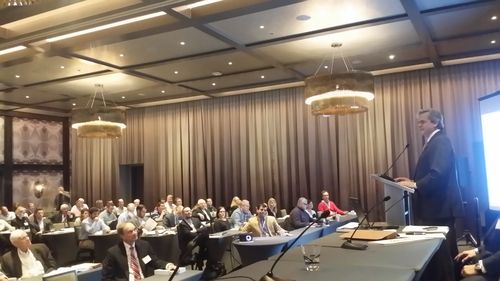
The second day of the 2016 ALI-CLE Eminent Domain and Land Valuation conference went as well as the first. Here are some highlights:
- Austin Mayor Steve Adler (pictured above), who is (was?) also an eminent domain lawyer, welcomed us to his city.
- We moderated a discussion between Andy Gowder and Dana Berliner about “First
New Cert Petition: Who Owns The Deposit In A Quick-Take?
A new cert petition filed earlier this week in a case from the Florida Court of Appeals that we’ve been following.
We’ve been following it because we filed an amicus brief when property owners sought cert review of an earlier decision by the same court which held the same thing: that the property owner subject
ALI-CLE 2016 Eminent Domain Conference, First Day: Standing Room Only, National Expertise
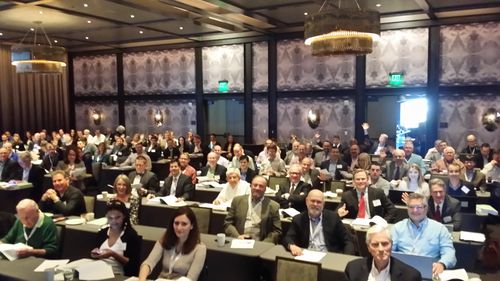
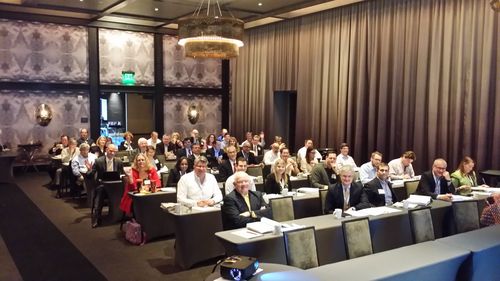
Here’s what’s going on today, the first day of the 33d annual ALI-CLE Eminent Domain and Land Valuation conference in Austin, Texas. We’re at standing room only, with a record number of attendees and our usual nationally renown faculty.
We started off the day with our usual “Eminent Domain Update” session with Amy
ALI-CLE 2016 Eminent Domain Conference: Austin Scouting Report

Austin, Texas, is where we’re at for the next few days, for the 2016 edition of the American Law Institute-CLE Eminent Domain and Land Valuation conference, now in its 33d year. First time we’re in Austin, however, and our registration numbers are looking very good, and we haven’t had this big a turnout in years.
“We’re Here From The Government, And We’re Here To … Do Nothing” – Gov’t Inaction Gives Rise To Inverse Condemnation
We know inverse condemnation liability can be triggered by intentional government action. But what about when government doesn’t act?
That was the issue before the Court of Appeals of Maryland in Litz v. Maryland Dep’t of the Environment, No. 23 (Jan. 22, 2016). And when the opinion starts this way, you just know where
Cal Supreme Court “Grants And Holds” Second Entry Statute Case
The California Supreme Court has agreed to review a recent Court of Appeal decision (see “Court Of Appeal Files Pro-Condemnor Amicus Brief In Cal Supreme Court “Entry Statute” Case“), but only after the court rules on Property Reserve v. Superior Court (S217738)
On January 13, 2016, the court granted and held the
Amicus Brief: Congress Cannot Bar Property Owners From Vindicating Right To Just Compensation
Here’s the amici brief filed last week by the Cato Institute and the National Association of Reversionary Property Owners in Resource Investments, Inc. v. United States, No. 16-802. That’s the case in which the property owner is claiming that the delay in issuing Clean Water Act permits was so extraordinary, it was a