
2016

Following up on our post earlier this week with our amicus brief, here are the remainder of the briefs filed in the Federal Circuit in a case in which the government is asking the court to bypass panel hearing and go straight to en banc review of a Court of Federal Claims opinion which held that the owners of a railroad easement which was converted to a recreational path are owed $900 in just compensation, plus EAJA fees. 

Why all this sturm und drang (as the Federal Circuit once characterized rails-to-trails cases) over 900 bucks?

As we wrote in our earlier post, this is the government’s attempt to wipe out established regulatory takings doctrine and get the Federal Circuit to effectively overrule its prior decisions holding the government liable for physical takings when it prevents reversion of the railroad easement to private owners when those easements are no longer

Continue Reading More Briefs In En Banc “Hail Mary” Asking Fed Cir To Abandon Decades Of Rails-To-Trails Rulings

We love Leo Rosten’s classic definition of chutzpah: “that quality enshrined in a man who, having killed his mother and father, throws himself on the mercy of the court because he is an orphan.” Mr. Rosten’s dictum stretches around the world — apparently even into its remote corners such as the Northern Marianas Islands.

Check out CNMI v. Lot No 281-5 R/W, No. 2013-SCC-0006 (Dec. 28, 2016), for the exemplar. In that case, the CNMI government took private property belonging to Ms. Quitugua. Not by regulating it (a favorite topic of this blog), but by “straight condemnation.” That is, the CNMI exercised the power of eminent domain to build a road. Not great for the owner, but she apparently didn’t object and indeed stipulated to a final judgment which granted the CNMI fee simple title, and gave her a judgment of $77,137 plus interest for just compensation. So far, so

Continue Reading What If The Government Gives A Takings Party, But Doesn’t Show Up?

You rails-to-trails and takings mavens all know the drill in those cases: rail easement stops being used for rail, bikers and runners want a recreational path, the federal Surface Transportation Board issues a Notice of Interim Trail Use (they say “interim” because of the fiction that they are just “railbanking” and someday when we want the iron horse to rule again, the bike path may be converted back into a rail line), which under the U.S. Supreme Court’s ruling in Preseault v. Interstate Commerce Comm’n, 494 U.S. 1 (1990), triggers the obligation of the federal government to pay just compensation for the taking of the property owner’s “reversionary” interest.

In other words, the owners across whose land the railroad easements are located were supposed to get that land back if those easements stopped being used for railroads. When they get converted instead into public recreational trails, there’s a taking. Now

Continue Reading Fed Cir Amicus Brief: Regulatory v. Physical Takes In Rails-To-Trails – No En Banc Review To Overturn Settled Precedent

Here’s the Ninth Circuit’s opinion in a election law case we’ve been following, Davis v. Commonwealth Election Comm’n, No. 14-16090 (Dec. 27, 2016). 

The issue in the case is whether limiting voting on certain constitutional amendments in the Commonwealth of the Northern Marianas Islands to a “person who is a citizen or national of the United States and who is of at least one-quarter Northern Marianas Chamorro or Northern Marianas Carolinian blood or a combination thereof or an adopted child of a person of Northern Marianas descent if adopted while under the age of eighteen years” is a race-based limitation on voting, prohibited under the Fifteenth Amendment.

You know the answer, don’t you? Of course it is, and the Ninth Circuit panel, in a short opinion, said so. Ancestry, as Rice v. Cayetano, 528 U.S. 495 (2000) held, can be a proxy for race, and “[j]ust as the definitions of Hawaiian and native Hawaiian in the

Continue Reading 9th Cir: Restricting Voting To People Of Northern Marianas Descent Is Race-Based Voting Limitation

Heads up for a case to watch being argued next week in the Hawaii Supreme Court.

This is a regulatory takings case that’s been up to the Hawaii appellate courts before (see here). In that opinion, the court of appeals correctly held that a property owner raising a regulatory takings case has no obligation to change the law to ripen her claims. [Note: we filed an amicus brief in that appeal in support of the property owner.] The court vacated the trial court’s dismissal, and remanded the case for trial.

The backstory to that case is long and complex.It involves beachfront property, the relationship between planning and zoning, and what exactly “economically beneficial use” means under the U.S. Supreme Court’s Lucas test for wipeout takings, especially in the context of what instructions that juries are given. [Another note: we represented a neighboring property owner in a similar case that

Continue Reading HAWSCT Considering Wipeout Regulatory Takings: What Is An Economically Beneficial Use?

JohnHuntNightman

Like the Elizabethan gong farmer — whose job it was to police up the unpleasant remnants after the “main event” — the opinion of a court of appeal after a remand from the Supreme Court is often anticlimactic, and other than the parties involved no one really wants to see or hear about it too much.  

The California Court of Appeal’s recent opinion in Property Reserve, Inc. v. Superior Court, No. C067758A (Dec. 16, 2016), strikes us as one of those. This decision came back to the court after the California Supreme Court’s “main event,” the opinion which held that a condemnor could in certain circumstances, enter private property in anticipation of an exercise of eminent domain, effect a taking, and not have to adhere to all of California’s eminent domain procedures. Except a jury trial, that is. The court “saved” the precondemnation entry statute by rewriting it

Continue Reading Property Reserve Remand: You Get Discovery During Precondemnation Entry Proceedings

Siouxfalls

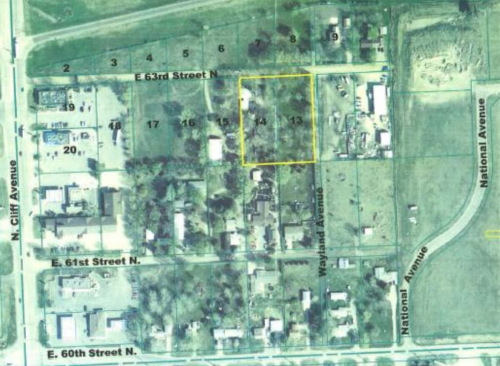
Schliem v. South Dakota, No. 27557 (Dec. 7, 2016) is the third in a series of condemnation cases issued earlier this month by the South Dakota Supreme Court. The first, South Dakota v. Miller, involved impairment of access resulting from a highway project suffered by an owner whose property was taken for the project. The second considered the effect of a quick take. 

Schliem came after the jury’s verdict in Miller, the first case. The difference here was that the property owners did not have any part of their land taken by the DOT for the project, yet their parcels (13 and 14 above), had, they claimed, lost access from Cliff Avenue. They filed an inverse condemnation claim for the alleged decrease in value of approximately $300,000 due to the changed access. The trial court granted the State summary judgment, concluding that the owners still had alternative

Continue Reading South Dakota Takings Trilogy, Part III: Landowners’ Claim That Nearby Highway Project Impaired Access Was, Like, Their Opinion, Man
Here’s one we’ve been waiting for.

In this post (“Sorry Not Sorry? Connecticut Supreme Court Has A Chance To Make Amends For Kelo“), we  previewed the arguments and briefs in a case in which the court was considering whether the Transportation Commissioner’s power under Connecticut law to take “land, buildings, equipment or facilities” includes bus companies’ exclusive state-granted rights to operate bus routes. The bus companies have what amounts to a monopoly under state-granted certificates of public convenience.

In Dattco, Inc. v. Comm’r of Transportation, No. SC19558 (Dec. 27, 2016), the court held that no, the power to take facilities does not include the power to take bus franchises. We recognized in our preview post that this was not a chance for the court to wholly make amends for its Kelo decision because the issues presented are obviously different. But even with that caveat firmly in mind, this

Continue Reading Whaddaya Know, There Are Some Limits To Eminent Domain In Connecticut

Here’s what we’re reading today:


Continue Reading Monday Reading: Raisin Redux, Beach Appeal Dismissal, Zoning, And More