
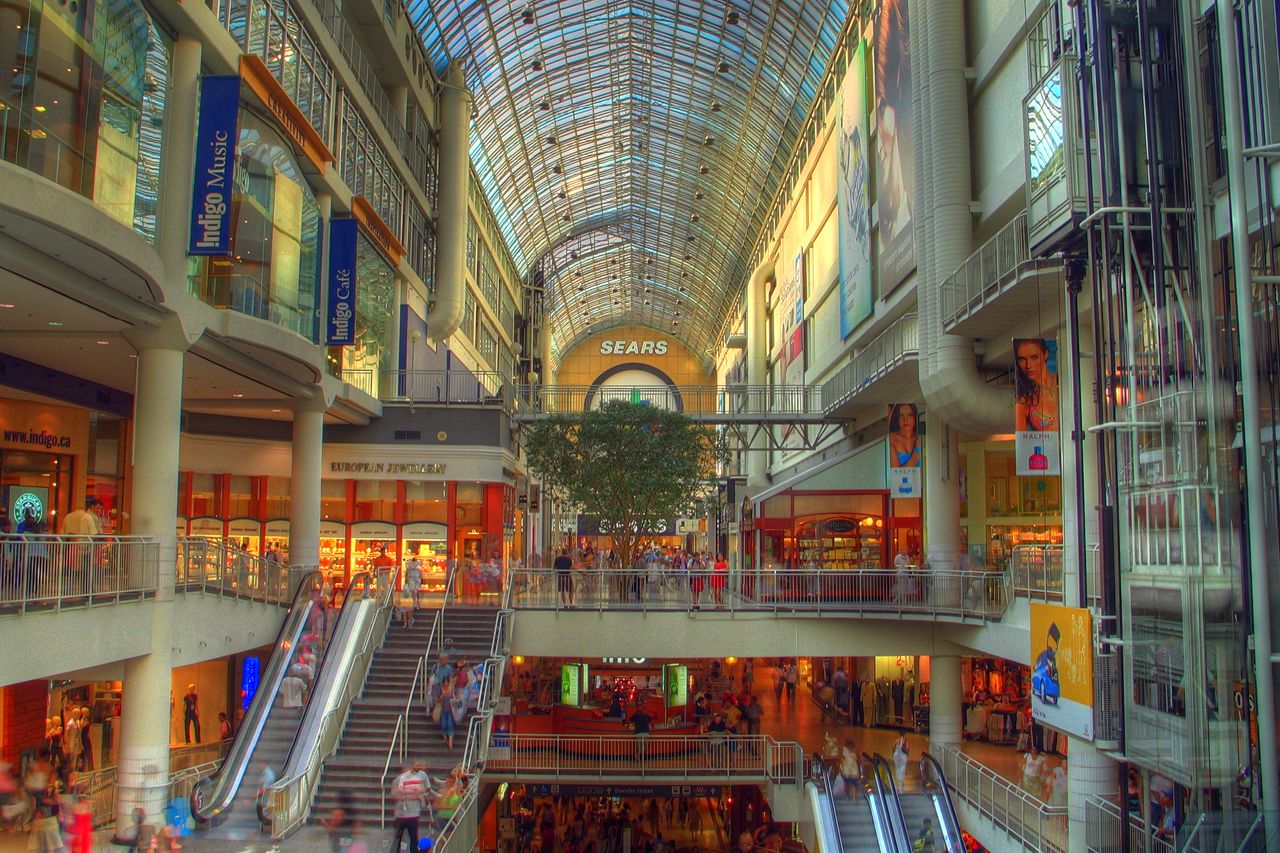
 Thousands of years from now, when future archaeologists and historians are reconstructing our civilization from the ruins, it is easy to imagine how they might misinterpret the function of shopping malls. Rather than climate-controlled centralized temples of consumerism, or teen hangouts with abundant parking, the historical record might suggest that malls were august civic centers — fora for political debates complete with speaker’s corners, which even included centralized feeding areas to insure the debaters’ sustenance.
And if they are reading the California Reports, they might be right.
Revisiting the issue of speech at shopping malls, the California Court of Appeal (2d District) held in Best Friends Animal Society v. Macerich Westside Pavilion Property LLC, No. B221067 (Mar. 2, 2011) that a shopping center’s rules giving preferential treatment to labor speech violate the California Constitution’s free speech clause. The shopping mall’s rules could not favor speech about labor issues over speech by those protesting “puppy mills.”
Unlike most states, California law treats shopping malls as forums for public speech and restrictions on speech are reviewed strictly. Thus, Californians have more speech rights under the California Constitution than under the First Amendment. Federal law and the law of most other jurisdictions do not follow this model. For example, the Hawaii Supreme Court in State v. Viglielmo, 105 Haw. 197, 95 P.3d 952 (2004), held that the Hawaii Constitution’s free speech clause provides no greater protection that the First Amendment, and that a shopping mall owner has the right to restrict expressive conduct on its premises.
Speech at malls has been a niche issue since PruneYard Shopping Center v. Robins, 447 U.S. 74 (1980), the case in which the California Supreme Court’s decision holding the California Constitution’s free speech clause required shopping center owners make their property available as forum for public speech was challenged as a judicial taking. We’ve discussed the issue a few times: here (the Ninth Circuit’s holding that a mall could not prohibit union speech), and here (a California Supreme Court decision holding that a mall could not prohibit speech directed at a mall tenant).
Back to Best Friends. In that case, the mall’s rules allowed noncommercial expressive activity such as political and religious speech, and “activity authorized by the National Labor Relations Act” (apparently, the mall’s lawyers read the two decisions referenced in the previous paragraph). However, “two types of expressive activty are regulated differently” —
Noncommercial expressive activity is limited to areas designated by the WP Rules; subject to Macerich‘s discretion, noncommercial expressive activity is not permitted on blackout days; and noncommercial expressive activity must cease when the store nearest to the designated area is closed to the public. In contrast, qualified labor activity is permitted in either a designated area or an area selected by Macerich that is proximately located to the targeted employer or business; the blackout days do not apply to qualified labor activity of people employed at Westside Pavilion; and qualified labor activity related to the fixing of the terms or conditions of employment is permitted during the hours the targeted person or business is engaged in work at Westside Pavilion.
Slip op. at 2-3 (footnote omitted). The mall denied the request of Best Friends, a group against the sellling of puppies bred in “puppy mills,” to protest in front of a mall tenant (a pet store) in violation of the mall’s rules. After some back and forth, Best Friends sued. The trial court denied an injunction because a mall may limit speech to certain areas and days, and because the federal NLRA requires preferential treatment for labor speech.
The Court of Appeal reversed, concluding that the mall’s rules are “content based” and not “content neutral,” and therefore are subject to strict scrutiny. Slip op. at 17. As we all know, “strict scrutiny” means “fatal scrutiny” most of the time since it shifts the burden of proving the speech restrict is lawful from the plaintiff to the defendant, and this case was no exception. The court found no authority for the mall’s argument that federal law required it to give preferential treatment for labor protests.
Finally, in a short paragraph, the court rejected the mall’s claim that allowing Best Friends to have unrestricted access would be a regulatory taking, because the mall may enforce its other rules on time, place, and manner (it just could not single out non-labor speech for more restrictive rules). Slip op. at 19.
Read the entire case if you want a primer on how California treats speech at malls.