
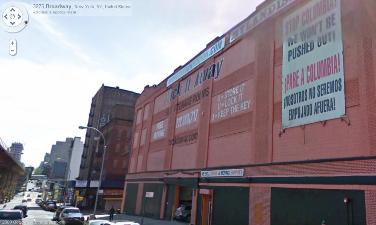
 Since the U.S. Supreme Court’s decision in Kelo v. City of New London, 545 U.S. 469 (2005), the focus in public use challenges to exercises of the eminent domain power has largely focused on state courts and state constitutional protections.
The Kelo majority held that the Fifth Amendment was a “baseline,” and established a standard for reviewing takings below which no state law could go:
We emphasize that nothing in our opinion precludes any State fromplacing further restrictions on its exercise of the takings power.Indeed, many States already impose “public use” requirements that arestricter than the federal baseline. Some of these requirements havebeen established as a matter of state constitutional law, whileothers are expressed in state eminent domain statutes that carefullylimit the grounds upon which takings may be exercised. As thesubmissions of the parties and their amici make clear, the necessityand wisdom of using eminent domain to promote economic development arecertainly matters of legitimate public debate. This Court’sauthority, however, extends only to determining whether the City’sproposed condemnations are for a “public use” within the meaning of theFifth Amendment to the Federal Constitution.
Kelo, 545 U.S. at (footnotes omitted).
In the wake of the public backlash against Kelo, many state and local legislatures restricted exercises of eminent domain, especially when exercised for economic development. Several state courts also took up Kelo‘s suggestion and held that the public use clause in their state constitutionsprovide greater protections to property owners than does the FifthAmendment. These courts struck down takings, even if Kelo would have allowed it. See, e.g., City of Norwood v. Horney, 853 N.E. 1115 (Ohio 2006) (economic development alone will not support a taking under the Ohio Constitution); In re Condemnation by the Redevelopment Authority of Lawrence County, 962 A.2d 1257 (Pa. Commw. Ct. 2008) (state’s Urban Redevelopment Law provides more protection than the Fifth Amendment).
However, at least two state courts — the District ofColumbia and Hawaii — have viewed the Fifth Amendment and Keloas requiring substantial deference to alegislative determination that a class of uses is a public use, butreserving for judicial review under the the Public Use Clause thequestion of whether a particular use or purpose is in fact the reasonfor a taking. See Franco v. Nat’l Capital Revitalization Corp., 903 A.2d 160, 169 n.8 (D.C. 2007) (“appply[ing] the decision of the Kelomajority, written by Justice Stevens,” a claim of pretext should betaken seriously and a court has the power of judicial review); County of Hawaii v. C&C Coupe Family Ltd. P’ship, 198 P.3d 615, 644 (Haw. 2008) (“However, both [Haw. Hous. Auth. v.] Ajimine[, 39 Haw. 543, 550 (Terr. 1952)] and Kelo make it apparent that, although the government’s stated purpose is subject to prima facieacceptance, it need not be taken at face value where there is evidencethat the stated purpose may be pretextual.”). [Disclosure: we representthe property owners in the Coupe cases.].
Now, there’s a third: Kaur v. New York State Urban Dev. Corp., 2009 NY Slip Op 08976 (Dec. 3, 2009).
Kelo and the precedent it relied upon — Berman v. Parker,348U.S. 26 (1954), and Hawaii Hous. Auth. v. Midkiff, 467 U.S. 229 (1984) — are rightfully seen as establishing a fairly relaxed test for whether a use or purpose
last week’s in Goldstein v. New York State Urban Development Corp., No. 178 (Nov. 24, 2009) (an opinion we criticized here)
The Goldsteinmajority, however, did not hold that the Atlantic Yards taking could condemn blighted aswell as nonblighted properties, but concluded that courts must accept an agency’s determination that a parcel is in fact blighted. The court’s total deference to thestated reasons for a taking establishes a standard so minimal, it isdoubtful that even the majority in Kelo v. City of New London, 545 U.S. 469 (2005) would likely accept it.
Thus, the Goldsteinmajority’s assertion that judges have virtually no role in reviewingclaims that property is blighted arguably falls below even Kelo‘s standard,