
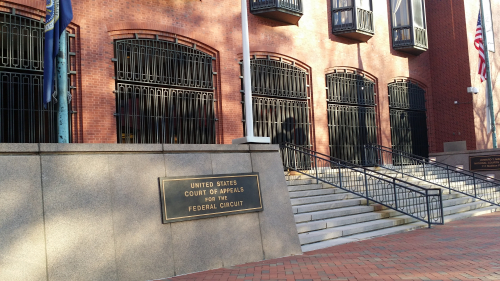
If you “get” this headline and the decision by the Federal Circuit, then congratulations, you are a super takings nerd. King of the Nerds. Off-the-charts nerd. Your takings law geek certificate is in the mail.
In Petro-Hunt, LLC v. United States, No. 16-1981 (July 13, 2017), the U.S. Court of Appeals for the Federal Circuit considered Tohono, § 1500, takings statutes of limitations, judicial takings, Quiet Title, temporary takings, physical vs regulatory takings, Louisiana law mineral servitudes, and related contract claims. Lots of issues, and we leave it to you to read the whole thing. Well worth it. Bottom line: property owner loses.
But even in the midst of a loss on all substantive and procedural fronts, this bright point: the Federal Circuit concluded that if the plaintiff had followed the first-to-file process, the court would have upheld the jurisdiction of the Court of Federal Claims against the government’s § 1500 challenge. We’ve been down this path before, see here for example, and our amicus brief in Tohono and in a follow up case.
The first-to-file procedure (aka the Tecon rule), allows the Court of Federal Claims to avoid the potential constitutional problems in applying § 1500 to preclude a claim for just compensation (the point raised in our Tohono brief) when a claim challenging the validity of the government action is pending in a district court. File your CFC claim for compensation first, and only then file your district court action challenging the validity of the government act:
Petro-Hunt could have avoided the force of § 1500 by following Tecon and filing its case first in the Court of Federal Claims. See Brandt v. United States, 710 F.3d 1369, 1379 n.7 (Fed. Cir. 2013) (stating that Tecon’s order-of-filing rule “remains the law of this circuit”); Hardwick Bros. Co. II v. United States, 72 F.3d 883, 886 (Fed. Cir. 1995) (the rule of Tecon “remains good law and binding on this court”).
Slip op. at 24.
This is logically backwards (the government action needs to be valid in order for there to be a taking, so the challenge to the validity of the action should be resolved before a takings challenge is ripe), but hey, who are we to quibble? The Supreme Court avoided this issue in Tohono (it really wasn’t squarely presented), so we think it will be back. The Tecon dodge, as useful as it is for property owners as a practical matter, is, as a matter of principle, just that — a dodge. Eventually, in the right case, the Supreme Court is going to have to confront this, or Congress is going to have to repeal or modify § 1500 for takings claims.
In the meantime, property owners, be sure to file first in the CFC, and only then file your district court action.
Petro-Hunt, LLC v. United States, No. 16-1981 (Fed. Cir. July 13, 2017)