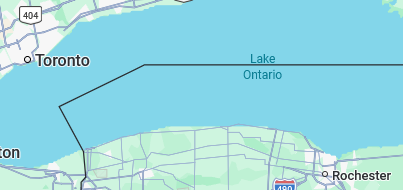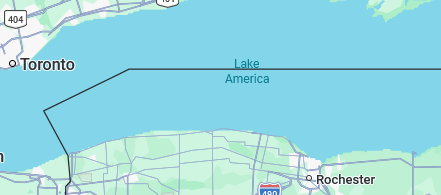
The latest naming kerfuffle, in which the established name of that body of water separating Toronto from upstate New York has been summarily changed to Lake America (at least on this side of the border) got us to thinking back to a book review we did a number of years ago.
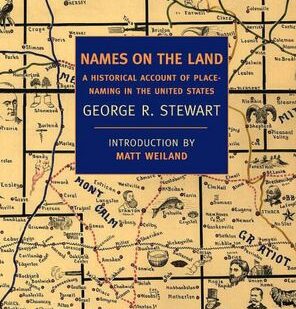
George Stewart’s Names on the Land: A Historical Account of Place-Naming in the United States (2008 ed.) is the “classic study of place-naming in the United States.” Stewart, who was a professor at the University of California, provides the history of place naming in the United States (there’s even a section on why our country is the “United States of America,” and not “Columbia” or “Alleghania”). Starting in prehistory and a fanciful section on why we bestow names on places, progressing from the first Spanish names in the continent in the early 1500’s (Florida), through the Dutch and English periods, and taking us to the modern era, Stewart chronicles the major periods in U.S. history, and how each contributed new names and new conventions to the naming rite. Two chapters, added after the book’s initial publication, detail the sources of place names in Alaska and Hawaii.
Dirt lawyers should be interested in geographical names, right?
Back to the Lake … Amerontario or whatever you might want to call it. Stewart’s book is a good reminder that these names are just cultural conventions, not something literally on the land and can change over time. We put a name to a place, and then later it might change. Sometimes we stick with history and tradition, sometimes not. Either way, the name is deeply tied to culture, property, and the sense of “belonging” to somewhere. There are no absolutes, and geography named by humans is never permanent.
Even our friends up north, some now outraged by this latest renaming, are not immune from the name-change game. For example, the now-accepted Kitchener, Ontario, used to be named “Berlin” until Germany, home of the most well-known “Berlin,” went to war with … The World (the first time).
So here’s our solution: you can bespoke it; curate and customize your naming preference. Depending on where you have your VPN set, it could show as the venerable Lake Ontario or with its new name (at least for the time being; we’d imagine that the second a D takes office, the name goes right back to good ol’ Lake Ontario). Take your pick. We checked — it works.