
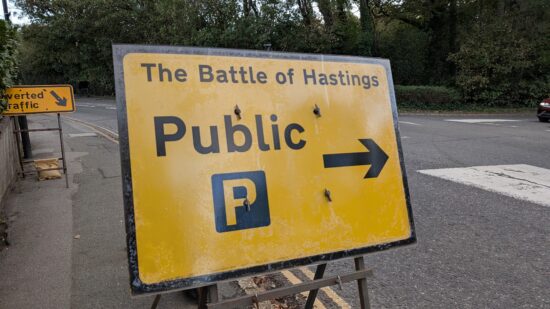
People often ask us “what is the difference between a ‘lawyer’ and an ‘attorney?'” (with the cheeky answer being “about $400 bucks per hour”).
But the more accurate response might be this small hill and field.
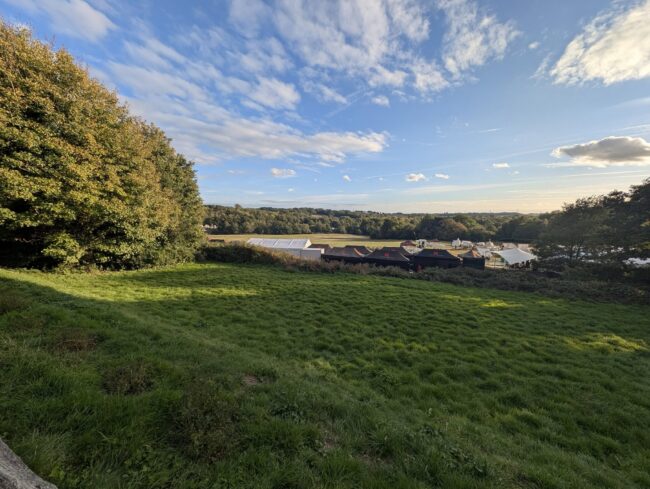
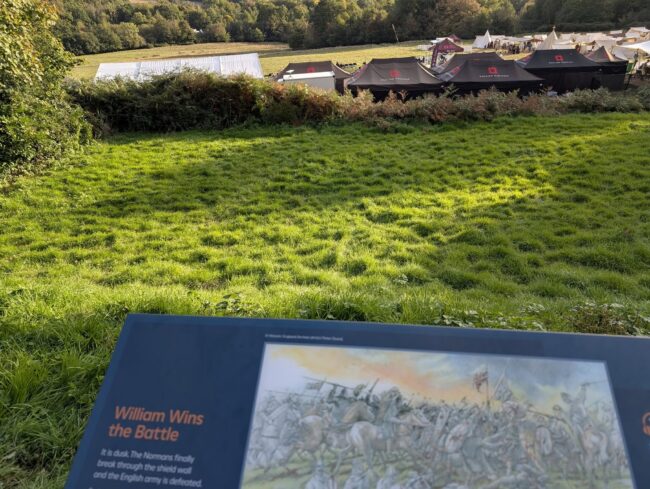
That’s right, the latest edition of property law pilgrimages is to southern England (Sussex) to the appropriately named Battle, UK, site of the 1066 Battle of Hastings, where Guillaume le Batard, Duc du Normandy became William the Conqueror, King of England.
After all, if not for the Norman invasion and conquest of Harold and his English/Anglo Saxons, we law-types might be stuck only with lawyers and petitioners, and not the more fanciful attorney and plaintiffs.
Law French might have stayed continental.
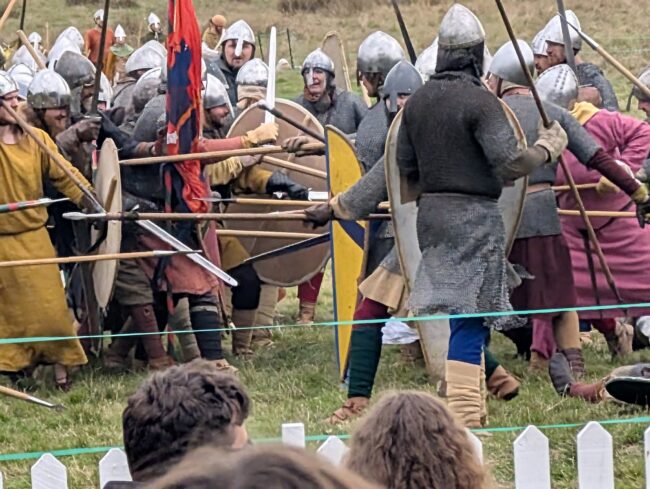
We were in London for the upcoming Brigham-Kanner Property Rights Conference and with the anniversary of the Battle of Hastings coming up (today, October 14) we decided this was as close we were ever going to get both geographically and temporally to the event.
Every year, the English Battlefield Trust stages a recreation of the battle, featuring over 500 authentically-clad and equipped reenactors, complete with period clothing, armor, and weaponry. Most of the “soldiers” were from England and the UK, but a significant number were from the places where Guillaume’s army were from: France, Belgium, the Netherlands, Germany…even a group from as far as Australia.
Couldn’t resist that, so we took a day trip from London to check it out.
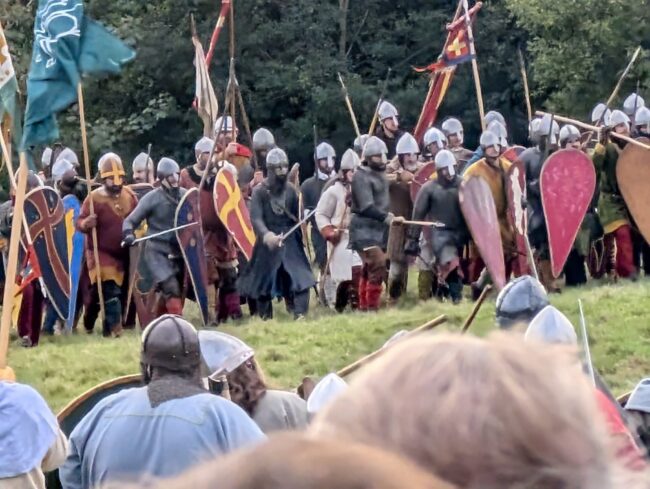
We’re covering this as part of our series on property rights pilgrimages where we visit the actual sites of famous or important dirt law events, because even though it is not directly related to property rights and property law, without William winning the day at Hastings, our system of property law might not look like it does.
Plus, this was like a Renaissance Fair with a brawl at the end.
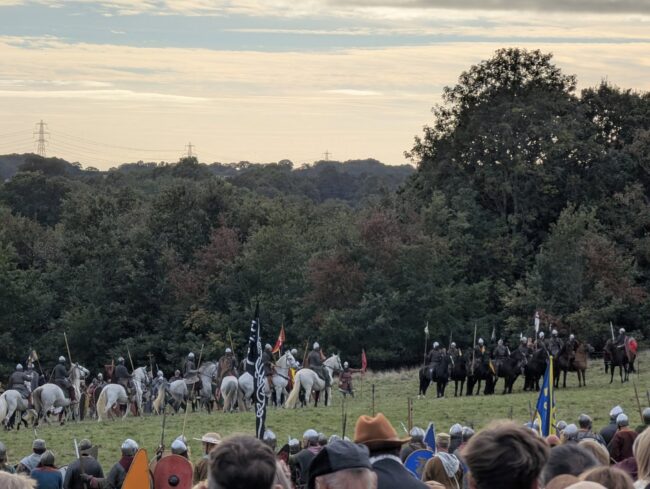
Apparently, in medieval battles there was a lot of trash-talking and parading in front of your own army (in sight of the other), getting them pumped up and excited about the upcoming melee. Here’s William giving it one of those “Braveheart”-type speeches from the back of his horse.
This fight lasted an hour and not all day like the real thing … but this was like the highlight reel of Hastings.
A mix of Monty Python and the Holy Grail (half expected William to say “go away, or I will taunt you a second time!”) and serious history, the re-staging of Hastings 1066 was worth the trip.
There was even a play-by-play announcer calling the fight.
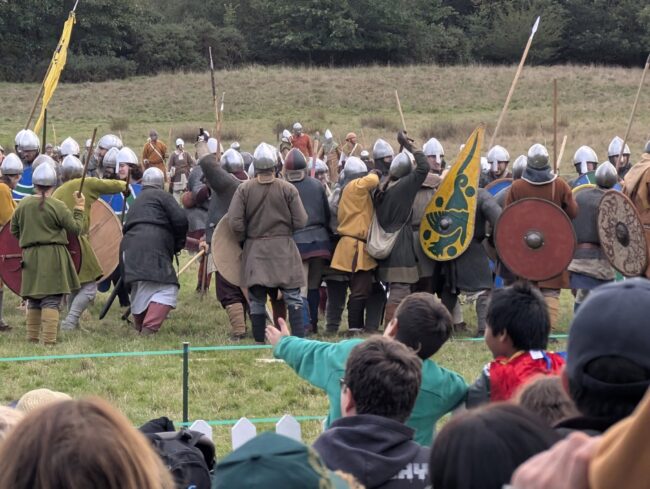
After some serious taunting, William’s forces finally advanced up the hill just like they did back in 1066, crashing into Harold’s shield wall repeatedly. And as in history, the shield wall held until the end, when William’s army suckered some of Harold’s men to break out of the phalanx and chase them down the hill. Uh oh.
There was an actual clanking of swords, the sounds of struggle, as the reenactors really got into the spirit. Some of these dudes are really into it.

The crowd was decidedly pro-Harold, perhaps not surprisingly given the venue.
Announcer: “Here’s William, parading on horseback.”
Crowd: “Boooooooooooo.”
Announcer: “And now Harold, King of England makes an appearance!”
Crowd: “GOD-WIN-SON! GOD-WIN-SON! GOD-WIN-SON!”

More team spirit than a Manchester United footie match.
In the end, the crowd’s exhortations amounted to nothing because — SPOILER ALERT! — the shield wall broke and Harold caught one in the eye, just like 960 years ago.
Game over man, game over.
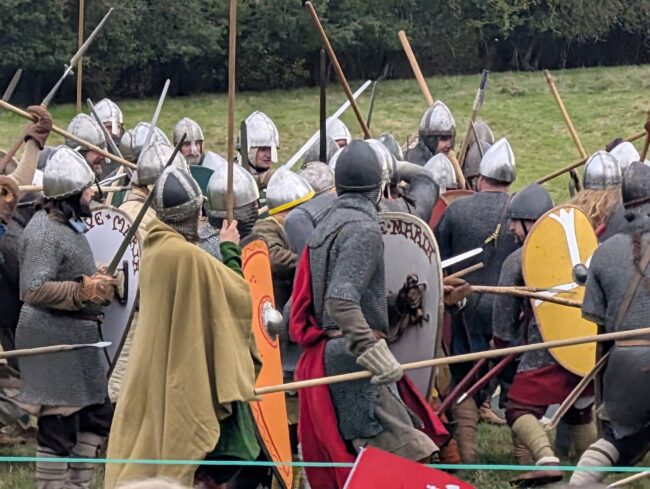
“Down goes Harold! Down goes Harold!” (With apologies to Howard Cosell and Joe Frazier).
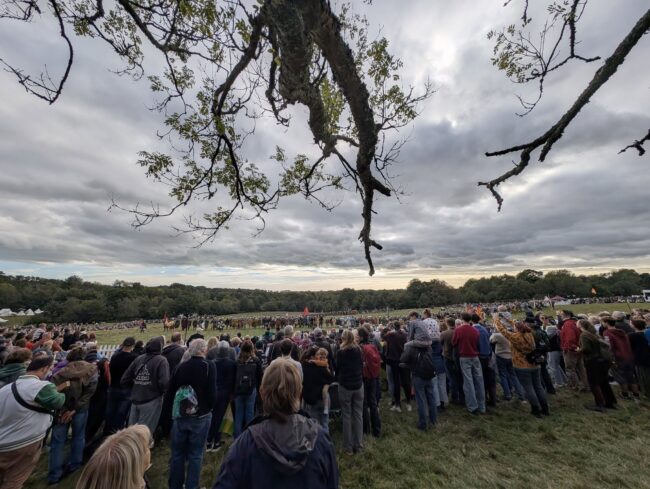
That there are this many people willing to pay to watch a restaging of a Middle Ages battle is somewhat heartening.
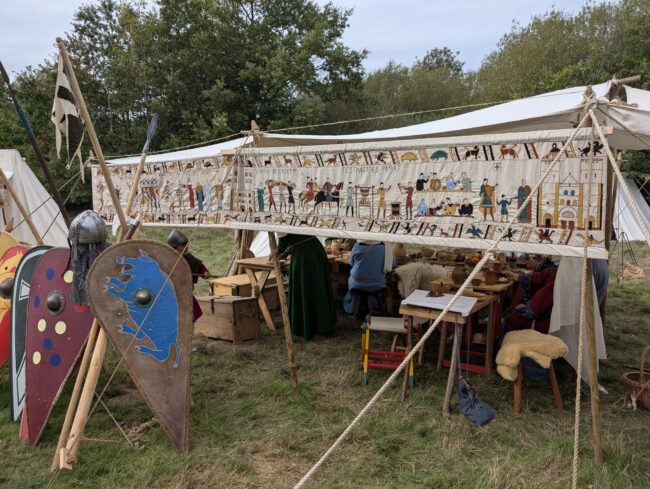
Fuggedaboud the Bayeux Tapestry, we have the Bayeux Throw Rug.
William (now “the Conqueror”) won, Harold II (“No Longer King of England”) lost (he was “deader than Caesar” as they say today and likely said back in 1066), and the rest is history.